
Notch Equipment
Notch 13 in Tri-Edge Saw Blade
Replacement 13 in tri-edge pruning blade for green wood.
Typical $32
Pick the right tree pruner, hand saw or pole saw and the work goes faster with cleaner cuts. This department covers Silky hand saws, Jameson and Marvin pole tools, Felco hand pruners, poles and replacement blades.
Notch Equipment
Replacement 13 in tri-edge pruning blade for green wood.
Silky
A factory replacement blade to bring a dull Sugoi back to full speed.
Silky
A straight-bladed 300 mm Silky pruning saw for clean, controlled cuts.
Silky
A pistol-grip, curved 330 mm Silky saw built for fast, aggressive cuts.
Silky
Silky's fast, curved, taper-ground saw for climbers and pro pruners.
Silky
A 330 mm curved pull saw for climbers who prune and remove limbs all day.
Notch
A four-section telescoping pole saw that reaches about 20 feet from the ground.
Jameson
A complete Jameson pole pruner and pole saw kit with fiberglass sectional poles.
Marvin
A cast saw head that turns a pole into a pole saw, or replaces a broken one.
Gap Arborist Supply
A 6-foot foam-filled fiberglass pole section for pruner and saw setups.
Jameson
A light 8-foot Jameson fiberglass section for pole saws and pruners.
Peavey Mfg
A traditional 12-foot ash pole for mounting pole saw and pruner heads.
Felco
The classic bypass hand pruner, with replaceable parts that last for years.
Marvin
A heavy-duty Marvin pole pruner head with a single pulley for bigger cuts.
Marvin
A replacement Marvin pole pruner head for clean bypass cuts from the ground.
Silky
A fine-tooth blade for the Silky Zubat handle, for smoother pruning cuts.
Fanno
A 17-inch tri-edge replacement blade for pruning pole saws.
Jameson
A 16-inch tri-cut replacement blade for Jameson pole saw heads.
Jameson
A replacement 13-inch blade for the HS-13TE-LPS pruning hand saw.
Silky
Fresh straight blade for the Silky Gomtaro Pro Sentei pruning saw.
Silky
A 390 mm extra-large-tooth blade for the Silky Hayate telescoping pole saw.
Silky
Replacement sickle blade for the Silky Hayate pole system, for vines and small shoots.
Silky
Fresh blade for the Silky Pocketboy folding pruning saw.
Fanno
A US-made 13-inch pruning saw with a traditional wooden handle.
Jameson
A compact 11-inch straight pruning saw for small cuts and tight spaces.
Jameson
A full-size 13-inch pruning saw with a shaped grip for long days.
Jameson
A 13-inch pruning saw with a classic wooden grip.
Silky
A pocket-size Silky folding saw with a 130 mm blade and large teeth.
Silky
Silky's popular straight 300 mm pruning saw, sold with a scabbard.
Silky
A curved Silky pruning saw with medium teeth for clean, quick cuts.
Silky
Silky's 13-inch curved Zubat set up for climbers with an arborist scabbard.
Gap Arborist Supply
A 12-inch non-metallic link for the pull rope on a pole pruner.
Gap Arborist Supply
A 16-foot, three-section aluminum telescoping pole saw for ground pruning.
Gap Arborist Supply
Replacement female pole ferrule with a spring-clip lock for sectional poles.
Jameson
A small replacement link that keeps a Jameson pole pruner head cutting cleanly.
Jameson
A fresh return spring for the Jameson Big Mouth pole pruner head.
Jameson
Replacement return spring for Jameson heavy duty pole pruner heads.
Jameson
Replacement lower bolts that hold the blade tight on a Jameson pole saw head.
Gap Arborist Supply
A replacement male joint fitting for sectional pruning and pole saw poles.
Marvin
Replacement fastener set for Marvin pole pruner and saw heads.
Marvin
A replacement butt cap that seals and protects the bottom end of a Marvin pole.
Marvin
The fitting that joins a Marvin pole pruner head to the top of the pole.
Marvin
The fitting that holds a Marvin pole saw head square on the pole.
Silky
Elastic thigh straps that keep a long Silky scabbard from swinging.
Phoenix
A pole saw head that turns a sectional pole into an overhead pruning saw.
Silky
Run a Silky pole saw blade on a standard sectional pole.
Weaver
A blade cover for 13 inch hook tip pole saw blades.
Weaver
A blade cover sized for 16 inch pole saw blades.
Weaver
A rubberized hand saw scabbard with a built-in pouch for hand pruners.
Jameson
Six foot fiberglass pole sections for building Jameson pole saw and pruner kits.
Jameson
Eight foot B-Lite fiberglass pole sections for Jameson pole tool kits.
Jameson
A foam-core base section that anchors a Jameson sectional pole kit.
Husqvarna
A straightforward bypass hand pruner for clean cuts on small stems.
Jameson
A ready-to-work pole pruner kit built around Jameson's wide-jaw Big Mouth head.
Jameson
A wide-jaw pole pruner head with pulley leverage for bigger overhead cuts.
Jameson
The wide-jaw Big Mouth pole pruner, set up for Jameson's CompositLock poles.
Jameson
A complete pulley pole pruner head with adapter and rope, ready to mount.
Marvin
Marvin's heavy-duty pole pruner head, supplied with the pole adapter.
Marvin
A classic Marvin pole pruner head supplied with its pole adapter.
Gap Arborist Supply
Replacement braided polyester pull cord for pole pruners.
Fanno
A 15-inch curved pull-stroke pruning saw for climbers and ground crews.
Corona
Rope-operated pole pruner head for cutting overhead limbs from the ground.
Corona
Hand bypass pruner with 1 in. capacity for clean cuts on live wood.
Husqvarna
A rope-pull bypass pruner head that mounts on a pole for clean cuts out of reach.
Husqvarna
A pole saw head that centers the blade on the pole for straighter cuts.
Notch
A fresh blade for your Notch Sentei saw when the old one is dull or bent.
Silky
A fresh 390mm curved blade to put a tired Hayauchi pole saw back on the job.
Gap Arborist Supply
Connects threaded-end tools to your pruning poles so one pole can run more heads.
Jameson
A 10 ft fiberglass pole section with a foam core for pole saws and pruner heads.
Marvin
A heavy-duty pole pruner head with double-pulley leverage for thicker cuts.
Jameson
A replacement end cap to keep the bottom of a Jameson pole sealed and protected.
Jameson
Locking composite poles for pole saw and pruner heads, for reaching overhead limbs.
Jameson
A 16 in replacement pole saw blade with fast tri-cut teeth.
Husqvarna
A 300mm curved pruning saw with scabbard for climbers and ground pruners.
Phoenix
A hand pruner for clean cuts on twigs and small branches up to about 3/4 in.
Jameson
Fiberglass pole that extends from 6 to 12 ft for pole saw and pruner heads.
Silky
Replacement pivot hardware to bring a loose Silky folding saw back to tight.
Weaver
A rubberized scabbard to carry and protect a pole saw blade.
Silky
A long curved Silky hand saw with scabbard for cutting big limbs.
Jameson
A 13 inch tri-cut pole saw blade with a hook for clearing hangers.
Silky
A 330 mm taper-ground replacement blade for the Silky Gunfighter saw.
Silky
A fresh 390 mm curved blade for the Silky Ibuki, so a tired saw cuts like new.
Silky
A new curved blade for the Zubat Arborist Edition, the saw many climbers live with.
Jameson
A compact folding pruning saw with a Tri-Cut blade for ground and light climbing work.
Jameson
A fixed-blade pruning saw that comes with its own scabbard, ready for the saddle.
Silky
A 330 mm curved Silky with large teeth for fast cuts on thicker limbs.
Jameson
A vinyl bag that keeps pole sections, pruner heads and saw heads together.
Jameson
A ready-to-work Jameson pole saw head with LS fiberglass pole sections.
Jameson
A pole saw head and 16 in Tri-Cut blade to put on your own poles.
Weaver
A clip-on 8 in pouch that keeps your hand pruners on your hip.
Weaver
One scabbard for a 14 in hand saw with a pouch for your pruners.
Weaver
A rubberized 14 in curved scabbard with a snap to keep the saw in place.
Jameson
A 4 ft fiberglass pole section to build or extend a Jameson pole kit.
Jameson
A light 6 ft Jameson pole section for pole saws and pruners.
Husqvarna
A 32 in lopper with the leverage for branches too thick for hand pruners.
Husqvarna
A pocket-size hand pruner for clean cuts on small stems all day.
Jameson
A wide-jaw pole pruner head with double pulley power, adapter and rope included.
Jameson
A Jameson pole pruner head with the CompositLock connection.
Jameson
A tough Jameson pole pruner head for crews who cut overhead all day.
Jameson
A complete Jameson pole pruner kit built around a fixed pulley head.
Silky
A 210 mm medium-tooth replacement blade for the Silky Gomboy folding saw.
Fanno
A 13 inch fixed-blade pruning saw for orchard and tree work.
Jameson
A pole saw head with a locking fitting for Jameson pruning poles.
Marvin
A cast pole saw head with an adapter for mounting it to your pole.
Nothing matches those filters. Try another brand or raise the price limit.
Buying guide
Even on crews with a full lineup of chainsaws, much of the finest pruning work is done with hand tools. A sharp pull saw makes a clean cut with good control, without the noise or the extra hazard of a running saw. Hand saws are also lighter to carry in the tree and quick to use on small to mid-size limbs.
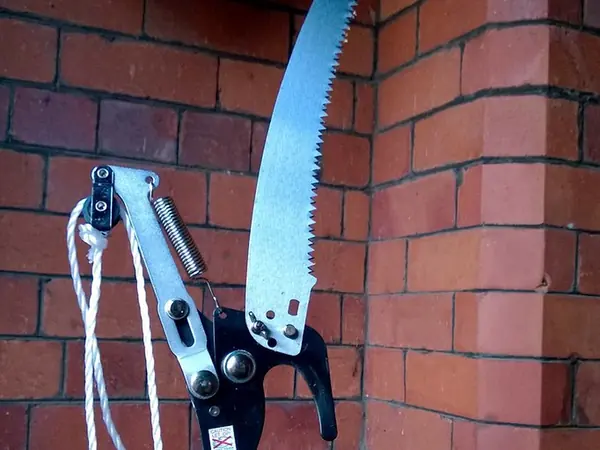
From the ground, pole saws and pole pruners let you reach deadwood, clear sidewalks and lift crowns without climbing. A good pole setup handles a lot of small-tree and street-tree work by itself.
Silky saws have a strong following among climbers for their sharp, fast-cutting blades. Felco hand pruners are known for durability and replaceable parts. Jameson and Marvin build pole tools that hold up to daily crew use.
Hand saws come in straight and curved blades. Curved blades cut aggressively on the pull and suit overhead cuts, while straight blades give more control for precise cuts. A scabbard on your saddle or belt keeps the saw ready and protects you from the teeth.
Pole saws pair a saw head with fiberglass or aluminum poles, and pole pruners add a cutting head with a rope-pulled blade for small limbs. Bypass hand pruners handle the smallest cuts. Each tool in this department has its own section and buying guide.
Replacement blades keep favorite saws in service, and scabbards protect both the blade and the person carrying it. Poles come in sections that build to the length you need.
The ANSI A300 standard describes how to make proper pruning cuts: cut outside the branch collar, avoid leaving stubs, and use the three-cut method on heavier limbs to prevent bark tearing. Sharp tools make this much easier. A dull saw tears wood and encourages rushed cuts.
Use the right tool for the size of the cut. A hand pruner for twigs, a hand saw for small and medium limbs, and a chainsaw only when the cut calls for it. Forcing a small tool through a large cut leads to tearing and poor results.
Clean cuts also save time. A clean, well-placed cut rarely needs to be redone, and a tree that is pruned well needs less correction work later. That is better for the tree and for your client relationships.
Never use conductive poles near energized lines, and only qualified line-clearance arborists should work within the minimum approach distances to power lines. Fiberglass poles rated for electrical work are used for line clearance, but they still require training, inspection and the correct procedures under ANSI Z133.
Keep blades sheathed when moving around the site, wear eye protection and gloves when cutting, and keep the drop zone clear for the ground crew.
Wipe and dry all cutting tools at the end of the day.
A sharp bypass hand pruner for the smallest cuts, then a pull saw or pole pruner as limbs get thicker or higher.
Curved blades cut fast, especially overhead. Straight blades give more control for precise cuts. Many climbers carry one of each.
Only qualified line-clearance workers should prune near energized lines, using properly rated insulated tools and following ANSI Z133.
Most modern pull saws use hardened teeth that are not resharpened. Replace the blade when it dulls or bends.