Notch Equipment
Notch 13 in Tri-Edge Saw Blade
Replacement 13 in tri-edge pruning blade for green wood.
Typical $32
 Replacement Blades
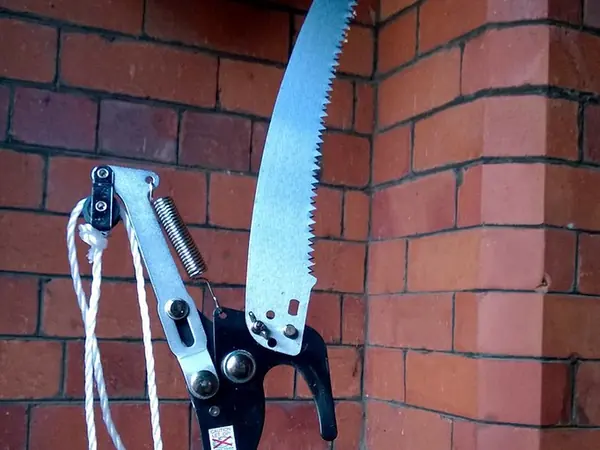
Representative photo. Check the retailer listing for the exact model, color and size.
Photo: Project 365 #211: 300718 A Cut Above by comedy_nose, CC BY 2.0
A fresh 390mm curved blade to put a tired Hayauchi pole saw back on the job.
The Silky Hayauchi replacement blade is the 390mm curved saw blade that bolts onto the Hayauchi telescoping pole saw. When the teeth go dull, a tooth chips on a hidden nail or the blade takes a kink, a new blade brings the saw back to how it cut on day one.
The Hayauchi is the pole saw a lot of crews reach for when they need reach without a powered pole pruner: clearance pruning over sidewalks, lifting canopies over driveways, cleaning deadwood out of a lower crown from the ground. The pole does the reaching, but the blade does the work, and the 390mm blade is the part that wears out.
Silky hardens its teeth so they stay sharp a long time, which is great until they are finally done. Hardened teeth are not something you touch up with a file in the truck. Once the saw starts skating instead of biting, or you feel it bind and drift in a cut it used to rip through, it is time for a new blade. A spare in the truck turns a dead saw into a two-minute fix.
The curve matters on a pole saw. When you are pulling down and back on a limb above your head, a straight blade tends to ride out of the kerf. The Hayauchi's curved blade keeps the teeth pulled into the wood, so each stroke takes a full bite with less wasted effort and less wobble at the top of a long pole.
At 390mm the blade handles the limbs you would normally take with a pole saw, from small suckers to wrist-thick laterals, with enough length for a long, efficient stroke. For bigger wood, make a small undercut first so the limb does not tear bark down the stem, then finish from the top. Keep yourself and anyone else out from under the drop zone, and never use any pole tool near energized lines unless you are a qualified line-clearance arborist with the right equipment.
Pole saw cuts reward patience. Let the teeth do the work with long, smooth strokes rather than short, hard jabs, which wear the blade faster and shake the pole.
Lay the saw down on a flat surface with the blade fully closed out of the way of your hands. Remove the blade bolt and nut from the head, lift the old blade off, set the new one in the same orientation and snug the hardware back down. Check that the blade sits fully seated and does not rock before you extend the pole.
Wear gloves while you handle the bare blade, the teeth are sharp enough to open a hand in one careless move. Wrap the old blade in tape or cardboard before it goes in the trash so nobody gets cut on the way to the dumpster.
Wipe sap off the blade at the end of the day and give it a light coat of oil before it goes back in the scabbard or truck rack. Pitch build-up makes any saw drag. Avoid cutting into the ground, wire, or old hardware buried in the wood; one nail can take out several teeth in a single stroke.
Browse more saw and pole saw blades in our replacement blades section, and make sure the blade you order matches the length of the head on your saw.
| Blade length | 390 mm (about 15.4 in) |
|---|---|
| Blade shape | Curved |
| Cutting stroke | Pull |
| Fits | Silky Hayauchi pole saw (390mm head) |
| Teeth | Hardened, not designed for filing |
Specs are from the manufacturer's published figures where available. Confirm against the product listing before you buy.
Silky teeth are hardened and are not designed to be filed. When the blade stops cutting well, replace it rather than trying to sharpen it.
Silky blades are specific to each saw model and length. Match the replacement to your saw's model and blade length before you order.
If the saw skates, binds, drifts off line or needs noticeably more effort on cuts it used to handle easily, or if teeth are chipped or the blade is bent, swap it.
Pairs well with
Notch Equipment
Replacement 13 in tri-edge pruning blade for green wood.
Silky
A factory replacement blade to bring a dull Sugoi back to full speed.
Silky
A fine-tooth blade for the Silky Zubat handle, for smoother pruning cuts.
Fanno
A 17-inch tri-edge replacement blade for pruning pole saws.
Jameson
A 16-inch tri-cut replacement blade for Jameson pole saw heads.
Jameson
A replacement 13-inch blade for the HS-13TE-LPS pruning hand saw.
Silky
Fresh straight blade for the Silky Gomtaro Pro Sentei pruning saw.
Silky
A 390 mm extra-large-tooth blade for the Silky Hayate telescoping pole saw.
Silky Hayauchi 390mm Replacement Blade$69