Gap Arborist Supply
6' Foam-Filled Pole
A 6-foot foam-filled fiberglass pole section for pruner and saw setups.
Typical $95
A good tree pole system is the backbone of pruning from the ground. Mix and match fiberglass sections, foam-filled poles and kits to reach the cuts you need.
Gap Arborist Supply
A 6-foot foam-filled fiberglass pole section for pruner and saw setups.
Jameson
A light 8-foot Jameson fiberglass section for pole saws and pruners.
Peavey Mfg
A traditional 12-foot ash pole for mounting pole saw and pruner heads.
Gap Arborist Supply
A 12-inch non-metallic link for the pull rope on a pole pruner.
Gap Arborist Supply
A 16-foot, three-section aluminum telescoping pole saw for ground pruning.
Gap Arborist Supply
Replacement female pole ferrule with a spring-clip lock for sectional poles.
Jameson
A small replacement link that keeps a Jameson pole pruner head cutting cleanly.
Jameson
A fresh return spring for the Jameson Big Mouth pole pruner head.
Jameson
Replacement return spring for Jameson heavy duty pole pruner heads.
Jameson
Replacement lower bolts that hold the blade tight on a Jameson pole saw head.
Gap Arborist Supply
A replacement male joint fitting for sectional pruning and pole saw poles.
Marvin
Replacement fastener set for Marvin pole pruner and saw heads.
Marvin
A replacement butt cap that seals and protects the bottom end of a Marvin pole.
Marvin
The fitting that joins a Marvin pole pruner head to the top of the pole.
Marvin
The fitting that holds a Marvin pole saw head square on the pole.
Silky
Elastic thigh straps that keep a long Silky scabbard from swinging.
Jameson
Six foot fiberglass pole sections for building Jameson pole saw and pruner kits.
Jameson
Eight foot B-Lite fiberglass pole sections for Jameson pole tool kits.
Jameson
A foam-core base section that anchors a Jameson sectional pole kit.
Husqvarna
A rope-pull bypass pruner head that mounts on a pole for clean cuts out of reach.
Gap Arborist Supply
Connects threaded-end tools to your pruning poles so one pole can run more heads.
Jameson
A 10 ft fiberglass pole section with a foam core for pole saws and pruner heads.
Jameson
A replacement end cap to keep the bottom of a Jameson pole sealed and protected.
Jameson
Locking composite poles for pole saw and pruner heads, for reaching overhead limbs.
Jameson
Fiberglass pole that extends from 6 to 12 ft for pole saw and pruner heads.
Silky
Replacement pivot hardware to bring a loose Silky folding saw back to tight.
Jameson
A vinyl bag that keeps pole sections, pruner heads and saw heads together.
Jameson
A 4 ft fiberglass pole section to build or extend a Jameson pole kit.
Jameson
A light 6 ft Jameson pole section for pole saws and pruners.
Nothing matches those filters. Try another brand or raise the price limit.
Buying guide
Fiberglass poles are the standard for pole saws and pole pruners because they are strong, light and resist conducting electricity when clean and dry. Hollow-core poles are lighter; foam-filled poles keep moisture from collecting inside, which helps preserve their dielectric properties. Wooden poles, such as ash, are still used for tools like peaveys, where toughness matters more than weight.
Foam-filled fiberglass poles are the usual pick for crews that do any work near utilities, but remember that only qualified line-clearance workers should be near energized lines.
Long pole saws for trees are typically built from multiple fiberglass sections, so choosing the right tree pole system early saves money and frustration later. Pick one system and stick with it so all sections and heads interchange.
Sectional poles connect end to end, so you can carry a few short sections and assemble the length you need. Most systems use a snap-button or locking connection. Keep sections from the same system together and check that each connection seats fully.
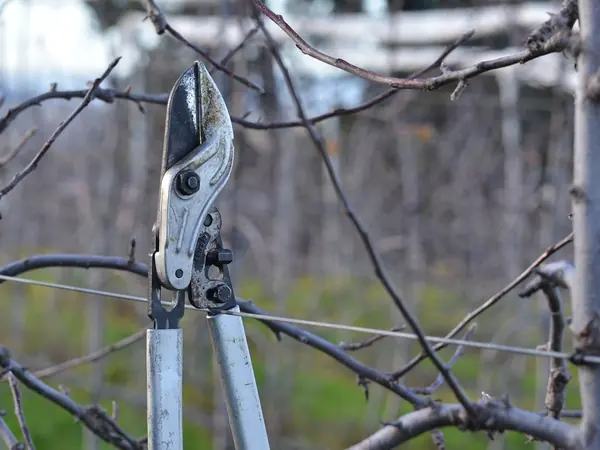
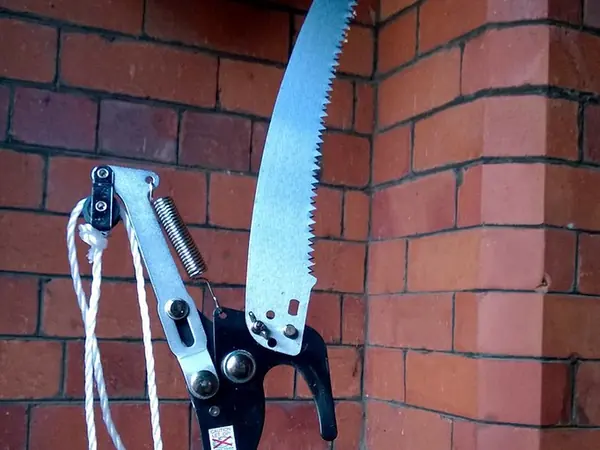
A pole pruner uses a rope to pull a cutting blade through small limbs. Keep the pole saw rope in good shape and routed so it cannot snag. A stiff, straight pole makes the work much easier at full length.
Rope poles and robel poles show up in searches too. Whatever you call them, the key is a strong, straight, well-maintained pole that fits your heads.
Wipe poles clean after use, store them dry and off the ground, and inspect for cracks, splinters and damaged ends before each job. A cracked fiberglass pole can fail under load and may not be safe near power. Retire damaged sections.
Wear a helmet and eye protection when working with poles, and keep the ground crew out of the drop zone.
Clean fiberglass poles with a mild cleaner made for the purpose and keep the surface free of deep scratches. Some crews apply a silicone or wax finish to help shed moisture, following the pole maker's advice. Damaged gel coat lets moisture into the fiberglass, which is a concern for any work near power.
A pole kit gives you sections, a saw head and a pruner head that work together, which is a good way to start a pole system. Add sections over time as you need more reach. Jameson poles are widely used in the trade, and their 8 foot hollow-core poles are a common choice. Six foot foam-filled poles are easier to carry and store. A peavey with a 12 foot ash pole is a different kind of tool, used for rolling and moving logs.
When tying a rope to a pole, such as for a pruner, follow the manufacturer's instructions for routing and attaching the rope.
Store pole sections in a rack or tube on the truck to keep them from bouncing around and cracking. Keep heads sheathed during transport.
Clean, dry, properly maintained fiberglass poles resist conduction, but only qualified line-clearance workers should be near energized lines, following ANSI Z133.
Foam keeps moisture and contaminants from building up inside the pole, which helps maintain its insulating properties.
Carry enough sections to reach your usual cuts. Many crews build to around 12 to 18 feet for routine pruning.
 Free tool2-Stroke Fuel Mix CalculatorExactly how much 2-stroke oil to add for any can size and ratio, in ounces and milliliters.