Jameson
Jameson 8' Hollow Core Pole
A light 8-foot Jameson fiberglass section for pole saws and pruners.
Typical $79
 Poles & Kits
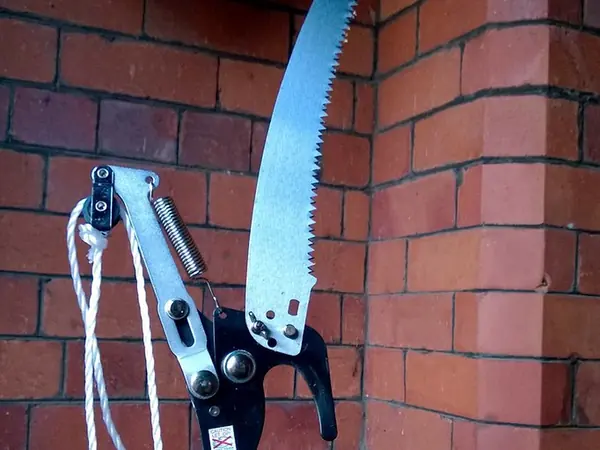
Representative photo. Check the retailer listing for the exact model, color and size.
Photo: Project 365 #211: 300718 A Cut Above by comedy_nose, CC BY 2.0
A 6-foot foam-filled fiberglass pole section for pruner and saw setups.
Foam poles are fiberglass tubes with a foam core, and this 6-foot section is a common building block for pole pruner and pole saw setups. The foam fills the inside of the tube so moisture and dirt cannot collect there, and the pole stays stiff and light enough to work overhead.
A hollow fiberglass pole can trap water, condensation and grime on the inside, where you cannot see or clean it. A foam core takes up that space. That is why foam-filled poles are the usual choice for crews who want a pole that stays clean inside, and it is one of the requirements line-clearance outfits look at when they spec tools.
A 6-foot section is a handy length. On its own it works for low pruning and close-in saw work, and stacked with other sections it builds out a longer pole without much flex.
Foam poles are also a little more forgiving of knocks than hollow ones, since the core supports the tube wall. They still need care, but they tend to shrug off the bumps of daily use on the truck.
Keep fiberglass clean and dry. Wipe off sap and dirt after use and store poles off the ground and out of direct sun. Before each job, check for cracks, deep scratches that expose fibers, crushed ends and loose fittings. A damaged pole should come out of service.
No pole makes it safe to work near energized lines unless you are a qualified line-clearance arborist and your tools are rated and tested for that work per ANSI Z133. Find more sections and complete setups in poles and kits.
Keep a record of when each pole entered service and when it was last inspected. On a crew with many poles, a simple numbering system makes it easy to pull a damaged section out before it goes back up a tree.
| Length | 6 ft |
|---|---|
| Material | Fiberglass |
| Core | Foam-filled |
Specs are from the manufacturer's published figures where available. Confirm against the product listing before you buy.
Foam-filled poles have a foam core that keeps moisture and debris out of the tube. Hollow poles are lighter but can collect material inside.
Yes, as long as the fittings match. Check the connection type against your existing poles and heads.
Pairs well with
Jameson
A light 8-foot Jameson fiberglass section for pole saws and pruners.
Peavey Mfg
A traditional 12-foot ash pole for mounting pole saw and pruner heads.
Gap Arborist Supply
A 12-inch non-metallic link for the pull rope on a pole pruner.
Gap Arborist Supply
A 16-foot, three-section aluminum telescoping pole saw for ground pruning.
Gap Arborist Supply
Replacement female pole ferrule with a spring-clip lock for sectional poles.
Jameson
A small replacement link that keeps a Jameson pole pruner head cutting cleanly.
Jameson
A fresh return spring for the Jameson Big Mouth pole pruner head.
Jameson
Replacement return spring for Jameson heavy duty pole pruner heads.
6' Foam-Filled Pole$95