Notch Equipment
Notch 13 in Tri-Edge Saw Blade
Replacement 13 in tri-edge pruning blade for green wood.
Typical $32
 Replacement Blades
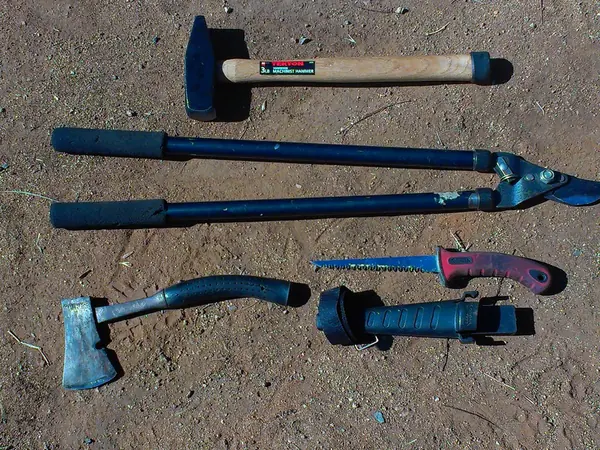
Representative photo. Check the retailer listing for the exact model, color and size.
Photo: THOR's hammer, lopper, hatchet and pruning saw IMAG0257 by el cajon yacht club, CC BY 2.0
A factory replacement blade to bring a dull Sugoi back to full speed.
A Silky Sugoi replacement blade is the fastest way to get a dull or damaged Sugoi cutting like new again. Silky replacement saw blades swap onto the existing handle, so you keep your scabbard and grip and only pay for fresh teeth.
Silky teeth are impulse hardened, which keeps them sharp for a long time but means they are not meant to be filed like a Western saw. When the blade starts to wander, burn, or need real effort on wood it used to slice through, it is time for a new one. A blade with a kink, bent tip or broken teeth should be replaced right away.
Replacing the blade costs much less than a new saw. You keep the handle, which is often in good shape long after the teeth are done, and the scabbard you already have fits the same size blade.
Climbers who cut daily often go through blades several times a year. Dirty wood, sandy bark near the ground, and hitting nails or wire all dull teeth quickly. Having a spare blade in the truck means you can swap it in at lunch instead of struggling through the afternoon.
The Sugoi comes in more than one blade length, so check your saw before ordering. The length is printed on the blade and handle. A replacement saw blade in the wrong length will not fit your scabbard properly and may not seat in the handle.
Shopping for a different saw instead? See the full Silky Sugoi hand saw or browse other replacement blades.
If you are not sure which saw you have, look for the model name and length printed on the blade near the handle. When in doubt, compare the old blade with the new one before throwing it away.
Remove the screw or bolt holding the blade in the handle, slide the old blade out, and fit the new one so it seats fully. Tighten the fastener firmly and check for play before cutting. Wear gloves while handling the blade, since new teeth are very sharp.
Dispose of the old blade safely by wrapping the teeth in tape or cardboard.
After installing the new blade, make a few test cuts on the ground before taking the saw aloft. That confirms the blade is seated and the fastener is tight.
Clean pitch off the blade after work with a resin cleaner and wipe on a light coat of oil to prevent rust. Do not twist the saw in a cut or use it to pry. Hand saws are sharp enough to cause serious cuts. Keep the blade in its scabbard when not cutting, wear gloves, and cut away from your body and your climbing line. Follow ANSI Z133 and get trained before cutting aloft.
Store the saw dry and in its scabbard. A rusty blade drags in the cut, and moisture trapped in the scabbard can spot the steel overnight.
| Fits | Silky Sugoi |
|---|---|
| Blade | Curved, taper-ground |
| Lengths | Available to match Sugoi 330, 360 and 420 mm saws |
| Tooth finish | Impulse-hardened teeth |
| Replacement | Swaps onto existing handle |
Specs are from the manufacturer's published figures where available. Confirm against the product listing before you buy.
Silky teeth are impulse hardened and are generally replaced rather than sharpened. Check Silky's guidance before attempting it.
No. Use a Sugoi blade in the same length as your saw.
It depends on species, dirt and technique. Many climbers replace blades several times over the life of a handle.
Pairs well with
Notch Equipment
Replacement 13 in tri-edge pruning blade for green wood.
Silky
A fine-tooth blade for the Silky Zubat handle, for smoother pruning cuts.
Fanno
A 17-inch tri-edge replacement blade for pruning pole saws.
Jameson
A 16-inch tri-cut replacement blade for Jameson pole saw heads.
Jameson
A replacement 13-inch blade for the HS-13TE-LPS pruning hand saw.
Silky
Fresh straight blade for the Silky Gomtaro Pro Sentei pruning saw.
Silky
A 390 mm extra-large-tooth blade for the Silky Hayate telescoping pole saw.
Silky
Replacement sickle blade for the Silky Hayate pole system, for vines and small shoots.
Silky Sugoi Replacement Blade$59