Jameson
Jameson LS Kit: Pruner, Pole Saw and Poles
A complete Jameson pole pruner and pole saw kit with fiberglass sectional poles.
Typical $379
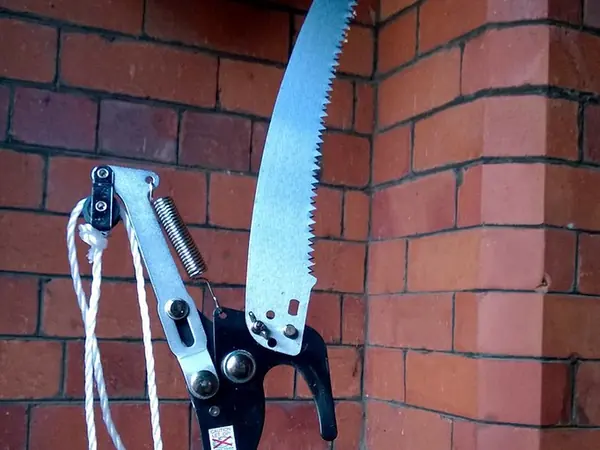 Pole Saws & Scabbards
Representative photo. Check the retailer listing for the exact model, color and size.
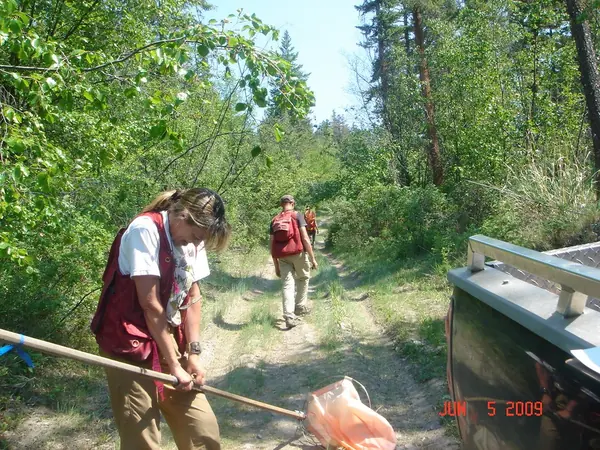
Photo: Project 365 #211: 300718 A Cut Above by comedy_nose, CC BY 2.0
A four-section telescoping pole saw that reaches about 20 feet from the ground.
The Notch Nobasu 20' 4-section telescoping aluminum polesaw is built for ground-based pruning when the limb is out of reach of a hand saw and a climb is not worth it. Four aluminum sections slide out to about 20 feet and collapse back down for the truck. A pull-stroke blade does the cutting, so you guide the saw rather than fight it.
A lot of pruning never needs a climber. Lifting a canopy over a sidewalk, taking deadwood out of a street tree, clearing a limb off a roof: a good pole saw handles those from the ground in a few minutes. The Nobasu stretches to about 20 feet, and with your own reach that covers most of the low and mid canopy on residential work.
Telescoping matters because you rarely need full length. You run it out only as far as the cut needs, which keeps the saw lighter at the head and easier to control. Shorter is always more accurate.
Telescoping also helps when you move between cuts. Instead of stopping to add or remove a section, you unlock, slide and relock. On a day of lifting street trees, that adds up to a lot of saved time and fewer trips back to the truck.
At full extension, any pole saw gets whippy. Stand off to the side of the limb, not under it, and plan where the piece will fall before you start. Make a small undercut first on anything heavier than a wrist so the bark does not tear down the stem. Then finish from the top. Let the pull stroke do the work and keep the pushes light.
Lock each section fully before you put load on it, and check the locks again after you change length. Wipe sap and grit off the sections at the end of the day so they keep sliding smoothly.
An aluminum pole conducts electricity. Do not use this saw anywhere near energized lines. Line-clearance work belongs to qualified line-clearance arborists using dielectric poles and the procedures in ANSI Z133.
Keep the blade sheathed when the saw is on the truck or leaning against a tree. When the teeth stop pulling a clean chip, replace the blade rather than trying to file it. A dull blade makes you push harder, and at 20 feet of leverage that is how cuts wander and poles bend.
Store the pole collapsed and dry. Compare other options in our pole saws and scabbards section, including fiberglass kits for crews that work around utilities.
If you prune from the ground several times a week, or you run a plant health care crew that does light structural work, a long telescoping saw saves a lot of climbs. Homeowners with big yards like it too. If you need sectional poles that can be insulated and inspected for line work, look at a fiberglass system instead.
Pair it with a good hand saw for the cuts you can reach, and a pole pruner for the small sprouts the saw tends to tear. Between the three, most ground-based pruning on a residential job is covered without anyone leaving the ground.
| Maximum length | about 20 ft |
|---|---|
| Sections | 4, telescoping |
| Pole material | Aluminum |
| Cutting stroke | Pull |
| Best use | Ground-based pruning and clearance |
Specs are from the manufacturer's published figures where available. Confirm against the product listing before you buy.
The pole extends to about 20 feet. Add your own height and arm reach, and you can work limbs in the mid-20-foot range, though accuracy drops as you go higher.
No. The pole is aluminum and conducts electricity. Keep well clear of all lines and leave that work to qualified line-clearance crews with dielectric tools.
Yes. Treat the blade as a wear item and replace it when it stops cutting cleanly rather than trying to sharpen it.
Pairs well with
Jameson
A complete Jameson pole pruner and pole saw kit with fiberglass sectional poles.
Marvin
A cast saw head that turns a pole into a pole saw, or replaces a broken one.
Phoenix
A pole saw head that turns a sectional pole into an overhead pruning saw.
Silky
Run a Silky pole saw blade on a standard sectional pole.
Weaver
A blade cover for 13 inch hook tip pole saw blades.
Weaver
A blade cover sized for 16 inch pole saw blades.
Weaver
A rubberized hand saw scabbard with a built-in pouch for hand pruners.
Husqvarna
A pole saw head that centers the blade on the pole for straighter cuts.
Notch Nobasu 20' 4-Section Telescoping Aluminum Polesaw$289