Silky
Silky GomTaro Pro-Sentei 300mm Hand Saw
A straight-bladed 300 mm Silky pruning saw for clean, controlled cuts.
Typical $55
 Hand Saws & Scabbards
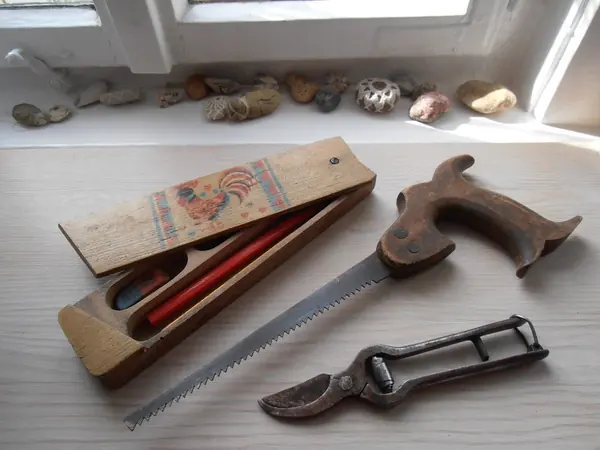
Representative photo. Check the retailer listing for the exact model, color and size.
Photo: The stars must be in a very special position... by storebukkebruse, CC BY 2.0
A compact 11-inch straight pruning saw for small cuts and tight spaces.
This Jameson 11" straight blade hand saw is a compact saw for small pruning cuts, crown cleaning and work in tight spots. It is light on the saddle and easy to control with one hand.
Not every cut needs a 13-inch blade. Crown cleaning, small deadwood and fine pruning cuts often happen in tight spots where a shorter saw is easier to control. The Jameson 11-inch saw is sized for that work and weighs less on your saddle.
A straight blade tracks predictably and works well for cuts at or below shoulder height. For bigger limbs or cuts overhead, a longer curved saw is often faster. Browse our hand saws and scabbards to compare.
It is also a good first saw for new climbers learning pruning cuts, because a shorter blade is easier to control and less likely to wander into a branch collar. On the ground it handles small limbing, cutting roots at planting time and trimming shrubs.
When you carry a hand saw aloft, keep it in a scabbard on your saddle and make two-handed cuts away from your rope and lanyard. Follow ANSI Z133 and get trained before you climb.
Clean off sap after use and keep the blade dry. Replace the blade or saw when teeth are dull or the blade has a kink. Keep the scabbard clear of sawdust so the saw seats fully.
| Blade length | 11 in |
|---|---|
| Blade shape | Straight |
| Cutting stroke | Pull |
| Brand | Jameson |
Specs are from the manufacturer's published figures where available. Confirm against the product listing before you buy.
It handles small pruning and crown cleaning well. Many climbers carry it alongside a longer saw for bigger cuts.
Straight blades track predictably and suit cuts at or below shoulder level. Curved blades bite more aggressively, especially overhead.
Pairs well with
Silky
A straight-bladed 300 mm Silky pruning saw for clean, controlled cuts.
Silky
A pistol-grip, curved 330 mm Silky saw built for fast, aggressive cuts.
Silky
Silky's fast, curved, taper-ground saw for climbers and pro pruners.
Silky
A 330 mm curved pull saw for climbers who prune and remove limbs all day.
Fanno
A US-made 13-inch pruning saw with a traditional wooden handle.
Jameson
A full-size 13-inch pruning saw with a shaped grip for long days.
Jameson
A 13-inch pruning saw with a classic wooden grip.
Silky
A pocket-size Silky folding saw with a 130 mm blade and large teeth.
Jameson 11" Straight Blade Hand Saw$32