
Notch Equipment
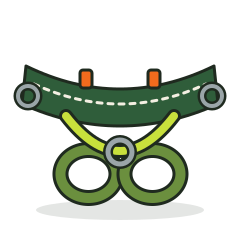
Notch Magneato Rope Runner Tether
A magnetic-catch tether that keeps your rope runner tidy and close at hand.
Typical $39
Carabiners are the small parts you clip a hundred times a day, so it pays to get the right ones. This section covers climbing carabiners for life support, gear carabiners for tools, snap hooks, quick links and saddle storage.
Notch Equipment
A magnetic-catch tether that keeps your rope runner tidy and close at hand.
Husqvarna
Auto-locking D-shaped carabiner for arborist climbing kits.
DMM
A light, auto-locking DMM carabiner with a snag-free nose for everyday climbing.
Petzl
Petzl's asymmetric D locker with a three-action auto-locking gate for climbing systems.
Notch Equipment
Compact Notch hardware for quick, tidy connections in a climbing setup.
Petzl
A compact quick link for semi-permanent connections in a climbing setup.
Gap Arborist Supply
A twisted stainless shackle that turns the connection 90 degrees for cleaner alignment.
DMM
A small DMM accessory carabiner for keeping your saddle rack organized.
Petzl
A carabiner with a built-in pulley for hitch tending, hauls and redirects.
Rock Exotica
A light Rock Exotica clip for racking slings, cords and tools.
Petzl
Petzl's asymmetric D locker with a screw gate for semi-permanent connections.
Petzl
A large pear-shaped screw lock carabiner with room for rope and multiple connections.
SMC
An extra large, heat-treated steel screw-lock carabiner for heavy-duty connections.
Gap Arborist Supply
A lighter double locking snap for lanyards and positioning gear.
Petzl
A wide-opening Petzl snap connector for lanyards and large anchors.
Gap Arborist Supply
A tough steel locking snap for spliced lanyards and lines.
ISC
A small saddle clip that keeps a flipline stowed and out of the way.
Rock Exotica
A large gear carrier that holds hardware and slings on your saddle.
Gap Arborist Supply
A simple polymer hook for hanging pruning tools on your saddle.
Pensafe
A tool-tethering carabiner for keeping small tools attached when you work at height.
CAMP
A large aluminum oval with a triple-action auto-lock gate for pulleys and devices.
DMM
An aluminum oval with a Locksafe gate and a captive bar to keep devices in place.
ISC
A wide pear-shaped aluminum connector for hitches, anchors and lanyards.
ISC
A symmetrical aluminum oval with a triple-action gate for pulleys and devices.
ISC
A compact oval with ISC's Supersafe auto-locking gate for tight hitch systems.
Pro-Climb
An affordable aluminum auto-locking carabiner for everyday climbing connections.
3-IN-ONE
Dry graphite lubricant for carabiner gates, hinges, and small hardware.
DMM
Symmetric oval auto-locking carabiner for pulleys and devices.
DMM
Auto-locking carabiner with a captive bar to hold an eye in place.
DMM
Large auto-locking oval carabiner for pulleys and multi-piece setups.
DMM
Large oval carabiner with DMM's three-stage Locksafe gate.
ISC
Auto-locking offset oval that centers devices and favors the spine.
Rock Exotica
Large auto-locking carabiner with room for rope and stacked hardware.
Rock Exotica
Black auto-locking D carabiner for everyday climbing connections.
Rock Exotica
Popular auto-locking D carabiner for arborist climbing systems.
Rock Exotica
Auto-locking oval carabiner for pulleys and rope grabs.
Kong
Positioning aid that keeps a carabiner from rotating and cross-loading.
Singing Tree
Machined compact connector for low-profile climbing and rigging links.
DMM
Locking gear-racking carabiner for tools and kit on the saddle.
ISC
Non-locking bent gate carabiner for fast clips and gear racking.
Kong
Tough non-locking steel oval for gear handling and wear-prone jobs.
Courant
Saddle tool hook for hanging a saw or gear within easy reach.
DMM
Wire gate racking carabiner for organizing gear on the saddle.
Shembiner
Saddle hook for parking a top-handle chainsaw while you reposition.
ISC
Steel screwgate carabiner for wear-prone rigging and anchors.
SMC
Large steel screw lock carabiner for rigging and wide connections.
Edelrid
Double locking steel snap hook for lanyards and positioning.
ISC
Self-locking snap hook with a swivel eye to stop lanyard twist.
Notch Equipment
A saddle tool carrier that keeps hand tools hanging where you can reach them.
Shembiner
A saddle-mounted hook that gives your saw its own place to hang.
ISC
A four-action auto-locking offset oval with a captive pin to hold it in place.
Gap Arborist Supply
A double locking snap for lanyard ends and flipline connections.
DMM
A DMM auto-locking carabiner for climbers who want a dependable gate on every clip.
DMM
An oval auto-locking DMM carabiner with a gate built for the US market.
Climbing Technology
An auto-locking Climbing Technology carabiner for tree climbing systems.
Gap Arborist Supply
A snap hook for spreading and connecting gear on the job.
DMM
A symmetrical oval carabiner that keeps pulleys and devices sitting square.
Petzl
A large pear-shaped aluminum carabiner for hitches and multiple attachments.
ISC
Light oval clip for racking tools and spare hardware on your saddle.
Gap Arborist Supply
Rubber keepers that hold carabiners in place so your system stays oriented.
ISC
Offset oval with a four-action gate for connections that must stay shut.
Gap Arborist Supply
Double-locking steel snap with a gate rated to current ANSI requirements.
ISC
Auto-locking carabiner with a built-in swivel eye to keep lines from twisting.
ISC
Large steel carabiner with a wide opening and triple-action locking gate.
DMM
An auto-locking carabiner with a built-in pulley wheel for redirects and pulley systems.
DMM
A stainless thimble that protects a spliced eye where it bears on hardware.
ISC
A durable steel offset oval auto-locker for hard-wearing climbing and rigging setups.
Husqvarna
Small accessory carabiners for organizing gear, not for life support.
DMM
A very light non-locking wiregate for racking gear on your saddle.
DMM
A screw gate carabiner with a built-in pulley wheel to cut friction.
ISC
An offset D auto-locking carabiner with a locking pin for tree climbing.
DMM
An auto-locking carabiner with a captive bar that keeps the load where it belongs.
DMM
A pear-shaped HMS auto-locker with room for a hitch, a rope and a bit of hardware.
DMM
A locking DMM carabiner in matt gray for everyday climbing connections.
ISC
An offset D auto-locker from ISC for strong, tidy connections on your saddle.
KONG
A symmetric aluminum oval that keeps pulleys and devices centered.
DMM
A big D-shaped auto-locker with room for anchors and multiple connections.
DMM
A large-opening auto-locker with an ANSI gate rating for demanding connections.
DMM
A carabiner with a built-in pulley wheel to cut friction on redirects.
DMM
A tough locking DMM carabiner for demanding climbing and rigging connections.
ISC
A light, symmetric locking oval for pulleys, devices and racking gear.
ISC
A durable ISC auto-locker for high-wear spots on your climbing system.
Petzl
A light asymmetric D locker for devices, lanyards and bridge connections.
Petzl
A locking carabiner with a built-in pulley for tending a hitch and hauling.
Rock Exotica
A roomy aluminum auto-locker with Rock Exotica's Orca locking gate.
Rock Exotica
A rockO carabiner with a captive eye that keeps a connection in position.
DMM
A small keeper that holds a carabiner in the right position on a sling or eye.
Petzl
A small positioning ring that keeps a connector oriented where you put it.
Kong
A non-locking Kong carabiner for racking and organizing gear on the saddle.
Petzl
Ultralight non-locking carabiner with a snag-free wire gate, for racking gear.
DMM
A small DMM racking clip for keeping light gear organized on the saddle.
Petzl
A harness-mounted tool holder for racking carabiners and gear on the saddle.
ISC
A steel triple-locking snap hook for lanyards and arborist climbing systems.
ISC
Triple-locking steel snap with a swivel eye to keep lanyards from twisting.
Gap Arborist Supply
A simple steel swivel snap for tool lines, bags and light gear handling.
DMM
A steel auto-locking modified D for spots where aluminum wears out fast.
Nothing matches those filters. Try another brand or raise the price limit.
Buying guide
Not every carabiner belongs in your climbing system. For anything that holds you, ANSI Z133 calls for self-closing, self-locking connectors that take at least two deliberate actions to open, with a minimum breaking strength of 5,000 lbf (about 22.2 kN). In practice that means an auto-locking carabiner, usually a triple-action design, rated for climbing.
Non-locking and screw gate carabiners still have a place, just not as life support in a climbing line. They hang hand saws, water bottles, throw line bags and spare slings off your saddle. Keep the two jobs separate and mark or color-code them if it helps your crew.
Oval carabiners keep loads centered and work well with pulleys and rope wrenches. D and offset-D shapes put the load near the spine, where the carabiner is strongest, and give a wider gate opening. A pearabiner, or HMS shape, has a wide end that suits hitches and bulky connections such as a rope bridge.
Steel carabiners are heavier but handle wear from rope and hardware better, which makes them a good fit for rigging and high-wear points. Aluminum carabiners are lighter and are what most climbers carry on the saddle. Captive-eye or bar designs keep a carabiner oriented on a rope wrench or device.
Gate design matters too. Keylock noses avoid snagging on rope and slings. Wide gate openings make it easier to clip thick rope or a saddle bridge. Some carabiners have a captive bar or clip that holds a device or pulley in the correct orientation and prevents cross-loading.
Beyond carabiners, this section carries quick links and shackles for semi-permanent connections, connectors like the Notch Quickie for fast tie-ins, snap hooks for lanyards, and saddle storage hooks and clips. A good saddle storage setup keeps your carabiners, saws and slings in the same place every climb, which saves time and reduces dropped gear.
When you pick hardware, think about gate opening, gloved operation and whether a connector will stay oriented under load. Cross-loading, where the gate takes force, can drastically reduce strength.
Climbers often ask how many carabiners they need. A practical starting point is two or three auto-locking carabiners for your climbing system and lanyard, a spare locker for rescue or changes, and four to six non-locking or gear carabiners for tools and slings. Add more as your system grows.
Check every carabiner before use. The gate should close and lock on its own every time. Look for grooves worn by rope, sharp edges, cracks, corrosion or any distortion. Retire any connector that has been dropped onto a hard surface from height, shock loaded or that fails to lock fully. Follow the manufacturer's instructions for each model.
Keep a few spare lockers in your kit. A gate that sticks with sap or grit at the top of a tree is not something you want to discover without a backup.
For life support, arborists use self-closing, self-locking carabiners that need at least two deliberate actions to open and are rated for at least 5,000 lbf, which in practice means auto-locking climbing carabiners.
Screw gate carabiners are not self-locking, so they do not meet Z133 for life-support connectors in a climbing line. Use them for gear and rigging where appropriate.
A pearabiner, also called an HMS carabiner, is a pear-shaped carabiner with a wide end that suits hitches, bridges and bulky connections.
Steel resists wear and abrasion better but weighs more. Aluminum is lighter and is the usual choice for carrying on a saddle.
 Free toolClimbing Kit BuilderPick your climbing system and budget, get a complete, compatible kit list you can add to your cart in one click.