Husqvarna
Husqvarna D-Shaped Carabiner
Auto-locking D-shaped carabiner for arborist climbing kits.
Typical $22
 Auto-Locking Carabiners
Representative photo. Check the retailer listing for the exact model, color and size.
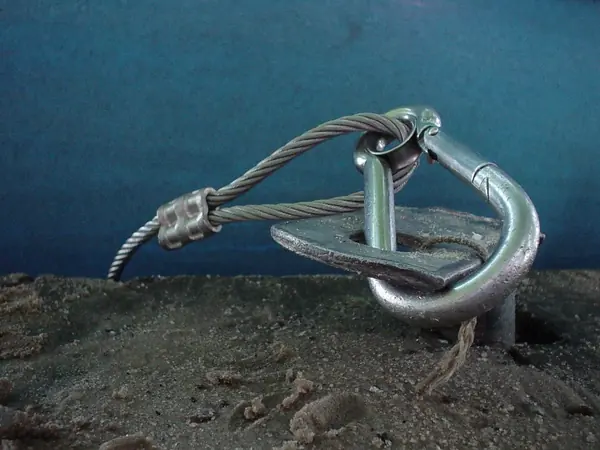
Photo: Carabiner by mikemol, CC BY 2.0
A durable steel modified D with an auto-locking twist gate for hard-wearing jobs.
A twist-lock modified D steel carabiner is a hard-wearing connector with a self-closing, twist-locking gate and an asymmetric D shape. Steel holds up to rope wear and rough handling better than aluminum, which suits rigging and ground work.
Aluminum carabiners are light, which is why climbers like them on the saddle. Steel is heavier but far more resistant to grooving from rope, and it shrugs off being dropped, dragged and thrown in the truck. That makes a steel modified D a good fit for rigging points, lowering devices, haul systems and anchors.
The modified D keeps the load toward the strong spine while opening wide enough for rope eyes and slings. More auto-lockers are in auto-locking carabiners.
Steel also makes sense where a carabiner meets a steel ring, chain or wire rope, since aluminum wears quickly against harder metal. Many crews keep a handful of steel twist-locks in the rigging bag for these jobs and leave the lighter aluminum connectors on the climbing saddle.
A twist-lock gate should snap shut and lock on its own every time. Check it before every use, and keep sap and grit out of the sleeve. Load the carabiner along its spine, avoid cross-loading and three-way loading, and keep it away from edges that can lever the gate.
Retire a carabiner with a sticky gate, cracks, deep grooves, sharp edges or corrosion. Only use it for life support if it is marked and rated for that and meets ANSI Z133 and the manufacturer's instructions.
| Material | Steel |
|---|---|
| Shape | Modified D |
| Gate | Twist-lock, auto-locking |
| Ratings | See markings on the spine |
Specs are from the manufacturer's published figures where available. Confirm against the product listing before you buy.
Steel carabiners often have higher strength ratings and wear better, but they weigh more. Always read the marked ratings.
Only if it is marked and certified for life support and suits your system. Life-support gear must meet ANSI Z133 and the manufacturer's instructions, be inspected before every use, and be used only by trained climbers.
Pairs well with
Husqvarna
Auto-locking D-shaped carabiner for arborist climbing kits.
DMM
A light, auto-locking DMM carabiner with a snag-free nose for everyday climbing.
Petzl
Petzl's asymmetric D locker with a three-action auto-locking gate for climbing systems.
CAMP
A large aluminum oval with a triple-action auto-lock gate for pulleys and devices.
DMM
An aluminum oval with a Locksafe gate and a captive bar to keep devices in place.
ISC
A wide pear-shaped aluminum connector for hitches, anchors and lanyards.
ISC
A symmetrical aluminum oval with a triple-action gate for pulleys and devices.
ISC
A compact oval with ISC's Supersafe auto-locking gate for tight hitch systems.
Twist-Lock Modified D Steel Carabiner$18