Husqvarna
Husqvarna D-Shaped Carabiner
Auto-locking D-shaped carabiner for arborist climbing kits.
Typical $22
 Auto-Locking Carabiners
Representative photo. Check the retailer listing for the exact model, color and size.
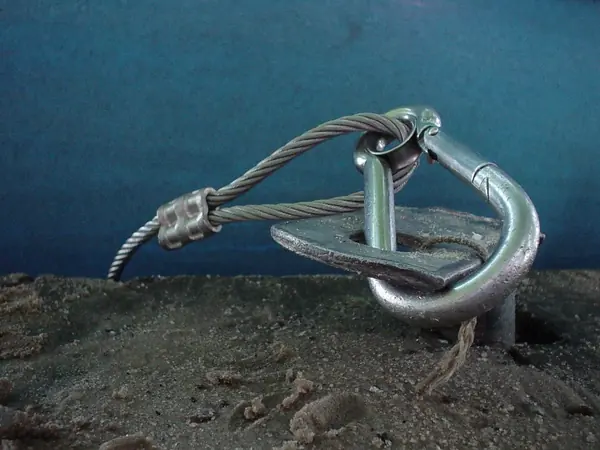
Photo: 3D-printed Carabiner Clip by Creative Tools, CC BY 2.0
An offset D auto-locker from ISC for strong, tidy connections on your saddle.
The ISC Offset D Supersafe carabiner combines an offset D shape with ISC's auto-locking Supersafe gate. The offset D keeps the load near the spine while opening wide enough to clip rope eyes, rings and devices.
An offset D puts the load close to the spine, which is the strongest part of a carabiner, while the wider gate end makes clipping a thick eye splice or a pulley side plate easier. That makes it a good all-rounder for hitch climbing systems, lanyard ends and connecting to a bridge.
Look at how the gate sits on your saddle when you build your system. An offset D clipped to a bridge or lanyard ring should hang with the gate facing out and away from bark, so it does not get pushed open against a stem. Set it up on the ground, hang in it, and check the orientation before you leave the ground.
The Supersafe gate is designed so it cannot be opened by a single accidental motion. See other auto-locking carabiners if you prefer an oval or HMS shape.
Make sure the gate closes fully and the lock engages without help. Look for cracks, deep rope grooves and corrosion, especially if you work near salt air or treated wood.
Treat it as life-support gear: follow the manufacturer's instructions, check it before every climb, and retire it after a hard fall, a drop onto a hard surface, or any damage you can't explain. Use it within an ANSI Z133 program and only after proper training.
| Shape | Offset D |
|---|---|
| Gate | Supersafe auto-locking |
| Brand | ISC |
Specs are from the manufacturer's published figures where available. Confirm against the product listing before you buy.
It is ISC's auto-locking gate design that needs more than one deliberate motion to open. Check ISC's instructions for the exact opening sequence.
ISC makes offset D carabiners in more than one material. Check the listing and the spine markings for the version you buy.
Pairs well with
Husqvarna
Auto-locking D-shaped carabiner for arborist climbing kits.
DMM
A light, auto-locking DMM carabiner with a snag-free nose for everyday climbing.
Petzl
Petzl's asymmetric D locker with a three-action auto-locking gate for climbing systems.
CAMP
A large aluminum oval with a triple-action auto-lock gate for pulleys and devices.
DMM
An aluminum oval with a Locksafe gate and a captive bar to keep devices in place.
ISC
A wide pear-shaped aluminum connector for hitches, anchors and lanyards.
ISC
A symmetrical aluminum oval with a triple-action gate for pulleys and devices.
ISC
A compact oval with ISC's Supersafe auto-locking gate for tight hitch systems.
ISC Offset D Supersafe Carabiner$28