Husqvarna
Husqvarna D-Shaped Carabiner
Auto-locking D-shaped carabiner for arborist climbing kits.
Typical $22
 Auto-Locking Carabiners
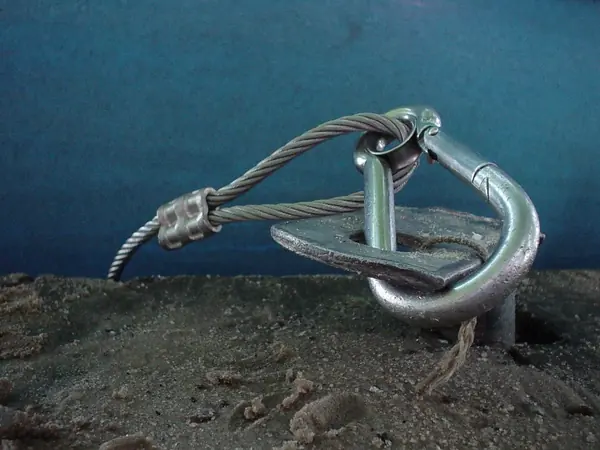
Representative photo. Check the retailer listing for the exact model, color and size.
Photo: Carabiner by mikemol, CC BY 2.0
A four-action auto-locking offset oval with a captive pin to hold it in place.
The ISC offset oval quadlock carabiner pairs a four-stage auto-locking gate with a captive pin that keeps the carabiner from rotating out of position. Climbers use it where a connector should stay put, such as on a device, pulley, or bridge.
A loose carabiner can rotate until it loads across the gate, which is exactly how connectors fail. The captive pin closes off part of the carabiner so whatever is clipped in, such as a pulley, device, or eye, stays in the right spot and the carabiner loads along its spine.
The quadlock gate takes four deliberate actions to open. That is more fiddly with gloves than a triple lock, but it is much harder for a branch, rope, or bridge to roll it open by accident. Compare it with other auto-locking carabiners if you prefer a quicker gate.
Load the carabiner only along its major axis and check the gate closes and locks fully every time you clip it. Do not let it rest across an edge or a limb, and do not three-way load it unless the maker allows it.
Inspect before each climb for sharp edges, grooves, cracks, and a sticky or slow gate, and retire any carabiner that has been dropped onto a hard surface from height. Treat it as life-support equipment: it must meet ANSI Z133 and the manufacturer's instructions, be inspected before every climb, and be used only by trained climbers.
| Shape | Offset oval |
|---|---|
| Gate | Auto-locking, four-action (quadlock) |
| Feature | Captive pin |
| Ratings | Marked on the carabiner |
Specs are from the manufacturer's published figures where available. Confirm against the product listing before you buy.
The gate needs four separate actions to open. It is slower to operate than a triple lock but more resistant to accidental opening.
Follow ISC's instructions. Do not modify a life-support connector beyond what the manufacturer allows.
Pairs well with
Husqvarna
Auto-locking D-shaped carabiner for arborist climbing kits.
DMM
A light, auto-locking DMM carabiner with a snag-free nose for everyday climbing.
Petzl
Petzl's asymmetric D locker with a three-action auto-locking gate for climbing systems.
CAMP
A large aluminum oval with a triple-action auto-lock gate for pulleys and devices.
DMM
An aluminum oval with a Locksafe gate and a captive bar to keep devices in place.
ISC
A wide pear-shaped aluminum connector for hitches, anchors and lanyards.
ISC
A symmetrical aluminum oval with a triple-action gate for pulleys and devices.
ISC
A compact oval with ISC's Supersafe auto-locking gate for tight hitch systems.
ISC Offset Oval Quadlock Carabiner with Captive Pin$39