Husqvarna
Husqvarna D-Shaped Carabiner
Auto-locking D-shaped carabiner for arborist climbing kits.
Typical $22
 Auto-Locking Carabiners
Representative photo. Check the retailer listing for the exact model, color and size.
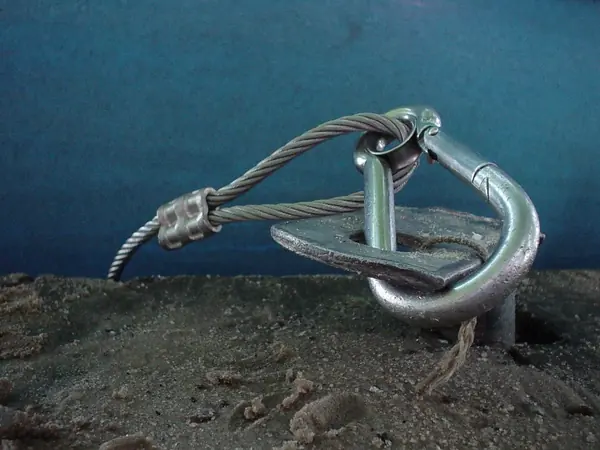
Photo: carabiner+chains by brenkee, CC0
An aluminum auto-locking carabiner in a low-glare matt gray finish.
The DMM Shadow carabiner in matt gray is an aluminum auto-locking carabiner with a keylock nose that does not snag on rope or slings. The matt gray finish has a low-glare, understated look that many climbers like.
The Shadow is a general-purpose connector for arborist work: lanyard ends, connecting devices and clipping to saddle attachment points. The keylock nose runs smoothly through rope eyes and sling loops without hooking, which saves frustration when you are clipping in one-handed.
The matt gray finish is about looks, not performance. It is the same Shadow, just in a muted color. Compare other auto-locking carabiners if you need a different shape or gate.
Some climbers use color to organize their saddle, with one color for the climbing system and another for lanyards or spare connectors. A matt gray carabiner stands out from the bright anodized colors many arborist connectors come in, so it is easy to set aside for one job. It also shows fewer scuffs from bark and grit than a glossy finish. Whatever system you use, keep it consistent so you can find the right carabiner by feel and sight while working aloft.
Load it along the spine with the gate closed and locked. Before each climb, check that the gate snaps shut and locks on its own, and look for grooves, cracks, sharp edges and corrosion. Retire it after a big fall or a drop onto a hard surface.
Life-support gear must meet the applicable standard, be used per the manufacturer's instructions and ANSI Z133, and be inspected before every climb. Get trained before you rely on it aloft.
| Material | Aluminum |
|---|---|
| Gate | Auto-locking |
| Nose | Keylock |
| Finish | Matt gray |
| Brand | DMM |
Specs are from the manufacturer's published figures where available. Confirm against the product listing before you buy.
No. Ratings are marked on the spine and are the same as for other Shadow colors.
It is a climbing connector. Use rigging hardware rated for the load when moving wood.
Pairs well with
Husqvarna
Auto-locking D-shaped carabiner for arborist climbing kits.
DMM
A light, auto-locking DMM carabiner with a snag-free nose for everyday climbing.
Petzl
Petzl's asymmetric D locker with a three-action auto-locking gate for climbing systems.
CAMP
A large aluminum oval with a triple-action auto-lock gate for pulleys and devices.
DMM
An aluminum oval with a Locksafe gate and a captive bar to keep devices in place.
ISC
A wide pear-shaped aluminum connector for hitches, anchors and lanyards.
ISC
A symmetrical aluminum oval with a triple-action gate for pulleys and devices.
ISC
A compact oval with ISC's Supersafe auto-locking gate for tight hitch systems.
DMM Shadow Carabiner, Matt Gray$22