

ISC
ISC Nessie Lanyard Management Clip
A small saddle clip that keeps a flipline stowed and out of the way.
Typical $25
 Saddle Storage
Representative photo. Check the retailer listing for the exact model, color and size.
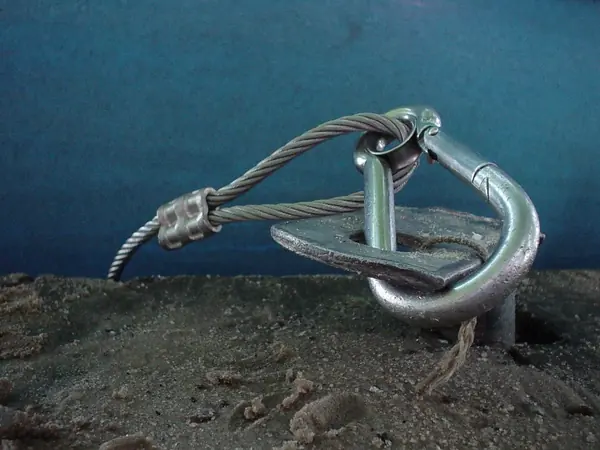
Photo: carabiner by ani!, CC0
A simple polymer hook for hanging pruning tools on your saddle.
This polymer hook clips to your saddle so pruning hooks, pole saw heads and hand saw scabbards have a home that is not your life-support hardware. It is light, quiet against the rope and cheap enough to run a few.
Pruning work means switching between hand saw, pole saw and pruning hooks all day. Each tool needs a place on the saddle where you can grab it one-handed and put it back without looking. Hanging them off a life-support carabiner or a D-ring is a bad habit; a dedicated tool hook keeps the gear organized and keeps your climbing hardware clear.
A polymer hook is light and does not clank or scratch other hardware. It also will not damage your rope if it bumps against it while you move through the canopy.
Pruning hooks, pole saw heads and long-handled loppers are the hardest tools to carry well. They are too long for a scabbard and too awkward to hold while you move. A dedicated hook gives them a resting spot between cuts, so both hands are free for climbing and positioning.
Think about where each tool needs to be. Most climbers carry the hand saw on the hip of their non-dominant side, with a hook further back for a pole pruner or pruning hook head when it is not in hand. Long tools ride better hanging vertically from a hook at the rear of the saddle so they do not catch on limbs.
Run a short lanyard or tool leash for pole saws and pruning hooks so a slip does not send them to the ground. Anything that falls lands in the drop zone, so keep the ground crew clear while you work.
Spread the load. Putting every tool on one side pulls the saddle off center and makes it harder to sit level in the bridge. Balance the weight left and right, and keep the heaviest items close to your hips.
Pole pruners and pruning hooks are sharp, long and awkward. Carry them with the blade pointed down and away from your rope and lanyard, and never let a blade rest against any part of your climbing system. When you hand-line a tool up, send it on a separate line and clip it to the hook only after you have control of it.
If your work is near power lines, use only insulated tools and qualified line-clearance methods. Metal hooks and poles conduct.
This is a storage hook, not climbing hardware. Never use it to connect yourself, your lanyard or your rope, or to hold rigging loads. Replace it if it cracks, bends or loses its shape. For rated connectors and more storage options, browse our saddle storage section.
Check the attachment point on the saddle as well. Tool loops wear and can tear from constant weight, so inspect them along with the hook and move the hook if the loop shows damage.
| Material | Polymer |
|---|---|
| End | Standard attachment end |
| Use | Saddle tool storage |
| Rating | Not for life support |
| Fits | Most saddle accessory loops |
Specs are from the manufacturer's published figures where available. Confirm against the product listing before you buy.
Yes, it is meant to carry tools such as pole saws and pruning hooks on your saddle. Keep the blade pointed away from your climbing system.
No. It is for tool storage only and must never be used as part of your life-support system.
Most climbers use two or three, placed so each tool has its own spot and can be reached one-handed.
Pairs well with
ISC
A small saddle clip that keeps a flipline stowed and out of the way.
Rock Exotica
A large gear carrier that holds hardware and slings on your saddle.
Courant
Saddle tool hook for hanging a saw or gear within easy reach.
DMM
Wire gate racking carabiner for organizing gear on the saddle.
Shembiner
Saddle hook for parking a top-handle chainsaw while you reposition.
Notch Equipment
A saddle tool carrier that keeps hand tools hanging where you can reach them.
Polymer Tool Hook with Standard End$12
