Weaver
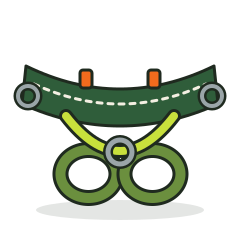
Weaver Chest Box Harness
A simple Weaver chest harness that keeps your saddle and ascent gear in position.
Typical $50
Weaver arborist saddles are proven, affordable climbing saddles made by a long-time US leather and webbing maker. From the popular Weaver Cougar saddle to simpler models, they are a common choice for new climbers and crews outfitting several people.
Weaver
A simple Weaver chest harness that keeps your saddle and ascent gear in position.
Weaver
A traditional American-style climbing saddle for everyday tree work.
Weaver
The classic Weaver Cougar saddle with a batten seat for long hours in the tree.
Weaver
A Weaver climbing saddle with a supportive batten seat for long work positioning.
Weaver
A Weaver tree-climbing harness for daily climbing and work positioning.
Weaver
A replacement webbing bridge for the Weaver Cougar saddle.
Weaver
Padded saddle suspenders with a built-in water bladder for long, hot climbs.
Weaver
A traditional wide-back climbing saddle for climbers who want simple, solid support.
Weaver
A Weaver climbing saddle built for everyday tree work.
Weaver
A Weaver climbing saddle with two floating D-rings for flexible positioning.
Nothing matches those filters. Try another brand or raise the price limit.
Buying guide
Weaver has been making climbing saddles for a long time, and you will find them on crews everywhere. They are straightforward, durable and priced so a crew can outfit new climbers without breaking the budget. For a lot of arborists, a Weaver saddle was the first one they climbed in.
The Weaver Cougar saddle is a popular model, with padding and support that suits everyday pruning and removal work.
Weaver saddles are also a common pick for crews that need spare saddles in the truck. When a climber's saddle is out for repair or a new hire starts, having a straightforward, well-fitting saddle on hand keeps the job moving.
Weaver saddles are also easy to service. Webbing, leather and hardware are simple to inspect, and replacement parts are widely available for many models, which helps keep a saddle in use for its full service life.
Look at how you climb. If you mostly use a moving rope system and a flip line, a traditional saddle with side D-rings and a front tie-in covers the basics well. If you plan to climb SRS a lot or want a bridge that moves with you, compare with European saddles such as the Petzl Sequoia.
Fit matters more than features. Use Weaver's sizing guide for waist and legs, and try the saddle on with the clothes you climb in.
If you climb a lot of different trees and use a flip line often, side D-rings are especially important. Make sure they sit comfortably on your hips and do not dig in when you lean back on the lanyard.
If you are buying for a crew, consider sizing a few climbers at once. A saddle that fits well makes new climbers more confident and more productive, and it helps them focus on technique instead of discomfort.
Many climbers add a chest harness, such as the Weaver Chest Box, when they start ascending stationary rope. Tool holders and gear loops help organize a rack. Check that any accessory works with your saddle and does not interfere with life-support components.
Hang test any new setup close to the ground before climbing.
Accessories can also make an older saddle more comfortable. Padding upgrades and tool holders can extend the life of a saddle you already like.
Inspect webbing, stitching, leather, buckles and D-rings before every climb. Look for cuts, abrasion, chemical contamination and cracked hardware. Retire the saddle when it shows significant wear, after a fall or when it reaches the maker's service life.
A saddle is life-support equipment: buy one that meets the applicable standard, follow the manufacturer's instructions and ANSI Z133, inspect it before every climb and retire it when wear reaches the maker's limits. Get trained before you climb on any new system.
Keep a simple log of when you put the saddle into service and any parts you replaced. It makes inspection easier and helps you plan replacement.
Many new climbers start in a Weaver saddle because they are affordable and straightforward. Fit and proper training matter more than brand.
It is one of Weaver's popular arborist climbing saddles, with padding and side D-rings for work positioning.
Many climbers do with the right setup, often adding a chest harness. Follow the manufacturer's instructions and get trained.
 Free toolClimbing Kit BuilderPick your climbing system and budget, get a complete, compatible kit list you can add to your cart in one click.