Edelrid
Edelrid TreeRex Bungee Chest Harness
An elastic chest harness that pairs with the TreeRex saddle for efficient ascent.
Typical $45
 Saddle Parts & Chest Harnesses
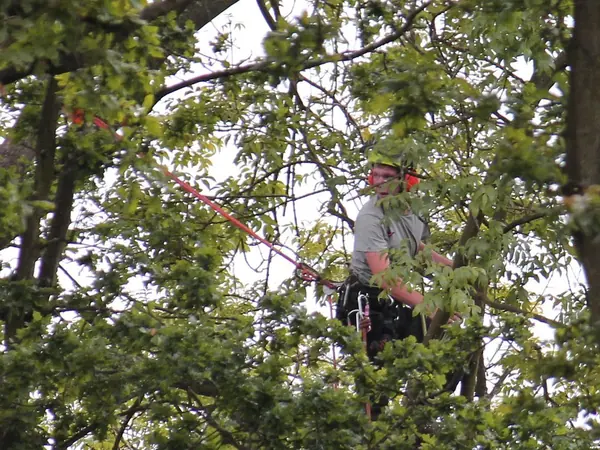
Representative photo. Check the retailer listing for the exact model, color and size.
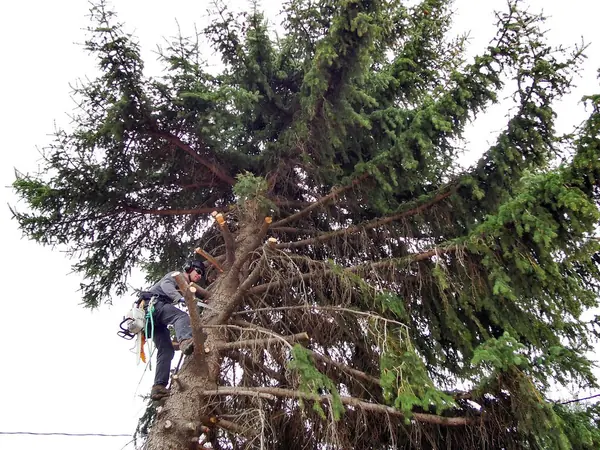
Photo: Tree Surgeon by Tim Sheerman-Chase, CC BY 2.0
A replacement webbing bridge for the Weaver Cougar saddle.
This Weaver Cougar replacement webbing bridge replaces the bridge on Weaver's Cougar climbing saddle. The bridge carries your climbing system and rubs against hardware all day, so it is usually the first part of a saddle to need replacing.
Your hitch, friction device, or ring slides along the bridge every time you move around the tree. That constant traffic, plus sap and grit, wears webbing faster than any other part of the saddle. On a saddle you use every day, a bridge can need replacing well before the rest of it.
Keeping a spare Weaver Cougar bridge in the truck means a worn one does not have to end your day or your saddle. Make sure it is the right part for your Cougar model. More spares are in our saddle parts and shoulder harnesses section.
Check the bridge length too. Bridge length changes where your hitch or device rides and how the saddle feels when you sit back, so replace it with the part Weaver specifies for the Cougar.
Fit the bridge exactly as Weaver's instructions show, with the correct routing through the saddle's attachment points and no twists. If you are unsure, have a competent person check it before you load it. The bridge is life-support equipment and must meet ANSI Z133 and the manufacturer's requirements.
Inspect it before every climb. Retire the bridge if you find cuts, fuzzing that exposes inner fibers, glazing from heat, stiff or discolored areas, or damaged stitching. Many climbers also date-mark their bridges so they know how long each one has been in service.
| Fits | Weaver Cougar saddle |
|---|---|
| Type | Replacement webbing bridge |
| Material | Webbing |
Specs are from the manufacturer's published figures where available. Confirm against the product listing before you buy.
There is no fixed interval. Replace it whenever inspection shows wear or damage, and follow Weaver's retirement guidance.
Only if Weaver approves that configuration for your saddle. Do not modify a saddle beyond what the manufacturer allows.
Pairs well with
Edelrid
An elastic chest harness that pairs with the TreeRex saddle for efficient ascent.
Weaver
A simple Weaver chest harness that keeps your saddle and ascent gear in position.
Tree Access
A simple chest harness that keeps your SRT ascent system tight and efficient.
Buckingham
A replacement bridge that keeps a Buckingham ErgoLite saddle in service.
Buckingham
Shoulder straps that retrofit to a Buckingham ErgoVation saddle.
Buckingham
A bridge for setting up an ErgoVation saddle for single-rope climbing.
Buckingham
Shoulder suspenders that carry tool weight on a compatible Buckingham saddle.
Edelrid
A replacement rope bridge for the Edelrid TreeRex saddle.
Weaver Cougar Replacement Webbing Bridge$35