Buckingham
Buckingham Agility Saddle
A Buckingham climbing saddle aimed at climbers who value freedom of movement.
Typical $380
 Saddles & Harnesses
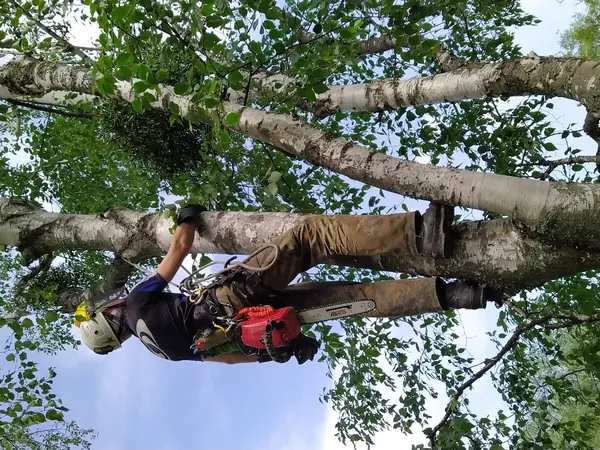
Representative photo. Check the retailer listing for the exact model, color and size.
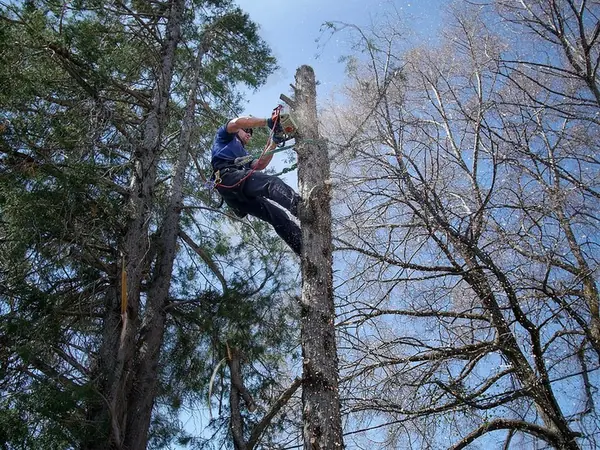
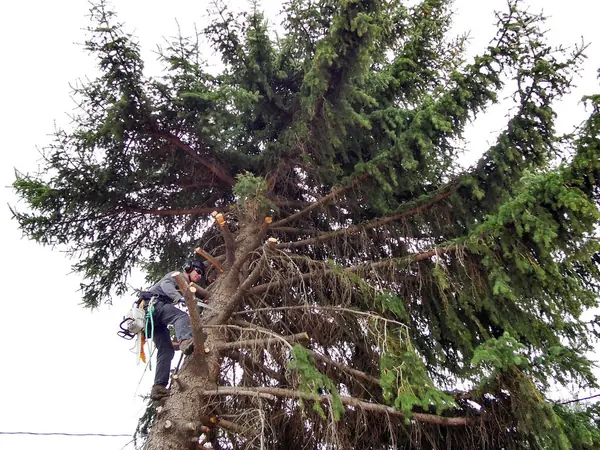
Photo: Arborist climbing on the tree by Yuliya Krasylenko, CC BY 4.0
A Weaver climbing saddle with two floating D-rings for flexible positioning.
The Weaver WLC-560 saddle is a tree climbing saddle fitted with two floating D-rings, which slide to follow your lanyard or flipline as you move around the stem. It suits climbers doing a lot of spur work and positioning on removals.
Fixed side D-rings pull your flipline from one spot, so the saddle twists when you lean around the trunk. Floating D-rings slide along the saddle, letting the lanyard load stay centered as you move and cut. On a long spar or a removal where you are constantly repositioning, that makes the saddle feel steadier and less tiring.
The WLC-560 pairs those rings with a padded body for days spent on spurs. Compare it with the WLC-530 and the Wideback in our Weaver saddles section.
Fit the saddle using Weaver's sizing and adjustment guidance so it sits snug on the hips. Use only a saddle that meets ANSI Z133 and the manufacturer's requirements, attach your climbing system only where Weaver allows, and get trained before you climb.
Inspect before every climb. Check that the floating D-rings move freely and show no cracks, wear grooves, or distortion, and look over the webbing, leather, and stitching for cuts, abrasion, or heat damage. Retire the saddle if anything is in doubt.
Floating rings wear where they slide, so look closely at the contact points on the rings and the saddle. Grooves, burrs, or sharp edges are reasons to take the saddle out of service.
| Model | WLC-560 |
|---|---|
| Type | Tree climbing saddle |
| D-rings | 2 floating |
Specs are from the manufacturer's published figures where available. Confirm against the product listing before you buy.
A D-ring mounted so it can slide along the saddle, letting your lanyard or flipline pull from the best angle as you move.
Yes. The floating D-rings make it well suited to spur work and frequent repositioning on removals.
Pairs well with
Buckingham
A Buckingham climbing saddle aimed at climbers who value freedom of movement.
Buckingham
A straightforward, supportive Buckingham saddle for working climbers.
Buckingham
A comfort-focused Buckingham saddle for climbers who log long hours aloft.
Petzl
A supportive tree care harness with a sliding bridge for all-day comfort.
Teufelberger
A semi-rigid, highly adjustable saddle for climbers who want support and options.
Edelrid
An elastic chest harness that pairs with the TreeRex saddle for efficient ascent.
Weaver
A simple Weaver chest harness that keeps your saddle and ascent gear in position.
DMM
DMM's Kinisi arborist saddle, built for climbers who spend all day in the tree.
Weaver WLC-560 Saddle with 2 Floating D-Rings$299