Buckingham
Buckingham Agility Saddle
A Buckingham climbing saddle aimed at climbers who value freedom of movement.
Typical $380
 Saddles & Harnesses
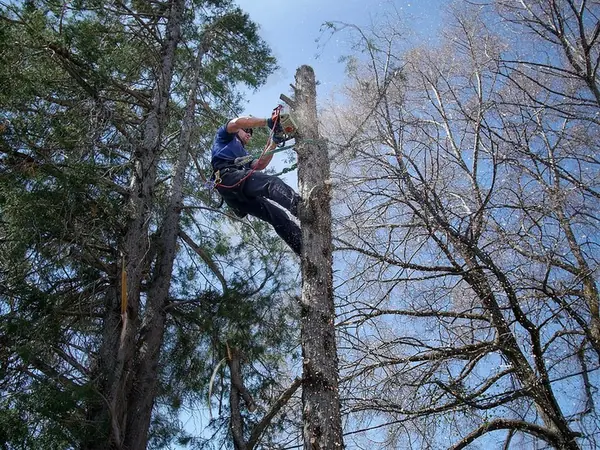
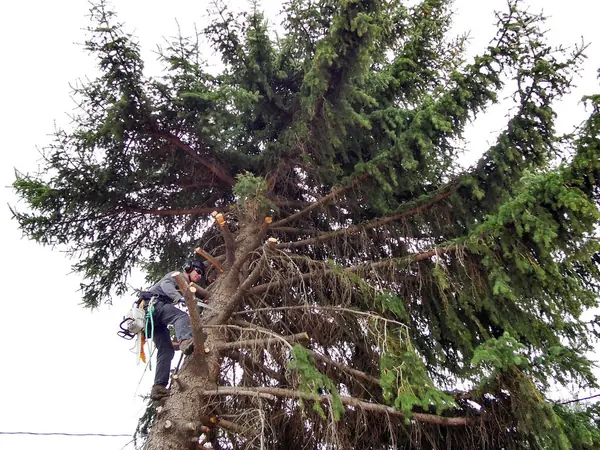
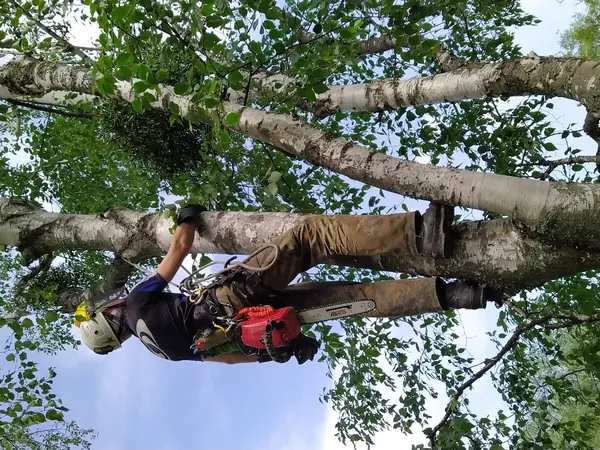
Representative photo. Check the retailer listing for the exact model, color and size.
Photo: Arborist climbing on the tree by Yuliya Krasylenko, CC BY 4.0
A Weaver tree-climbing harness for daily climbing and work positioning.
The Weaver Denali climbing harness is a tree climbing saddle for arborists who climb and position all day. Weaver has built saddles for tree workers for decades, and the Denali is a practical choice for climbers who want support and simple setup.
Your saddle is the one piece of gear you are attached to all day, so fit and comfort decide how you feel at quitting time. Look at how the waist and leg loops carry your weight when you sit back, how the attachment points line up with your climbing and positioning systems, and whether there is room to hang a saw, handsaw, and a few carabiners.
Compare the Denali with our other saddles and harnesses to find the right fit for your climbing style, whether that is mostly spurring removals or long pruning climbs.
Try the harness on with your usual clothing and gear loaded before you commit, since a saddle that fits empty can feel very different with a saw hanging from it.
Use the maker's sizing chart and adjust the harness so the waist sits snug above the hips and the legs do not pinch when you sit. Hang in it on the ground before climbing.
Check the label to confirm the harness is certified for the work you do. Inspect the webbing, stitching, buckles, and attachment points before every climb, and retire it if you find cuts, burns, or worn stitching. Treat it as life-support equipment: it must meet ANSI Z133 and the manufacturer's instructions, be inspected before every climb, and be used only by trained climbers.
| Brand | Weaver |
|---|---|
| Model | Denali |
| Type | Tree climbing harness |
| Sizes | See listing for sizing |
Specs are from the manufacturer's published figures where available. Confirm against the product listing before you buy.
Use Weaver's sizing chart for waist and leg measurements, then adjust and test it hanging on the ground.
Check the manufacturer's instructions for approved attachment points and configurations before setting up an SRS system.
Pairs well with
Buckingham
A Buckingham climbing saddle aimed at climbers who value freedom of movement.
Buckingham
A straightforward, supportive Buckingham saddle for working climbers.
Buckingham
A comfort-focused Buckingham saddle for climbers who log long hours aloft.
Petzl
A supportive tree care harness with a sliding bridge for all-day comfort.
Teufelberger
A semi-rigid, highly adjustable saddle for climbers who want support and options.
Edelrid
An elastic chest harness that pairs with the TreeRex saddle for efficient ascent.
Weaver
A simple Weaver chest harness that keeps your saddle and ascent gear in position.
DMM
DMM's Kinisi arborist saddle, built for climbers who spend all day in the tree.
Weaver Denali Climbing Harness$249