Buckingham
Buckingham Agility Saddle
A Buckingham climbing saddle aimed at climbers who value freedom of movement.
Typical $380
 Saddles & Harnesses
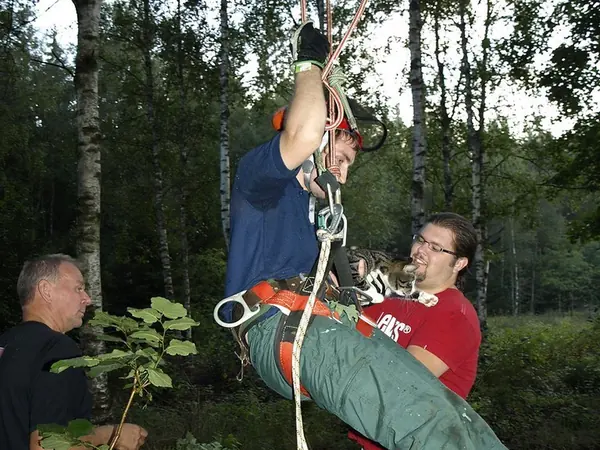
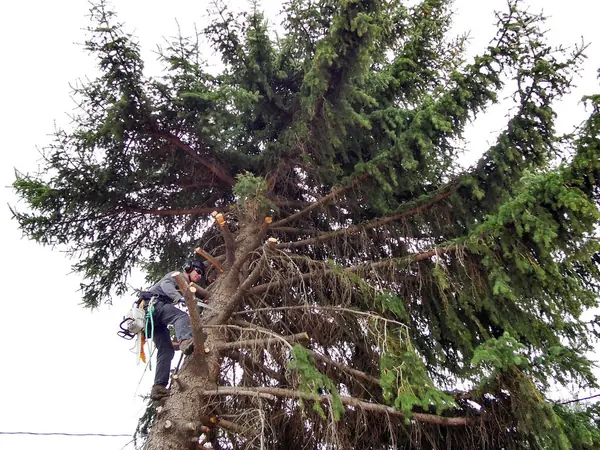
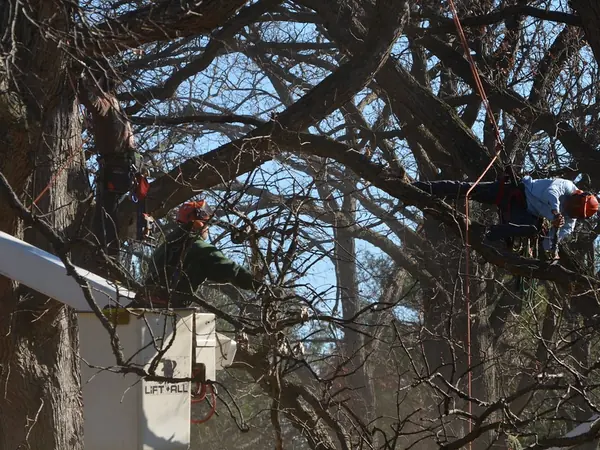
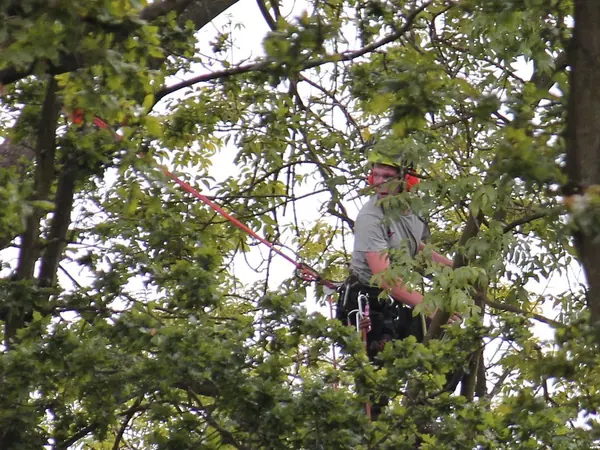
Representative photo. Check the retailer listing for the exact model, color and size.
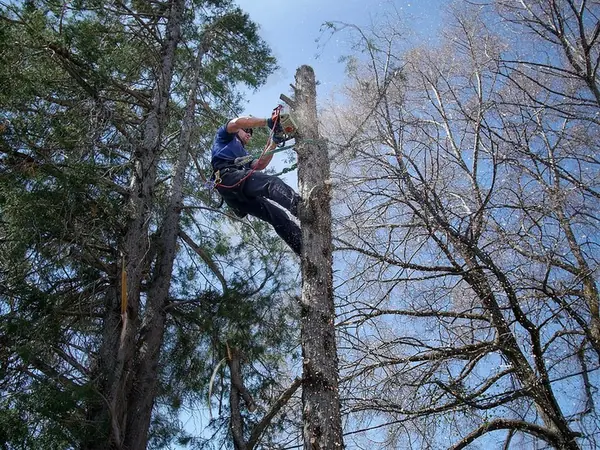
Photo: Tree Surgeon by Tim Sheerman-Chase, CC BY 2.0
A Weaver tree climbing saddle for daily work positioning.
The Weaver Stratus saddle is a tree climbing saddle from Weaver, a long-time name in arborist saddles. Like any saddle, fit and comfort matter most when you hang in it all day.
A climbing saddle is where you spend most of a work day, so fit and comfort matter as much as anything on the spec sheet. A good saddle spreads your weight across the waist and legs, keeps the bridge or attachment points where you can reach them, and carries the tools you need without getting in the way.
Weaver has made tree saddles for a long time, and many climbers like their straightforward, durable designs. Before ordering, check the sizing chart against your waist and leg measurements, and be honest about the clothing you wear in winter. If you can, hang in a saddle before you commit to it and check how the leg loops and waist belt feel when you lean back into your lanyard.
Think about how you climb. An SRT climber, a spur-heavy removal climber, and a pruning climber may want different attachment points and gear storage.
Adjust the saddle per Weaver's instructions and set up your gear loops so the tools you use most are easiest to reach. Compare other models in Weaver saddles.
Inspect webbing, stitching, buckles, D-rings, and the bridge or attachment points before every climb. Look for cuts, burns, chemical stains, worn stitching, and cracked or bent hardware. Keep the saddle clean, dry it away from direct heat, and store it out of the sun.
Life-support gear must meet the applicable standard, follow ANSI Z133 and the manufacturer's instructions, and be inspected before every climb. Get trained before you rely on it.
| Brand | Weaver |
|---|---|
| Type | Tree climbing saddle |
| Use | Work positioning |
Specs are from the manufacturer's published figures where available. Confirm against the product listing before you buy.
Use Weaver's sizing chart for this model and measure over the clothing you usually climb in.
Check Weaver's instructions for which parts, if any, are replaceable, and use only Weaver parts.
Pairs well with
Buckingham
A Buckingham climbing saddle aimed at climbers who value freedom of movement.
Buckingham
A straightforward, supportive Buckingham saddle for working climbers.
Buckingham
A comfort-focused Buckingham saddle for climbers who log long hours aloft.
Petzl
A supportive tree care harness with a sliding bridge for all-day comfort.
Teufelberger
A semi-rigid, highly adjustable saddle for climbers who want support and options.
Edelrid
An elastic chest harness that pairs with the TreeRex saddle for efficient ascent.
Weaver
A simple Weaver chest harness that keeps your saddle and ascent gear in position.
DMM
DMM's Kinisi arborist saddle, built for climbers who spend all day in the tree.
Weaver Stratus Saddle$399