
Gap Arborist Supply
3/8 in Eye Bolt for Tree Cabling
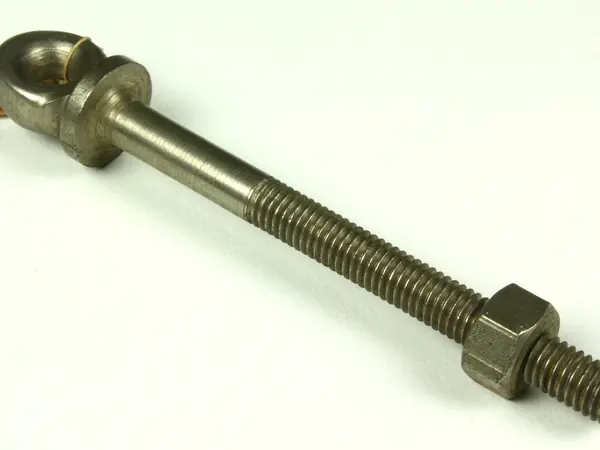
A 3/8 in eye bolt for anchoring light cabling systems in trees.
Typical $7
Tree cabling hardware anchors the cable to the tree. Eye bolts go through the limb for the strongest hold, while eye lags and J-lags thread into the wood for lighter loads or where through-bolting is not practical.
Gap Arborist Supply
A 3/8 in eye bolt for anchoring light cabling systems in trees.
Gap Arborist Supply
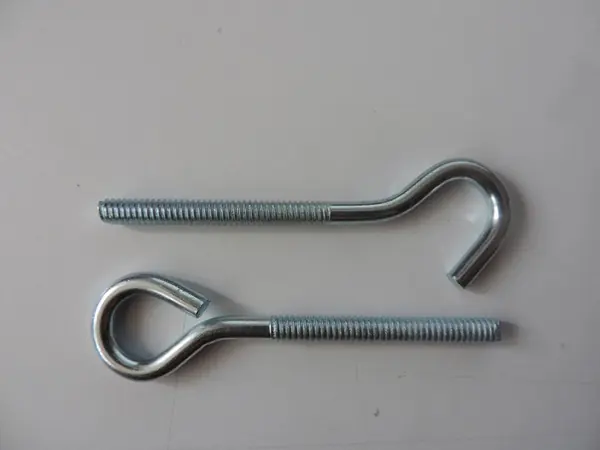
A galvanized lag eye for anchoring light cable systems in small to medium limbs.
Gap Arborist Supply
Hook-style lag anchors for cabling leads with a cable that wraps the J.
Gap Arborist Supply
A 1/2 in. turnbuckle for fine tension adjustment in guying and support systems.
Gap Arborist Supply
A 5/8 in. eye bolt anchor for through-bolted tree cabling systems.
Gap Arborist Supply
A forged eye nut that turns threaded rod into a cable anchor point.
Gap Arborist Supply
Galvanized washers to seat nuts and eyes on through-bolted cabling hardware.
Preformed Line Products
Helical dead-ends for fast, clean termination of steel support cable.
Rig Guy
Beveled washer that seats cabling hardware evenly on a rounded stem.
Rig Guy
Caps that finish off cable ends and hardware on a tree cabling install.
Rig Guy
Stop fitting that holds the wire at the hub in a Rig Guy cabling system.
Gap Arborist Supply
A 1/2 in through-bolt anchor for tree cabling and support systems.
Preformed Line Products
Wedge-style dead-end grips for terminating steel strand in tree cabling systems.
Rig Guy
Central hub that joins up to four cable runs in multi-lead cabling layouts.
Nothing matches those filters. Try another brand or raise the price limit.
Buying guide
Through-bolted eye bolts with washers and nuts are the strongest anchor and are used for larger limbs and higher loads. Lag-type anchors are faster to install and suit smaller limbs. Match the hardware size to the cable and follow ANSI A300 guidance on placement and hole size.
Galvanized hardware resists corrosion. For guy wires for trees during planting, use soft straps and earth anchors rather than hardware driven into the trunk.
Drill holes to the size the hardware maker and ANSI A300 call for, and place anchors in sound wood, avoiding decay and cracks. Align the anchor with the cable so it pulls straight rather than bending the shank. Use the same metal type across the system to avoid corrosion where parts touch.
Record the hardware type, size and location for each tree. That makes follow-up inspections faster and lets the next arborist understand the system. Galvanized eye lag screws and J-lags are handy for small, lighter systems; through-bolted eye bolts are the go-to on bigger limbs and higher loads.
Eye bolts through the limb hold more and are preferred on larger limbs. Lags are for smaller limbs and lighter systems.