Gap Arborist Supply
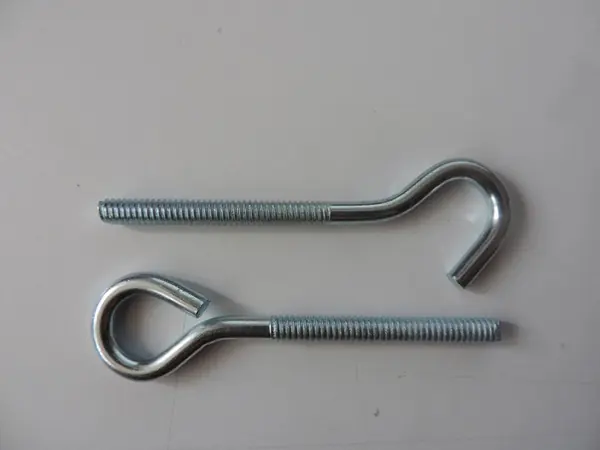
3/8 in Eye Bolt for Tree Cabling
A 3/8 in eye bolt for anchoring light cabling systems in trees.
Typical $7
 Cabling Hardware
Representative photo. Check the retailer listing for the exact model, color and size.
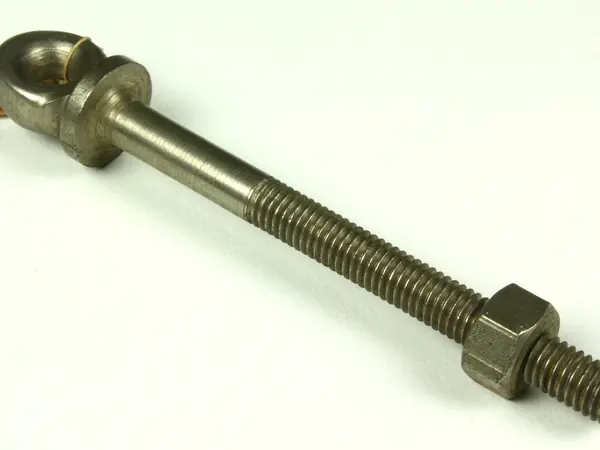
Photo: Eye Bolt - Basil Watson's Sopwith-Type Biplane, Melbourne, Victoria, 1916 by Photographer: David Thompson, CC BY 4.0
Helical dead-ends for fast, clean termination of steel support cable.
Preformed Line Products dead-end cable grips terminate steel strand with helically formed rods that wrap around the cable. In tree cabling they make a quick, tidy termination at the anchor eye.
A dead-end grip is a set of preformed helical rods. You loop it around a thimble in the anchor eye and wrap both legs onto the cable. The helix grips the strand along its length, spreading the load without clamps or hand splices.
Each grip is made for a specific cable diameter and type. A grip on the wrong size cable will not hold its rated load. Check the color code or marking on the grip against the cable you are installing.
Dead-end grips have become common in tree cabling because they are quick to install aloft and do not depend on the installer's splicing skill. They do still need to be applied correctly, so practice on the ground before using them in a tree.
Use a thimble at the eye, wrap the legs fully onto the cable and do not reuse grips once they have been applied and removed unless the maker allows it. Leave enough cable tail as the instructions show. Inspect at each check for corrosion, slipping and wear at the eye. Cabling and bracing is structural work on a living tree. It should be specified and installed by a trained arborist following ANSI A300 Part 3, ANSI Z133 and the hardware maker's instructions, and inspected on a regular schedule after install. Find the rest of the hardware in our cabling hardware section.
| Brand | Preformed Line Products |
|---|---|
| Type | Helical dead-end grip |
| Sizes | Match to cable diameter and type |
Specs are from the manufacturer's published figures where available. Confirm against the product listing before you buy.
Follow the maker's instructions. Many helical dead-ends are not meant to be reused after they have been removed.
Yes, a thimble at the anchor eye protects the grip and cable from a sharp bend and wear.
Pairs well with
Gap Arborist Supply
A 3/8 in eye bolt for anchoring light cabling systems in trees.
Gap Arborist Supply
A galvanized lag eye for anchoring light cable systems in small to medium limbs.
Gap Arborist Supply
Hook-style lag anchors for cabling leads with a cable that wraps the J.
Gap Arborist Supply
A 1/2 in. turnbuckle for fine tension adjustment in guying and support systems.
Gap Arborist Supply
A 5/8 in. eye bolt anchor for through-bolted tree cabling systems.
Gap Arborist Supply
A forged eye nut that turns threaded rod into a cable anchor point.
Gap Arborist Supply
Galvanized washers to seat nuts and eyes on through-bolted cabling hardware.
Rig Guy
Beveled washer that seats cabling hardware evenly on a rounded stem.
Preformed Line Products Dead-End Cable Grips$8