Gap Arborist Supply
3/8 in Eye Bolt for Tree Cabling
A 3/8 in eye bolt for anchoring light cabling systems in trees.
Typical $7
 Cabling Hardware
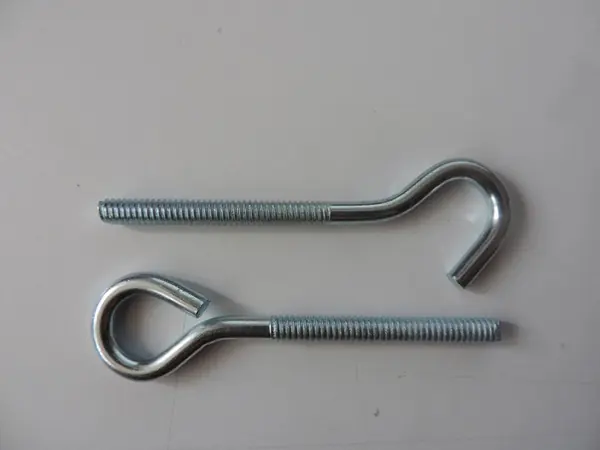
Representative photo. Check the retailer listing for the exact model, color and size.
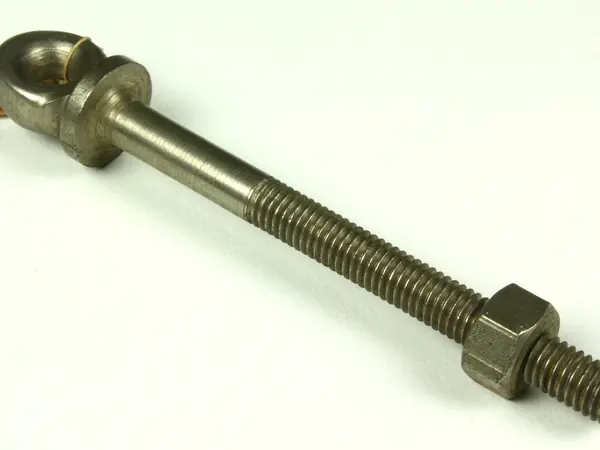
Photo: Eye Bolt - Basil Watson's Sopwith-Type Biplane, Melbourne, Victoria, 1916 by Photographer: David Thompson, CC BY 4.0
A galvanized lag eye for anchoring light cable systems in small to medium limbs.
This galvanized eye lag screw threads straight into sound wood and gives you a closed eye to terminate a cable on. It is the simple anchor for light cabling jobs in smaller leads where a through-bolt would be overkill. The galvanized finish holds up to weather while the tree closes wood around the shank.
A cable system is only as good as its anchors. The galvanized eye lag screw is the lightest anchor in the cabling kit: you drill a pilot hole, thread the lag into sound wood until the eye sits just proud of the bark, and terminate your cable on the eye with a thimble or a preformed dead-end.
Because it goes in from one side, a lag eye is quick to set from a climbing position or out of a bucket. That makes it a good fit for light cabling in younger trees and smaller codominant leads, where you want support without drilling all the way through the stem.
Browse the rest of the anchors, cable and dead-ends in our cabling hardware section.
Lag eyes are also handy beyond cabling. Crews use them to anchor guying on transplanted trees, to hang a light support for a leaning ornamental, or as a fixed point for a brace on a fence line tree. In each case the logic is the same: sound wood, a straight pilot hole, and a load that pulls in line with the shank.
Lags rely on thread engagement in the wood, so they are rated lower than a through-bolt with a washer and nut on the far side. On bigger leads, heavier loads, or wood with any question about soundness, step up to a through-bolt or a J-lag sized for the job.
Read the load ratings published by the hardware maker and match the anchor to the cable you are installing. The current reference for cabling and bracing in the US is ANSI A300 Part 3. If you are new to cabling, learn it from someone who installs systems regularly before you put a lag in a client's tree.
Think about the whole system, not just the anchor. Cable, termination and anchor should all be sized to work together, and the weakest piece sets the real capacity. A heavy cable on a light lag gives you a false sense of security.
Drill a pilot hole sized to the lag's root diameter, in line with the direction the cable will pull. A lag set at an angle to the cable gets side-loaded at the eye. Thread it in with a bar through the eye and stop when the eye is just clear of the bark so the tree can grow without engulfing the termination too soon.
Inspect the tree before you drill. Do not set anchors in decay, cracks or included bark. Plan to re-inspect the system on a regular schedule, because trees grow, cables loosen, and hardware that was right five years ago may need adjustment.
Keep a small kit together for cabling days: a selection of lag eyes, a long auger bit sized for the pilot, a bar or large screwdriver to turn the eye, thimbles, dead-ends and a tape to measure the leads. Having it all in one bag means fewer trips down the rope.
Write down what you installed, where, and when. A simple record on the work order lets the next inspection check that the anchor, cable and tension are still doing their job, and gives the client a reason to have the system looked at on schedule.
| Type | Eye lag screw (lag eye) |
|---|---|
| Material | Galvanized steel |
| Thread | Lag thread, single-side install |
| Eye | Closed eye |
| Typical use | Light-duty cable anchors in small to medium leads |
| Standard | Install per ANSI A300 Part 3 and the hardware maker's instructions |
Specs are from the manufacturer's published figures where available. Confirm against the product listing before you buy.
Size the lag to the cable and the lead. Lags are for light systems in smaller leads. Check the maker's ratings and ANSI A300 Part 3, and move to a through-bolt when the load or limb size calls for it.
Yes. Drill a pilot hole close to the root diameter of the thread so the lag pulls in straight without splitting the wood or stripping out.
Leave the eye just clear of the bark. Too far out adds leverage on the shank; flush means the tree swallows the termination quickly.
Use hardware sold for tree support with published ratings. Light-duty eye screws with bent or open eyes are not made for the loads a cable system sees.
Pairs well with
Gap Arborist Supply
A 3/8 in eye bolt for anchoring light cabling systems in trees.
Gap Arborist Supply
Hook-style lag anchors for cabling leads with a cable that wraps the J.
Gap Arborist Supply
A 1/2 in. turnbuckle for fine tension adjustment in guying and support systems.
Gap Arborist Supply
A 5/8 in. eye bolt anchor for through-bolted tree cabling systems.
Gap Arborist Supply
A forged eye nut that turns threaded rod into a cable anchor point.
Gap Arborist Supply
Galvanized washers to seat nuts and eyes on through-bolted cabling hardware.
Preformed Line Products
Helical dead-ends for fast, clean termination of steel support cable.
Rig Guy
Beveled washer that seats cabling hardware evenly on a rounded stem.
Galvanized Eye Lag Screw$12