Gap Arborist Supply
3/8 in Eye Bolt for Tree Cabling
A 3/8 in eye bolt for anchoring light cabling systems in trees.
Typical $7
 Cabling Hardware
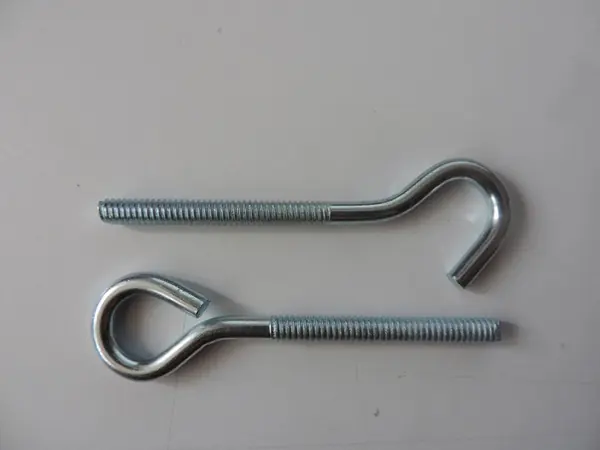
Representative photo. Check the retailer listing for the exact model, color and size.
Photo: Eye Bolt - Basil Watson's Sopwith-Type Biplane, Melbourne, Victoria, 1916 by Photographer: David Thompson, CC BY 4.0
A 1/2 in through-bolt anchor for tree cabling and support systems.
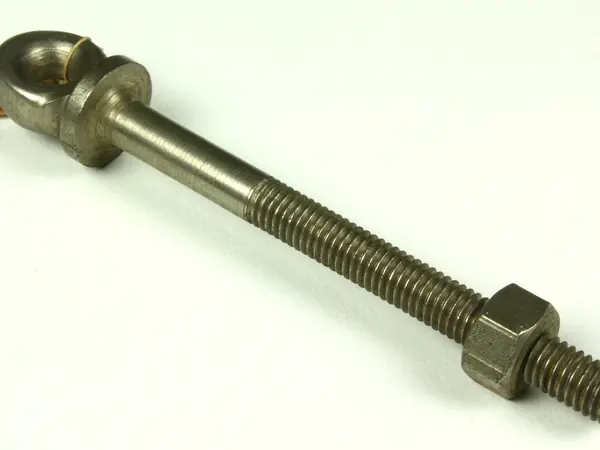
A 1/2 in eye bolt for tree cabling is a through-bolt anchor that passes through the limb and gives the cable a strong attachment point. It is one of the standard anchors for steel cable systems on medium-sized leaders.
In a steel cable system, each end of the cable needs a solid anchor in the tree. A through-bolted eye bolt is one of the most common: you drill straight through the limb, run the bolt through, and secure it with a washer and nut on the far side. The cable then attaches to the eye, usually with a thimble and a preformed dead-end grip or wire rope clips.
The 1/2 in size suits a range of medium leaders. Larger stems and heavier loads call for bigger hardware. Find matching cable and fittings in our cabling hardware section.
Eye bolts are typically galvanized or otherwise corrosion-resistant so they hold up in the tree for years. Check the listing for the bolt length and whether a nut and washer are included.
Choose the bolt length to pass fully through the limb with enough thread for the washer and nut. Drill a hole matched to the bolt, set the eye in line with the cable, and avoid drilling into decay.
Cabling should be designed and installed by a qualified arborist following ANSI A300 and ANSI Z133. Inspect systems regularly and keep records.
Plan the cable height and anchor spacing before drilling; once a hole is in the tree it cannot be undone.
| Diameter | 1/2 in |
|---|---|
| Type | Eye bolt (through-bolt anchor) |
| Use | Tree cabling and bracing |
Specs are from the manufacturer's published figures where available. Confirm against the product listing before you buy.
Long enough to pass through the limb at the install point with room for the washer and nut. Measure the stem diameter where you will drill.
Some synthetic systems use their own anchors. Follow the cable maker's instructions for compatible hardware.
Pairs well with
Gap Arborist Supply
A 3/8 in eye bolt for anchoring light cabling systems in trees.
Gap Arborist Supply
A galvanized lag eye for anchoring light cable systems in small to medium limbs.
Gap Arborist Supply
Hook-style lag anchors for cabling leads with a cable that wraps the J.
Gap Arborist Supply
A 1/2 in. turnbuckle for fine tension adjustment in guying and support systems.
Gap Arborist Supply
A 5/8 in. eye bolt anchor for through-bolted tree cabling systems.
Gap Arborist Supply
A forged eye nut that turns threaded rod into a cable anchor point.
Gap Arborist Supply
Galvanized washers to seat nuts and eyes on through-bolted cabling hardware.
Preformed Line Products
Helical dead-ends for fast, clean termination of steel support cable.
1/2 in Eye Bolt for Tree Cabling$14