Gap Arborist Supply
3/8 in Eye Bolt for Tree Cabling
A 3/8 in eye bolt for anchoring light cabling systems in trees.
Typical $7
 Cabling Hardware
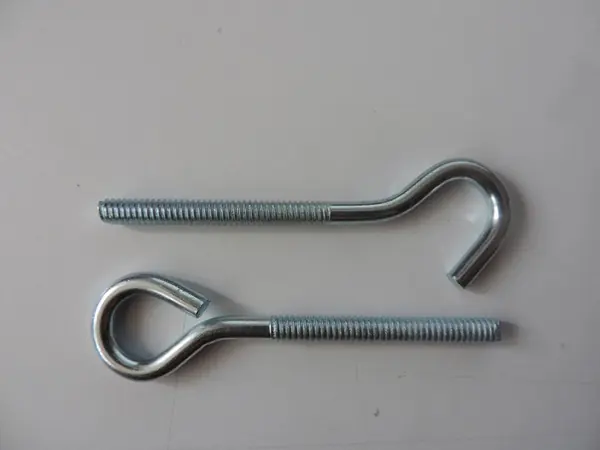
Representative photo. Check the retailer listing for the exact model, color and size.
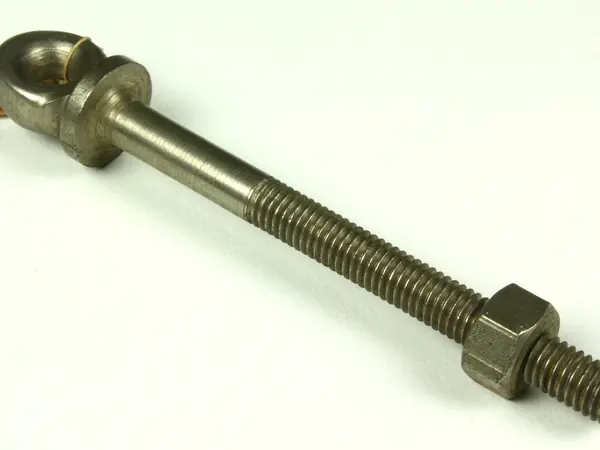
Photo: Eye Bolt - Basil Watson's Sopwith-Type Biplane, Melbourne, Victoria, 1916 by Photographer: David Thompson, CC BY 4.0
Wedge-style dead-end grips for terminating steel strand in tree cabling systems.
Preformed Line Products wedge grips are dead-end grips used to terminate steel strand when installing static cabling in trees. They grab the strand as load comes on, giving a quick, consistent termination that pairs with eye bolts or lag hooks.
In a static cabling system, steel strand runs between anchors in two leaders to limit how far they can move apart. Each end of the strand needs a termination. A wedge grip does this by clamping the strand inside a tapered body, so the harder the strand pulls, the tighter the grip holds.
Compared with hand-wrapped dead ends or clamps, a wedge grip is quick to install and gives a consistent result from tree to tree. Compare other cabling hardware for eye bolts, thimbles, and strand.
Wedge grips are common in static steel cabling, where the strand runs between eye bolts or lag hooks set in each leader. Because the grip is quick to install, it saves time when you are working off a lanyard high in the crown, but the job still needs the same care in anchor placement, strand tension, and hardware selection as any cabling install.
Match the grip to the exact strand size you are installing, and follow ANSI A300 cabling standards and the manufacturer's installation steps. Use a thimble where the grip bears on an eye to protect the hardware.
Inspect cabling systems on a regular schedule for wear, corrosion, and changes in the tree. Cabling should be designed and installed by a qualified arborist.
| Type | Wedge dead-end grip |
|---|---|
| Brand | Preformed Line Products |
| Use | Steel strand tree cabling |
| Sizing | Match to strand diameter (check listing) |
Specs are from the manufacturer's published figures where available. Confirm against the product listing before you buy.
No. Each grip is made for a specific strand diameter. Use the size that matches the strand you are installing.
Follow the manufacturer's instructions for the system you are using. A thimble is often used where the termination wraps an eye.
Pairs well with
Gap Arborist Supply
A 3/8 in eye bolt for anchoring light cabling systems in trees.
Gap Arborist Supply
A galvanized lag eye for anchoring light cable systems in small to medium limbs.
Gap Arborist Supply
Hook-style lag anchors for cabling leads with a cable that wraps the J.
Gap Arborist Supply
A 1/2 in. turnbuckle for fine tension adjustment in guying and support systems.
Gap Arborist Supply
A 5/8 in. eye bolt anchor for through-bolted tree cabling systems.
Gap Arborist Supply
A forged eye nut that turns threaded rod into a cable anchor point.
Gap Arborist Supply
Galvanized washers to seat nuts and eyes on through-bolted cabling hardware.
Preformed Line Products
Helical dead-ends for fast, clean termination of steel support cable.
Preformed Line Products Wedge Grips$12