Weaver
Weaver Two-Man Bucket Truck Cover
A cover for two-man aerial buckets that keeps weather and debris out.
Typical $169
 Bucket Truck Accessories
Representative photo. Check the retailer listing for the exact model, color and size.
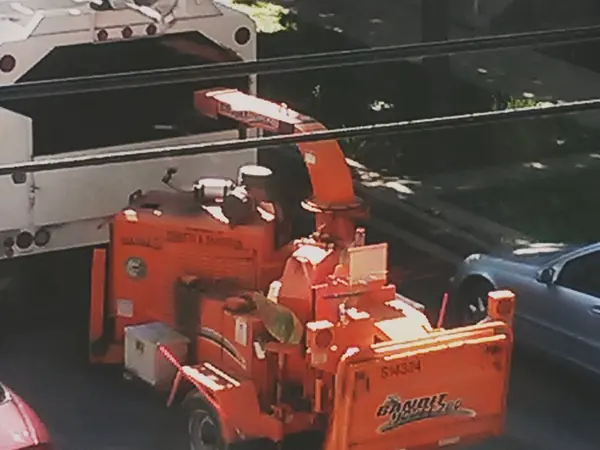
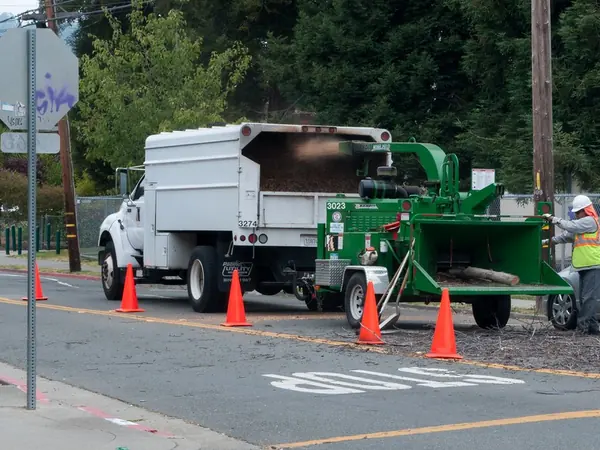
Photo: Man operating wood chipper on Milvia St in Berkeley by D Coetzee, CC0
Composite outrigger pads that spread the load under bucket trucks and cranes.
Bigfoot outrigger pads go under the feet of a bucket truck, crane or knuckle-boom outrigger to spread the load over a larger area. That keeps the machine level and stable on soft ground and protects lawns, driveways and pavers from punched-in dents.
A bucket truck or crane puts a huge point load on each outrigger foot. On soft lawn, wet ground or thin asphalt, a foot can sink or punch through, and a machine that settles mid-lift is a serious hazard. Pads spread that load, so the ground pressure drops and the machine stays where you set it.
Composite Bigfoot crane pads also do not rot, soak up water or split like wood cribbing, and they clean off with a hose.
Composite pads are also lighter to handle than steel plates, so one person can usually set and pick up pads without a struggle.
Size pads to the machine and the ground. Larger pads are needed for heavier machines and softer soils. Check the equipment manufacturer's requirements and do not exceed the pad's rating. Center the outrigger foot on the pad, set it on firm, level ground where you can, and recheck after the first lift.
Inspect pads for cracks and deep gouges and replace damaged ones. See more bucket truck accessories and ground protection mats.
Keep the pads with the truck at all times, not in the shop. The day you leave them behind is the day the ground turns out softer than it looked.
| Type | Outrigger pad |
|---|---|
| Material | Composite |
| Use | Bucket trucks, cranes, lifts |
Specs are from the manufacturer's published figures where available. Confirm against the product listing before you buy.
It depends on the machine's outrigger load and the ground conditions. Follow the equipment maker's guidance and the pad's rated capacity.
They do not rot or absorb water, they are easy to clean and they last longer, though they cost more up front.
Pairs well with
Weaver
A cover for two-man aerial buckets that keeps weather and debris out.
Gap Arborist Supply
A heavy-duty wheel chock for tree trucks, chippers and trailers.
Gap Arborist Supply
A fiberglass bucket protector with a built-in step for aerial lift work.
Gap Arborist Supply
Hook-on step for getting in and out of a bucket or truck bed safely.
Weaver
Fitted cover that keeps rain and debris out of a one-man aerial bucket.
Estex
A fitted cover with a stiffening insert for 28 x 34 in one-man aerial lift buckets.
Gap Arborist Supply
Vinyl cover with a foam insert that keeps a one-man bucket dry and clean.
Gap Arborist Supply
Laminated Baltic birch pads to spread outrigger loads on soft ground.
Bigfoot Composite Outrigger Pads$199