Gap Arborist Supply
Ground Protection Mats, 3' x 8'
A 3 x 8 foot HDPE mat for protecting turf and soft ground on tree jobs.
Typical $249
 Ground Mats
Representative photo. Check the retailer listing for the exact model, color and size.
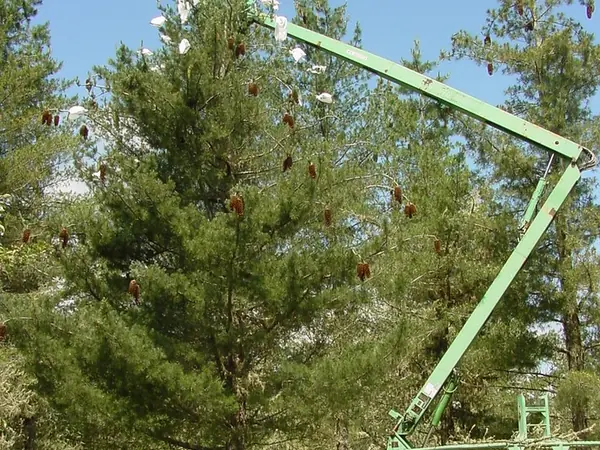
Photo: WINTERHAVEN GETTING READY by bill85704, CC BY 2.0
HDPE ground mats that keep trucks and equipment from rutting a client's yard.
Ground mats are the difference between leaving a clean yard and leaving a muddy mess with ruts that need regrading. These HDPE ground protection mats give your trucks, loaders and stump grinders a temporary roadway over turf and soft ground, and they lift and move as the job progresses.
Most residential tree removals happen in a back yard. Getting a loader, chip truck or stump grinder back there means crossing lawn, irrigation and sometimes pavers. Without protection, one wet day can leave ruts that take a landscaper a week to fix. A ground protection mat spreads the load so the ground under it barely notices.
Mats also save time. Instead of hand-carrying brush across a soft lawn, you can bring the machine to the work. That alone pays for a set of mats over a season.
Clients notice, too. Showing up with mats tells a homeowner you plan to leave the yard the way you found it, and that is often what wins the next job.
Mats come in several sizes, from lighter 3 x 8 foot sheets that one or two people can carry to 4 x 8 foot sheets and larger. Thicker, larger mats carry heavier loads but take more effort to move. Think about your heaviest regular machine, the gates and side yards you squeeze through, and how many mats you need to lay a path.
Ground protection mats for heavy equipment come with load ratings. Use them, and match the mat to the machine. Track mats work for tracked loaders and compact equipment, but check the rating before running heavy wheeled trucks across them.
If you only own a few mats, buy the size you can handle on every job rather than the biggest you can afford. Mats left in the truck because they are too heavy do not protect any lawns.
Plan the route before the equipment shows up. Lay mats on ground as level as you can, connect or overlap them so edges cannot kick up, and keep turns gentle. Sharp turns with tracked machines can scuff turf even through mats. Leapfrog mats forward as you go if the path is longer than your set.
When the job is done, pull the mats, rake out any flattened grass and hose the mats off before loading. Mud on a mat goes onto the next client's driveway otherwise.
On slopes, run the mats straight up and down where you can, and be careful when they are wet or icy. HDPE can get slick, and a loaded machine sliding sideways is dangerous. Keep ground workers clear of mats while equipment is moving on them, since an edge can flip up under a wheel.
Store mats flat or upright on edge so they do not warp. HDPE handles weather well, but long periods in hot sun on an uneven surface can distort them. Check connectors and edges for cracks. For a lighter, easier-to-handle option, see the 3 x 8 ground protection mats, and pair mats with outrigger pads for bucket truck setups.
| Material | HDPE |
|---|---|
| Surface | Traction tread |
| Use | Turf, soft ground and hardscape protection |
| Equipment | Trucks, loaders, stump grinders, lifts |
| Load rating | See listing for each size |
Specs are from the manufacturer's published figures where available. Confirm against the product listing before you buy.
It depends on size and thickness. Check the load rating for each mat against your heaviest machine.
Short-term placement usually leaves grass flattened but intact. Avoid leaving mats down for days in hot weather, and turn machines gently.
Yes. Mats also help protect hardscape from outrigger and track damage.
Pairs well with
Gap Arborist Supply
A 3 x 8 foot HDPE mat for protecting turf and soft ground on tree jobs.
ArborMats
Ground mats that keep trucks and machines from rutting lawns on tree jobs.
Bigfoot
Composite outrigger pads that spread the load under bucket trucks and cranes.
Weaver
A cover for two-man aerial buckets that keeps weather and debris out.
Gap Arborist Supply
A heavy-duty wheel chock for tree trucks, chippers and trailers.
Gap Arborist Supply
A bucket-mounted saw holder that keeps a chainsaw secure and in reach aloft.
Gap Arborist Supply
A 6-foot self-retracting web lanyard for fall protection at height.
Petzl
A single-leg energy-absorbing lanyard for fall arrest at height.
Ground Protection Mats$329