Grounds Keeper
Grounds Keeper Rake Replacement Handle
Replacement handle that puts a broken Grounds Keeper rake back in service.
Typical $29
 Landscaper Tools
Representative photo. Check the retailer listing for the exact model, color and size.
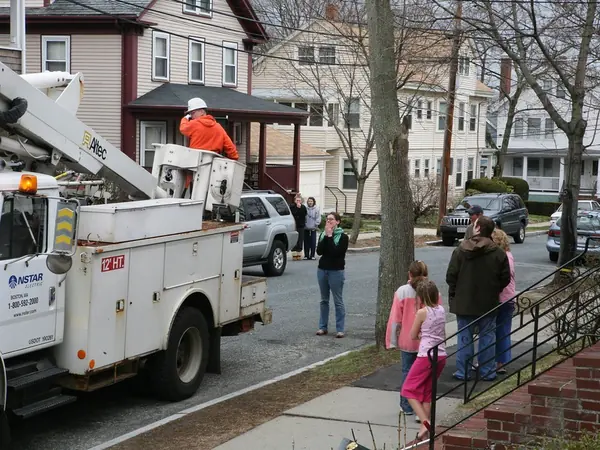
Photo: bucket truck and snowy trees by BryanAlexander, CC BY 2.0
Stiff-tined scrape rake that cleans chips and twigs out of lawns after tree work.
The Grounds Keeper is a scrape rake built for cleanup: its stiff, closely spaced tines pull wood chips, sawdust, twigs and leaves out of turf in a way a leaf rake cannot. Tree crews use it to leave a yard cleaner than they found it.
The last half hour of a removal decides what the customer remembers. Sawdust piles under the bucking area, chips blown out of the chipper chute and small twigs stuck in the grass all make a yard look worked over. A leaf rake rides over the top of that mess. A scrape rake digs in.
The Grounds Keeper uses stiff spring tines set close together. They comb down into the thatch, flick out chips and twigs, and pull everything into a pile without tearing up healthy turf when used with a light hand. Crews that try one usually end up buying one for every truck.
It is not just for lawns. Crews use it to pull chips out of mulch beds, rake sawdust off patios before blowing, and clean up the small stuff around a stump after grinding. Anything small and annoying that a leaf rake leaves behind, this rake tends to catch.
Work in short pulls toward a tarp or the pile, rather than long sweeping strokes. Let the tines do the work. Pressing down hard tears grass and wears tines faster. On sawdust, rake first, then finish with a blower such as the Husqvarna 125B to clear what is left on driveways and beds.
It also works well on gravel driveways where chips land, for pulling debris out of shrub beds and for spreading mulch. On hard surfaces, use a lighter touch to avoid scraping the tines across concrete.
Lay a tarp down before you start and rake onto it. A tarp drags easily to the chipper or the truck and saves a lot of bending over with a pitchfork. For big jobs, two people raking toward the same tarp clears a yard fast.
Rakes take a beating on a tree crew. Handles snap when someone uses them as a pry bar, and tines get bent on roots and curbs. The Grounds Keeper is designed so you can replace parts rather than the whole tool. Replacement tines and a replacement handle are sold separately, so one rake head can last for years.
Check the tines regularly. Bent tines can often be straightened by hand, but cracked or broken tines should be swapped so the rake keeps cleaning evenly.
Buying wear parts instead of whole tools also cuts down on what ends up in the dumpster at the end of the season, and it means every rake on the truck works the same way.
Store the rake on a rack or in a tube on the truck where it will not get run over or bent under logs. Knock off sap and mud at the end of the day and check that the head is still tight on the handle. A loose head wastes effort with every pull.
Wear gloves when raking cleanup debris. Splinters, thorns and hidden glass are common in yards, and gloves make long cleanup sessions easier on your hands.
At the end of the season, check the tine fasteners and the handle joint and replace anything worn before spring. Starting the busy season with a tight, straight rake saves time on every job.
| Type | Scrape rake, complete with handle |
|---|---|
| Tines | Spring steel, replaceable |
| Handle | Replaceable |
| Use | Cleanup of chips, sawdust, twigs, leaves |
| Brand | Grounds Keeper |
Specs are from the manufacturer's published figures where available. Confirm against the product listing before you buy.
A rake with stiff, closely spaced tines that digs into grass and pulls out small debris like chips, sawdust and twigs.
Used with light, short strokes it removes debris without much damage. Heavy pressure can tear grass.
Yes. Replacement tines and handles are sold separately so you can rebuild the rake instead of replacing it.
Pairs well with
Grounds Keeper
Replacement handle that puts a broken Grounds Keeper rake back in service.
Grounds Keeper
Spring steel replacement tines that restore a worn Grounds Keeper rake.
Hasegawa
Japanese aluminum tripod ladder for pruning, hedges and orchard work.
Corona
A sturdy steel leaf rake for cleaning up after tree work and landscaping.
Husqvarna
Battery-powered 4-gallon backpack sprayer for plant health and landscape work.
Husqvarna
Square-profile string trimmer line for clean cuts in grass and weeds.
Husqvarna
Tough, long-wearing trimmer line for crews who clean up heavy growth after the tree work.
Husqvarna
Dependable everyday trimmer line for cleanup around the jobsite.
Grounds Keeper Rake, Complete$69