Gap Arborist Supply
Helmet Ear Muff
Clip-on ear muffs for slotted helmets, for saw, chipper and grinder work.
Typical $32
 Hearing Protection
Representative photo. Check the retailer listing for the exact model, color and size.
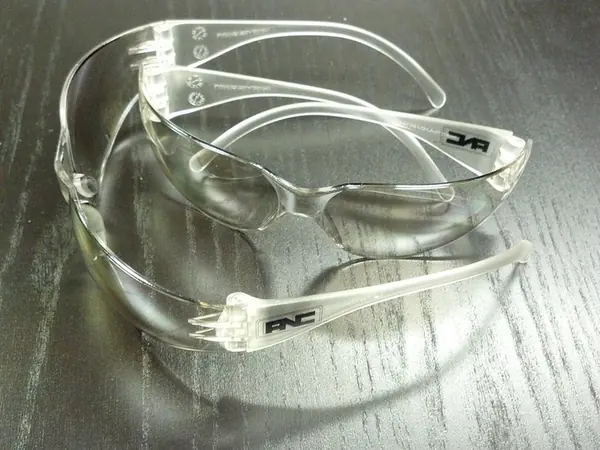
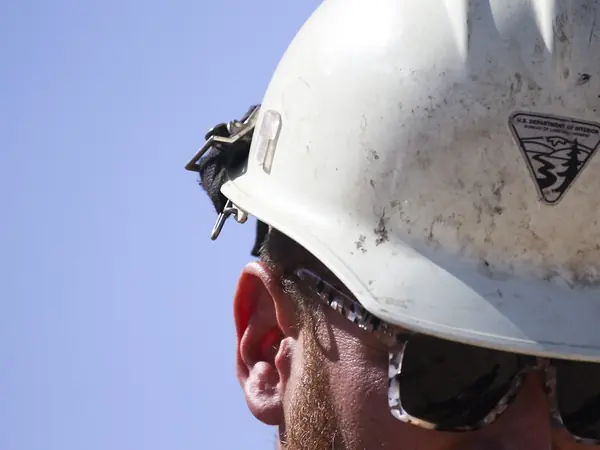
Photo: MAY 18 Close-up of helmet and safety glasses by National Interagency Fire Center, Public domain
Over-the-head hearing protection from 3M Peltor for ground crews.
3M Peltor over-the-head earmuffs are simple hearing protectors for ground crews running saws, chippers, and stump grinders. They are quick to put on and take off between tasks.
Chainsaws, chippers, and stump grinders are loud enough to cause permanent hearing loss over time. Earmuffs are the simplest fix: they go on in a second and come off when you need to talk to the crew.
Over-the-head muffs suit ground workers who are not wearing a helmet. If you wear a helmet all day, a helmet-mounted muff is usually a better fit.
Wear hearing protection whenever you are near running saws, chippers, or grinders, not just when you are running them yourself. Ground workers feeding a chipper or bucking near a felling cut get almost the same noise exposure as the operator. Keep spare muffs on the truck so nobody goes without.
Push hair away from the cushions, keep glasses temples thin, and check the cushions for cracks. Replace cushions and foam inserts when they harden or flatten, since a poor seal lets noise in.
Hearing loss from noise is gradual and permanent, so the habit matters more than any single day. Make muffs part of the kit you put on before starting any power equipment.
See other hearing protection. Check the noise reduction rating on the product label and match it to your exposure.
| Brand | 3M |
|---|---|
| Line | Peltor |
| Style | Over-the-head earmuff |
Specs are from the manufacturer's published figures where available. Confirm against the product listing before you buy.
Over-the-head muffs usually do not fit well under a helmet. Choose a helmet-mounted model for that.
It depends on your exposure. Check the NRR on the product label and your employer's hearing conservation program.
Pairs well with
Gap Arborist Supply
Clip-on ear muffs for slotted helmets, for saw, chipper and grinder work.
Husqvarna
Replacement cushions and foam inserts that bring tired Husqvarna muffs back to spec.
3M
Slot-mount Peltor muffs for crews who live under a helmet all day.
Husqvarna
Helmet-mounted hearing protection from Husqvarna for saw operators.
LAND
Vented climbing-style helmet for climbers who want airflow on hot days aloft.
LAND
Non-vented Class E, Type 2 helmet for line clearance and general tree crew work.
LIFT Safety
Fresh comfort pads for the LIFT Radix helmet when the old ones are flat or worn.
LIFT Safety
Replacement suspension for the LIFT Radix when the harness is worn or damaged.
3M Peltor Over-the-Head Earmuffs$29