Husqvarna
Husqvarna Ear Muff Hygiene Set
Replacement cushions and foam inserts that bring tired Husqvarna muffs back to spec.
Typical $15
 Hearing Protection
Representative photo. Check the retailer listing for the exact model, color and size.
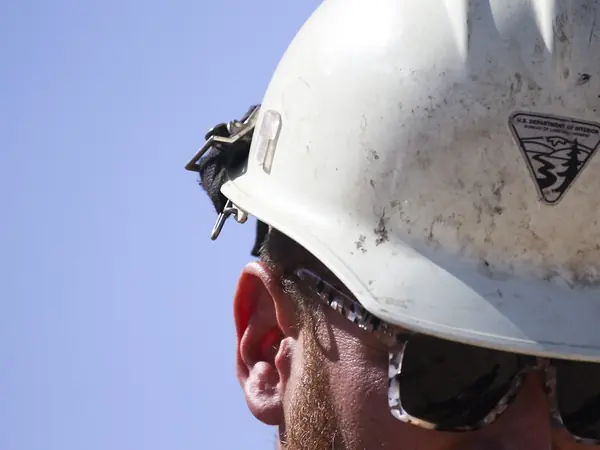
Photo: Mirrored Safety Glasses - Imprinted with Logo by Woodlands Ad Agency, CC BY 2.0
Clip-on ear muffs for slotted helmets, for saw, chipper and grinder work.
Helmet ear muffs clip directly into the side slots of a work helmet, so hearing protection is always on your head and ready to flip down. For tree crews running saws, chippers and stump grinders all day, that convenience is what keeps people wearing them.
Chainsaws, chippers and stump grinders are loud enough to damage hearing in a single workday without protection. Hearing loss from noise is permanent and creeps up slowly, so by the time you notice, it is too late. The best protection is the one you actually wear every time.
That is the argument for earmuffs under helmet setups, or more precisely, mounted on the helmet. They are always there. You do not have to find them in the truck or pull them out of a pocket. Flip them down when the saw starts, flip them up to talk to the ground crew.
Hearing protection also helps with fatigue. A day of saw noise wears you down, and people who protect their hearing often report feeling less drained at the end of a long job. That matters on a crew where focus is safety.
Muffs also make it easier to hear the important things. With the saw noise knocked down, many workers find shouted commands and whistle signals from the ground clearer, not harder, to pick out.
On a typical removal, the climber's top-handle, the ground saw, the chipper and maybe a loader or grinder are all running within a few minutes of each other. Even crew members who are not running a saw are exposed, so everyone on site should have protection on.
Helmet ear muffs clip into the accessory slots on the side of a helmet. Most climbing and forestry helmets use a standard slot, but not all do, so check your helmet before ordering. Once fitted, adjust the arms so the cups seal fully around your ears with no gaps. Hair, glasses arms and hats under the helmet all reduce the seal.
If you wear a face screen, make sure the muffs and screen work together and the muffs can still reach the work position. See our helmets for slotted models that accept muffs and visors.
Helmet ear muffs also stay put when you look up, bend over or climb, which is where loose headband muffs tend to slip. For climbers, that means one less thing moving around while you work.
Every hearing protector carries a noise reduction rating (NRR) on the label. Higher is more protection, but real-world protection is lower than the label figure, especially with a poor seal. For very loud work like grinding, some crews double up with foam ear plugs under the muffs.
Replace the ear cushions and foam inserts when they harden, crack or flatten, since that ruins the seal. Keep the muffs clean and dry. Check that the arms still hold tension. If the cups feel loose on your head, they are not protecting you.
Keep a spare set of cushions in the truck, so a cracked seal does not mean a day of working without protection.
| Type | Helmet-mounted ear muff |
|---|---|
| Mount | Helmet side slot clip |
| Positions | Work and park (flip up) |
| Noise rating | See product label for NRR |
| Use | Saws, chippers, grinders |
Specs are from the manufacturer's published figures where available. Confirm against the product listing before you buy.
They fit helmets with standard side accessory slots. Confirm your helmet's slot style before ordering.
Yes. For very loud work, plugs plus muffs give more protection than either alone.
Whenever they crack, harden or no longer seal, and at least as often as the maker recommends.
Pairs well with
Husqvarna
Replacement cushions and foam inserts that bring tired Husqvarna muffs back to spec.
3M
Slot-mount Peltor muffs for crews who live under a helmet all day.
3M
Over-the-head hearing protection from 3M Peltor for ground crews.
Husqvarna
Helmet-mounted hearing protection from Husqvarna for saw operators.
LAND
Vented climbing-style helmet for climbers who want airflow on hot days aloft.
LAND
Non-vented Class E, Type 2 helmet for line clearance and general tree crew work.
LIFT Safety
Fresh comfort pads for the LIFT Radix helmet when the old ones are flat or worn.
LIFT Safety
Replacement suspension for the LIFT Radix when the harness is worn or damaged.
Helmet Ear Muff$32