Gap Arborist Supply
Speed Line Kit with Carabiners
A speedline setup for zipping brush and wood over obstacles to the drop zone.
Typical $260
 Rigging Kits
Representative photo. Check the retailer listing for the exact model, color and size.
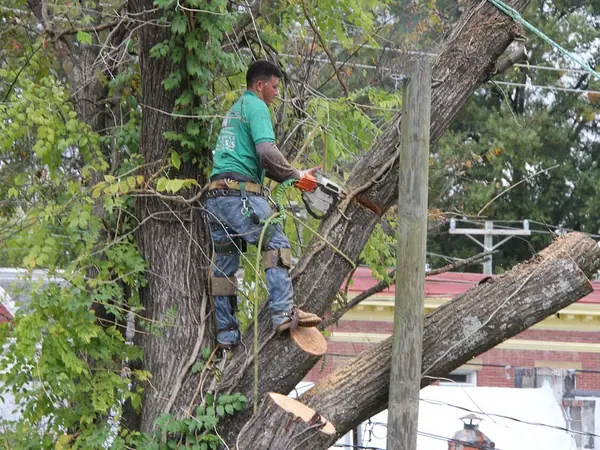
Photo: Tree Pruning in RVA (Carytown, Virginia) by Gamma Man, CC BY 2.0
A starter set of rigging gear for lowering wood on everyday removals.
This standard tree rigging kit pulls together the core gear a crew needs to start lowering wood on removals, so you are not piecing the system together one part at a time. Check the included items against the size of the wood you plan to rig.
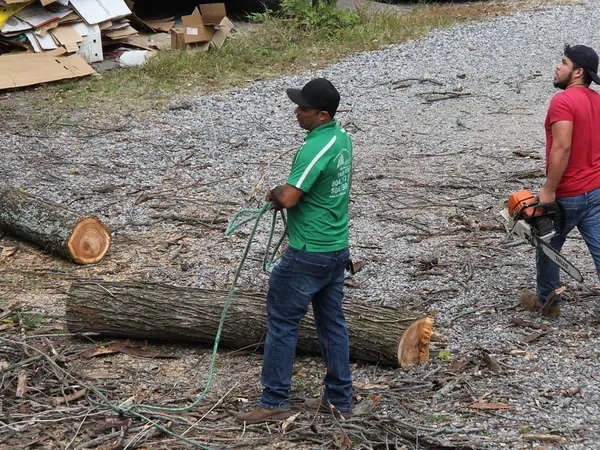
Rigging is how you take a tree down in pieces over a house, a fence, or a garden. A basic system has a rigging point in the tree, a rigging line, slings to choke the piece and set the block, and a way for the ground worker to control friction as the piece comes down.
A kit takes the guesswork out of matching those parts and gives a crew a consistent setup they can learn on.
Rigging is also where a lot of gear gets damaged and a lot of injuries happen. Having gear that is sized together and kept together in one bag makes it easier to inspect and harder to grab the wrong piece.
Check the listed contents and the rated strength of each part, and keep loads well inside the weakest link. Big wood needs bigger gear; see rigging kits for heavier setups.
Inspect slings, rope, and hardware before every job. Rigging forces climb fast with dynamic loads, so let pieces run, keep the drop zone clear, and make sure everyone on the crew is trained in ANSI Z133 rigging practice.
Store rigging gear dry, out of the sun, and away from saw fuel and bar oil. Log the big loads and retire any gear that has seen a shock load or shows damage.
| Type | Rigging kit |
|---|---|
| Use | Lowering limbs and wood |
| Level | Light to moderate rigging |
Specs are from the manufacturer's published figures where available. Confirm against the product listing before you buy.
A standard kit is for light to moderate rigging. Large wood needs heavier blocks, rope, slings, and a proper lowering device.
No. Keep rigging and climbing gear separate. Rigging gear sees loads and abrasion climbing lines are not built for.
Pairs well with
Gap Arborist Supply
A speedline setup for zipping brush and wood over obstacles to the drop zone.
Buckingham
A friction lowering device and soft anchor sling, ready to mount and rig.
Weaver
A packaged speedline setup from Weaver for zipping brush to the drop zone.
Gap Arborist Supply
A speedline setup for sending brush down a tensioned rope to a clear drop zone.
CMI
Hardware to set up a speedline and send brush and wood to a clear drop zone.
ISC
An ISC rigging block for 1/2 inch line, with a sling to hang it.
ISC
A light aluminum rigging block for 5/8 inch line with a matching dead-eye sling.
Buckingham
A friction lowering device and an adjustable 5/8 inch whoopie sling to mount it.
Standard Rigging Kit$599