Gap Arborist Supply
Speed Line Kit with Carabiners
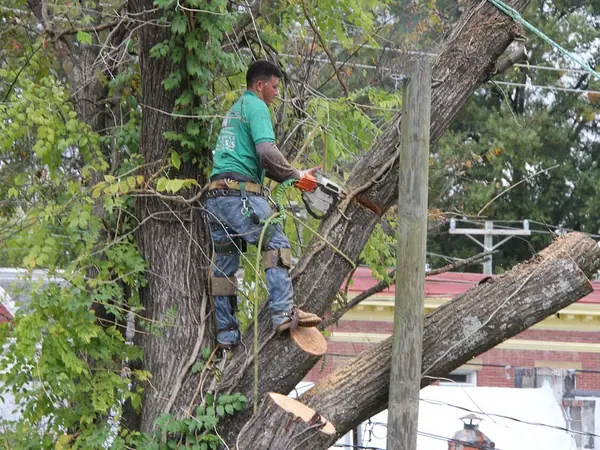
A speedline setup for zipping brush and wood over obstacles to the drop zone.
Typical $260
 Rigging Kits
Representative photo. Check the retailer listing for the exact model, color and size.
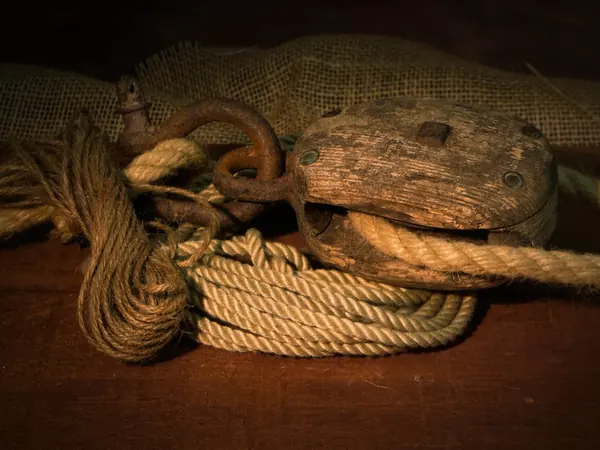
Photo: Pulley Block Equipment Rigging Edited 2020 by chimpwithcan, CC BY 2.0
A speedline setup for sending brush down a tensioned rope to a clear drop zone.
A speed line kit with snap hooks gives a crew the parts to rig a tensioned line from the tree to a drop zone and send cut brush down it, clear of roofs, fences, and gardens. Snap hooks clip each piece of brush onto the line quickly, so the climber keeps cutting while the ground crew clears.
The line runs from an anchor high in the tree to a low anchor at the drop zone, usually a stout tree or a vehicle-safe ground anchor, and is tensioned so loads slide down instead of sagging into whatever you are protecting. The climber clips a snap hook onto the butt of each limb, hooks it over the line, and makes the cut. Gravity does the rest.
Line angle and tension are the whole game. Too flat and brush stalls halfway; too steep and pieces arrive fast. A tag line on bigger pieces and a clear landing area with a ground worker standing off to the side keep it controlled. Keep pieces small; a speedline is for brush and light wood, not heavy rigging.
Anchor points carry far more load than the brush weight once the line is tensioned, so pick sound anchors and do not over-tension with mechanical advantage. Keep everyone out from under the line and the landing zone while it is running. Compare complete setups in our rigging kits.
Rigging forces are dynamic and can be several times the weight of the piece. Follow the manufacturer's ratings and ANSI Z133, inspect every component before the job, and keep rigging work to trained crews.
| Use | Speedline / zip line brush removal |
|---|---|
| Connectors | Snap hooks |
| Load type | Brush and light wood |
Specs are from the manufacturer's published figures where available. Confirm against the product listing before you buy.
Brush and small, light wood. Heavy wood needs a proper rigging system with a lowering device, not a speedline.
Tight enough that pieces travel without dragging, but not so tight that you overload anchors. Use a modest mechanical advantage and stay within the ratings of every component.
Pairs well with
Gap Arborist Supply
A speedline setup for zipping brush and wood over obstacles to the drop zone.
Buckingham
A friction lowering device and soft anchor sling, ready to mount and rig.
Weaver
A packaged speedline setup from Weaver for zipping brush to the drop zone.
CMI
Hardware to set up a speedline and send brush and wood to a clear drop zone.
ISC
An ISC rigging block for 1/2 inch line, with a sling to hang it.
ISC
A light aluminum rigging block for 5/8 inch line with a matching dead-eye sling.
Buckingham
A friction lowering device and an adjustable 5/8 inch whoopie sling to mount it.
ISC
An ISC rigging block for 1/2 in rope, paired with an adjustable loopie sling.
Speed Line Kit with Snap Hooks$299