Jail Brake
Jail Brake Lowering Device
Tree-mounted friction device for controlled lowering on rigging jobs.
Typical $349
 Lowering Devices
Representative photo. Check the retailer listing for the exact model, color and size.
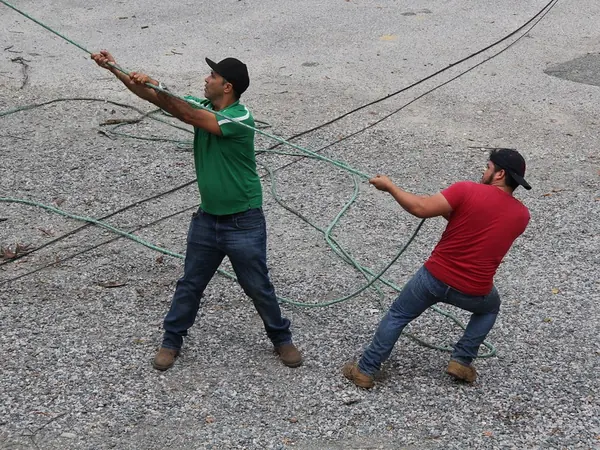
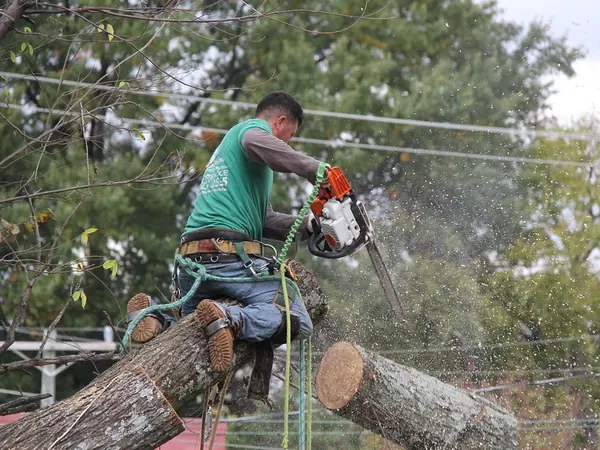
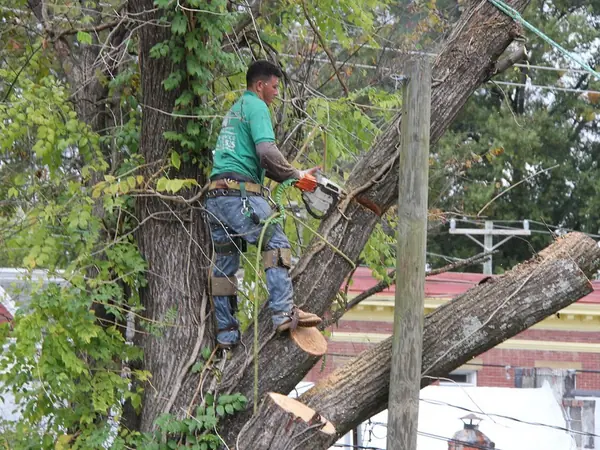
Photo: Tree Pruning in RVA (Carytown, Virginia) by Gamma Man, CC BY 2.0
A trunk-mounted lowering device and winch in one, for crews that rig big wood.
GRCS rigging means running your lowering line through the Good Rigging Control System, a trunk-mounted unit that combines a friction drum for lowering with a winch for lifting and tensioning. It lets one ground worker lower heavy wood, pull a top over or lift a piece off a roof with the same tool.
A standard lowering device only adds friction. The Good Rigging Control System adds a winch drum, so you can also take in rope under load. That opens up jobs that used to need a crane or a lot of people: lifting a cut piece clear of a roof before lowering it, pre-tensioning the rigging line so a top does not drop before it catches, or pulling a leaning tree back over the notch.
When lowering, the rope wraps on the drum like on any friction device and the operator controls descent with the tail. Switch to winching and the same rope can be pulled in with the handle. Nothing gets re-rigged.
The design keeps the operator on the ground with full control. One person can manage what used to take a couple of people heaving on a pull line, and the drum gives them a mechanical advantage that hand-tensioning never could.
Crews doing removals over houses, pools and gardens get the most from a GRCS. Being able to lift a piece rather than letting it swing into a target is a big deal. On take-downs where you need to pull a stem against its lean, a tensioned rigging line through the GRCS can replace a separate pull line and come-along setup.
It is a serious investment and a serious piece of gear. Many crews start with a Portawrap and add a GRCS once their work routinely needs lifting and pre-tensioning.
Strap the unit to the trunk or a nearby anchor tree so the line runs straight from the block to the drum. Follow Good Rigging's manual for wraps, rope size and strapping. Keep the handle off the drum when you are not winching so it cannot spin.
Practice with light loads first. The winch makes it easy to put large forces into the rigging, the block, the sling and the tree itself, and those forces add up faster than most people expect.
Rope choice matters. Use rigging line in the diameter range the manual lists, in good condition, and keep it clean; grit on a winch drum wears rope fast. Watch for heat on long, heavy lowers and give the drum and rope time to cool between big pieces.
Store the unit in a case or secure spot on the truck so the drum and mounting hardware are not knocked around in transport.
Everything in the system must be rated for the loads: rope, block, slings and anchors. Inspect the GRCS, straps and rope before each job. It is rigging equipment, not life support. Operators should be trained on its use, and crews should work to ANSI Z133 with clear communication between climber and ground.
When pre-tensioning a top before the cut, agree on how much tension to apply. Too much can pull the piece off the stub early or split the stem. The climber should be out of the line of any piece that could swing before the operator starts winching.
| Brand | Good Rigging |
|---|---|
| Model | Good Rigging Control System (GRCS) |
| Type | Lowering device with winch |
| Mounting | Straps around the trunk |
| Functions | Lowering, lifting, tensioning, pulling |
| Ratings | See Good Rigging's manual |
Specs are from the manufacturer's published figures where available. Confirm against the product listing before you buy.
Rigging run through the Good Rigging Control System, a combined lowering device and winch that mounts to the trunk.
Yes. The winch can take in rope under load to lift or tension, within the limits in the manual.
If you routinely rig heavy wood over targets or need to pre-tension and pull, it can replace extra gear and labor. For occasional rigging, a friction device may be enough.
Pairs well with
Jail Brake
Tree-mounted friction device for controlled lowering on rigging jobs.
Buckingham
A medium friction lowering device for controlled lowering on everyday removals.
Hobbs
A trunk-mounted friction lowering device built for heavy rigging control.
Buckingham
The large friction lowering device for bigger rigging lines and heavy wood.
CMI
Friction device that helps the ground crew control loads on a rigging line.
Buckingham
A compact Port-A-Wrap for lowering light limbs and small wood.
Gap Arborist Supply
A friction lowering device for light rigging loads up to 120 kg.
Stein
A trunk-mounted Stein rigging winch for controlled lowering and lifting.
Good Rigging Control System (GRCS)$2,100