

Husqvarna
Husqvarna Replacement Fuel Filter for T435 Chainsaw
Replacement in-tank fuel filter for the Husqvarna T435 top-handle saw.
Typical $10
 Parts
Parts
Representative photo. Check the retailer listing for the exact model, color and size.
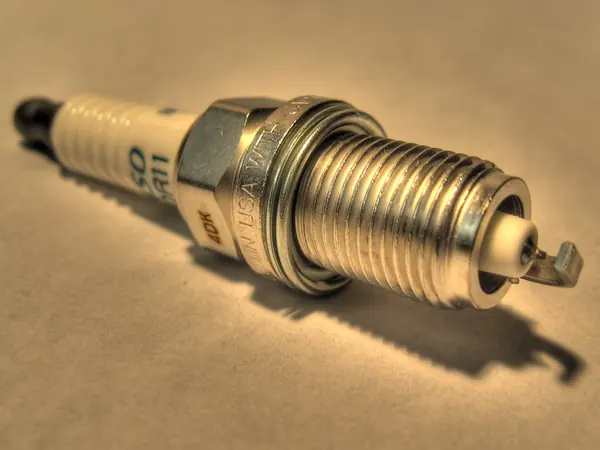
Photo: Spark plug by Razor512, CC BY 2.0
A compact 10 mm resistor plug in a colder heat range for small engines.
The NGK CMR7H spark plug is a compact 10 mm resistor plug used in many small handheld engines, including trimmers, blowers, pole saws and small chainsaws. It shares its size with the CMR6H but runs one step colder.
The ngk cmr7h follows NGK's compact plug naming. C is a 10 mm thread with a 16 mm hex. M marks the compact design for small engines. R means resistor. The 7 is the heat range, and H indicates a 1/2 in (12.7 mm) reach.
Compact plugs are made for small cylinder heads where a full-size plug will not fit. The cmr7h spark plug shows up in trimmers, blowers, edgers, pole saws and small chainsaws, as well as some small four-stroke handheld engines.
Plenty of crews run several brands of small engines, so the same plug may turn up in a trimmer, a blower and a pole saw on the same truck. That makes the CMR7H one of the handier plugs to keep stocked, as long as each machine actually calls for it.
These two plugs look the same and fit the same holes, but they are different heat ranges. In NGK's system, a higher number means a colder plug. The CMR7H is one step colder than the CMR6H. Engines that run hotter or at sustained high load may call for the colder plug.
Only swap between them if your manual lists both. A plug that is too hot for the engine can cause pre-ignition and engine damage, while a plug that is too cold can foul. If you are not sure, match the plug that came out of the engine and confirm it against the manual. See the NGK CMR6H for the hotter version.
Small threads strip easily, especially in aluminum heads. Thread the plug in by hand first and only use the 5/8 in plug wrench for the final snugging. Check the gap with a wire gauge against your manual, and make sure the boot is seated fully on the terminal. Always replace a plug with the engine cool and the plug wire or boot removed, and never test for spark by holding the plug near the open spark plug hole. Fuel vapor can ignite.
When you pull the old plug, look at its color and deposits. Heavy black carbon can mean a rich mixture or dirty air filter. Oily deposits can point to too much oil in the mix. A light tan or gray tip usually means the engine is running well.
Keep spare plugs in their packaging until you use them, so the gap stays where it was set and the electrode does not get damaged in a tool bag.
Replace the plug at the interval in your manual, or any time the engine is hard to start, idles roughly or loses power. A worn or fouled plug is cheap to replace and is one of the first things to check. Keep a few spares in the truck with your other power equipment parts.
| Thread | 10 mm |
|---|---|
| Hex | 5/8 in (16 mm) |
| Reach | 1/2 in (12.7 mm) |
| Resistor | Yes |
| Heat range | 7 (NGK) |
Specs are from the manufacturer's published figures where available. Confirm against the product listing before you buy.
They are the same size, but the CMR7H is one heat range colder. Use the one your engine's manual specifies.
It has a 10 mm thread, a 5/8 in (16 mm) hex and a 1/2 in (12.7 mm) reach.
Yes. The R in the code means it has a built-in resistor.
Pairs well with
Husqvarna
Replacement in-tank fuel filter for the Husqvarna T435 top-handle saw.
NGK
A common resistor spark plug for chainsaws and small two-stroke engines.
Gap Arborist Supply
In-tank replacement fuel filter to keep debris out of your saw's carburetor.
Husqvarna
A tune-up kit with the wear parts a 445 or 450 needs each season.
NGK
A 14 mm resistor plug in a colder heat range for chainsaws and small engines.
Husqvarna
A general-purpose diamond blade for power cutters on jobsite cutting work.
Husqvarna
A replacement 3/8 in pitch, 7-tooth clutch drum for the 562XP.
NGK CMR7H Spark Plug$9

