

Husqvarna
Husqvarna Replacement Fuel Filter for T435 Chainsaw
Replacement in-tank fuel filter for the Husqvarna T435 top-handle saw.
Typical $10
 Parts
Parts
Representative photo. Check the retailer listing for the exact model, color and size.
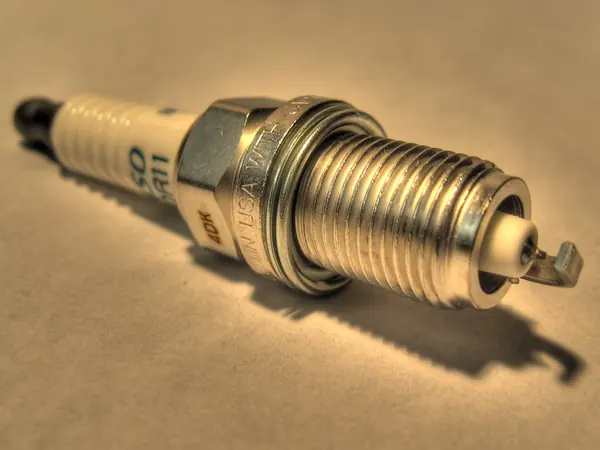
Photo: Spark plug by Razor512, CC BY 2.0
A common resistor spark plug for chainsaws and small two-stroke engines.
The NGK BPMR7A is one of the most common spark plugs in chainsaws and small outdoor power equipment, a 14 mm resistor plug with a projected tip. If your saw, blower or trimmer calls for a BPMR7A spark plug, keeping a couple in the truck is cheap insurance against hard starting.
NGK spark plug codes look cryptic, but they tell you a lot. In the bpmr7a, the B means a 14 mm thread with a 13/16 in hex. P means a projected insulator tip. M marks a compact plug design with a short reach. R means it has a built-in resistor. The 7 is the heat range, and the A is a design variation.
The resistor matters on modern equipment. It cuts down on electrical noise from the ignition, which can affect electronic ignition modules and other electronics. If your manual calls for the resistor version, use it. The ngk bpm7a spark plug is the non-resistor version of the same basic plug, so do not swap them unless your manual allows it.
The BPMR7A is found in a wide range of chainsaws, blowers, trimmers and other small two-stroke engines from several manufacturers. That is part of why the ngk bpmr7a spark plug is such a common search: lots of people own something that uses it.
Do not guess on fitment. Check the operator's manual or the plug that came out of the engine. Heat range, reach and thread all matter. A plug with the wrong reach can hit the piston or leave threads exposed to carbon, and the wrong heat range can cause fouling or overheating.
Set the gap to the figure in your engine's manual using a wire gauge, and do not assume the gap out of the box is correct for your engine. Thread the plug in by hand first to avoid cross-threading, then snug it with a plug wrench. Do not over-tighten, especially in aluminum cylinder heads.
Replace the plug on the schedule in your manual or any time it looks worn, fouled or oily. A black, sooty plug can point to a rich mixture or a dirty air filter. A white, blistered plug can point to a lean condition that needs attention before it damages the engine. Always replace a plug with the engine cool and the plug wire or boot removed, and never test for spark by holding the plug near the open spark plug hole. Fuel vapor can ignite.
A spark plug is the cheapest part in the saw box and one of the first things to check when a saw will not start. Many crews keep a few bpmr7a spark plugs with the files and spare chains. Pair a fresh plug with a new fuel filter and a clean air filter for a quick tune-up, or browse more power equipment parts.
Store spare plugs in their packaging so the electrodes do not get bent or the gap knocked out of spec while rattling around in a tool bag. Check the gap again before installing a plug that has been carried around for a while.
| Thread | 14 mm |
|---|---|
| Hex | 13/16 in (20.8 mm) |
| Reach | 3/8 in (9.5 mm) |
| Resistor | Yes |
| Heat range | 7 (NGK) |
| Tip | Projected insulator |
Specs are from the manufacturer's published figures where available. Confirm against the product listing before you buy.
The R in BPMR7A means it has a built-in resistor. The BPM7A is the non-resistor version. Use the one your engine's manual specifies.
Use the gap listed in your engine's operator manual. Check it with a wire gauge before installing.
It has a 14 mm thread and a 13/16 in (20.8 mm) hex.
Follow your manual's interval, and replace it any time it is fouled, worn or the engine is hard to start.
Pairs well with
Husqvarna
Replacement in-tank fuel filter for the Husqvarna T435 top-handle saw.
Gap Arborist Supply
In-tank replacement fuel filter to keep debris out of your saw's carburetor.
Husqvarna
A tune-up kit with the wear parts a 445 or 450 needs each season.
NGK
A 14 mm resistor plug in a colder heat range for chainsaws and small engines.
NGK
A compact 10 mm resistor plug in a colder heat range for small engines.
Husqvarna
A general-purpose diamond blade for power cutters on jobsite cutting work.
Husqvarna
A replacement 3/8 in pitch, 7-tooth clutch drum for the 562XP.
NGK BPMR7A Spark Plug$5

