

Husqvarna
Husqvarna Replacement Fuel Filter for T435 Chainsaw
Replacement in-tank fuel filter for the Husqvarna T435 top-handle saw.
Typical $10
 Parts
Parts
Representative photo. Check the retailer listing for the exact model, color and size.
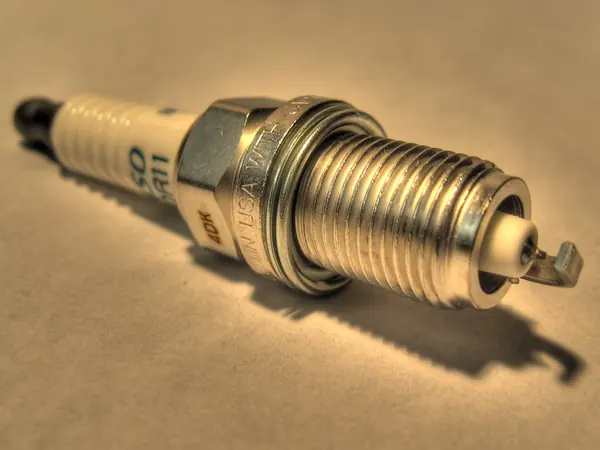
Photo: Spark plug by Razor512, CC BY 2.0
A 14 mm resistor plug in a colder heat range for chainsaws and small engines.
The NGK BPMR8Y is a 14 mm resistor spark plug with a projected tip and a heat range of 8, and it is the resistor version of the NGK BPM8Y spark plug. It is used in a range of chainsaws and small two-stroke engines that call for a slightly colder plug than the BPMR7A.
The only letter that separates the bpmr8y from the BPM8Y is the R, which stands for resistor. A resistor plug reduces electrical noise from the ignition system. Many modern engines with electronic ignition specify a resistor plug, and some older engines were designed around the non-resistor version.
If your manual lists the BPMR8Y, use it. If it lists the BPM8Y, check whether the resistor version is an approved substitute before swapping. In practice, many people looking for an ngk bpmr8y spark plug are replacing a BPM8Y and want to know whether it will work. The answer depends on your engine's ignition, so the manual is the final word.
The BPMR8Y is found in a range of chainsaws and other small two-stroke engines. Because several brands of equipment use it, it is a plug many shops keep in stock, and it is worth keeping a couple in the truck if your saws call for it.
In NGK's numbering, a higher number means a colder plug. An 8 runs cooler than a 7, which can suit engines that run hot or at high load. The wrong heat range causes problems: too hot can lead to pre-ignition and engine damage, too cold can lead to fouling.
Searches for bpmr8y cross reference usually come from people matching other brands' plugs. Cross-reference charts are helpful, but heat ranges do not always map exactly between brands. Use the plug the engine maker specifies, or ask a trusted dealer.
Do not change heat range to fix a running problem. If a plug keeps fouling or looks overheated, the cause is usually fuel mix, carburetor tuning, an air leak or a dirty filter. Fix the cause and keep the specified plug.
Check the gap with a wire gauge against your manual before installing. Thread the plug in by hand to avoid cross-threading, then snug it with a plug wrench. Do not over-tighten, especially in aluminum heads. Push the plug boot on until it clicks or seats fully. Always replace a plug with the engine cool and the plug wire or boot removed, and never test for spark by holding the plug near the open spark plug hole. Fuel vapor can ignite.
Read the old plug when it comes out. A dry, light tan or gray color is normal. Wet, black or oily deposits suggest a rich mixture, oil problem or dirty air filter. White or blistered electrodes suggest a lean condition that needs attention.
Spark plugs are cheap and easy to swap, and a fresh plug fixes a lot of starting problems. Keep spares in their packaging in the saw box along with spare filters. If your engine uses the hotter 7 heat range, see the NGK BPMR7A. For other parts, browse power equipment parts.
| Thread | 14 mm |
|---|---|
| Hex | 13/16 in (20.8 mm) |
| Reach | 3/8 in (9.5 mm) |
| Resistor | Yes |
| Heat range | 8 (NGK) |
| Tip | Projected insulator |
Specs are from the manufacturer's published figures where available. Confirm against the product listing before you buy.
Often, but not always. The BPMR8Y adds a resistor. Check your engine's manual or ask a dealer before swapping.
It is an 8 on NGK's scale, one step colder than a 7.
It has a 14 mm thread and a 13/16 in (20.8 mm) hex.
Pairs well with
Husqvarna
Replacement in-tank fuel filter for the Husqvarna T435 top-handle saw.
NGK
A common resistor spark plug for chainsaws and small two-stroke engines.
Gap Arborist Supply
In-tank replacement fuel filter to keep debris out of your saw's carburetor.
Husqvarna
A tune-up kit with the wear parts a 445 or 450 needs each season.
NGK
A compact 10 mm resistor plug in a colder heat range for small engines.
Husqvarna
A general-purpose diamond blade for power cutters on jobsite cutting work.
Husqvarna
A replacement 3/8 in pitch, 7-tooth clutch drum for the 562XP.
NGK BPMR8Y Spark Plug$5

