Husqvarna
Husqvarna Long Handle Hookaroon
Long-handled pick for dragging, flipping and stacking logs and firewood.
Typical $59
Log handling tools are the logging tools that save your back on every removal. Cant hooks roll stems for bucking, hookaroons grab and drag rounds, and log carriers let two people lift heavy wood without grabbing it by hand.
Husqvarna
Long-handled pick for dragging, flipping and stacking logs and firewood.
LogRite
Lightweight aluminum cant hook for rolling and positioning logs.
LogRite
Aluminum-handled pickaroon for moving rounds, logs and firewood without bending.
LogRite
Two-person log lifting tool with a center hook and aluminum handle.
LogRite
An add-on stand that turns a LogRite tool into a log lifter for clean bucking.
LogRite
Log arch with wide tires for moving logs out of yards and woods.
LogRite
Hand log tongs for lifting and dragging rounds without straining your back.
Husqvarna
Steel log tongs for grabbing and dragging rounds and short logs.
LogRite
A light, strong aluminum-handled peavey for rolling and positioning logs.
Nothing matches those filters. Try another brand or raise the price limit.
Buying guide
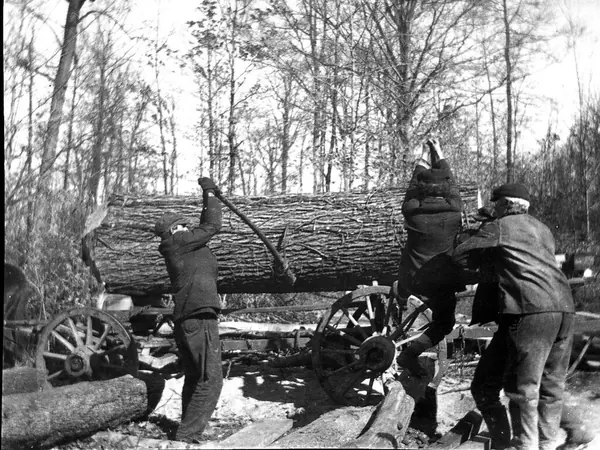
A cant hook uses a swinging hook and a toothed toe to grip and roll a log. On the job it lets you turn a stem so you can finish a cut without hitting dirt, and roll logs onto a trailer or into position for splitting. Aluminum handles are noticeably lighter than wood, which matters when you carry one all day.
Pick a handle length suited to the logs you normally handle: longer handles give more leverage on big stems, shorter ones are handier in tight spots.
To roll a log, set the toe under the log on the side away from you, swing the hook over the top so it bites, and pull the handle toward you. Keep your feet clear of the log's path and roll it a little at a time on slopes. On a crew, two cant hooks on the same log make big stems manageable.
A hookaroon, sometimes called a pickaroon, has a sharp pick on a handle. Swing it into the end grain or side of a round and drag it, stack it or lift it onto a splitter without bending. A long-handled hookaroon gives more reach; a short one is better for firewood and splitting.
Log grabbers and log tongs pinch a round from both sides so you can carry it. They are handy for moving short pieces to the chipper or the truck.
Hookaroons are also handy for pulling brush toward the chipper without reaching near the infeed, though you should never feed a hookaroon into the chipper or hold one near the feed rollers. Keep the pick out of the machine and your hands well back.
A two-person log carrier grabs a round in the middle so two people can carry it at hip height. It is the safest way to move heavy rounds that are too big to toss but not worth bringing in a loader. Walk in step and set loads down together.
Log carriers also work well for lifting rounds onto a log splitter or the tailgate of a truck. Pick one with enough jaw opening for the size of rounds you usually handle, and keep the points sharp so they grip bark and do not slip when the load shifts.
Logging tools keep hands and feet out of pinch points, but they do not change the weight of the wood. Know your limits, lift with your legs, and roll or drag instead of lifting whenever possible. Keep pick points sharp so they bite and do not glance off.
Store log handling tools where the points and hooks cannot hit other gear or people, and replace worn hooks and cracked handles. A tool that slips under load can cause a fall or a crushed hand. Keep a spare hook and bolt kit for your cant hook, since those are the parts that wear first on a busy crew.
Get a cant hook if you roll logs for bucking or loading. Get a hookaroon if you mostly move rounds and firewood. Many crews carry both.
Quality aluminum-handled cant hooks and hookaroons are designed for professional use and are lighter than wood. Use them within the maker's intended purpose and do not use them as pry bars beyond that.
It lets two people lift and carry a round between them without bending over and grabbing it by hand.
Touch up the point with a file when it starts glancing off wood, keeping the original shape.