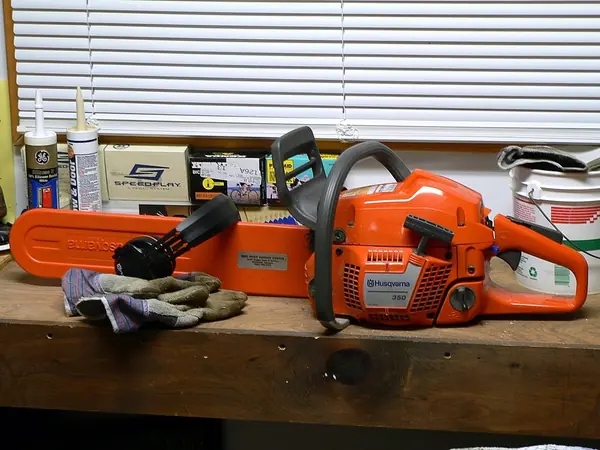
Husqvarna
Husqvarna 1 Quart Premix 50:1 Fuel, Case
Ready-to-pour 50:1 ethanol-free premix in quart cans, sold by the case.
Typical $79
 Fuel & Oil
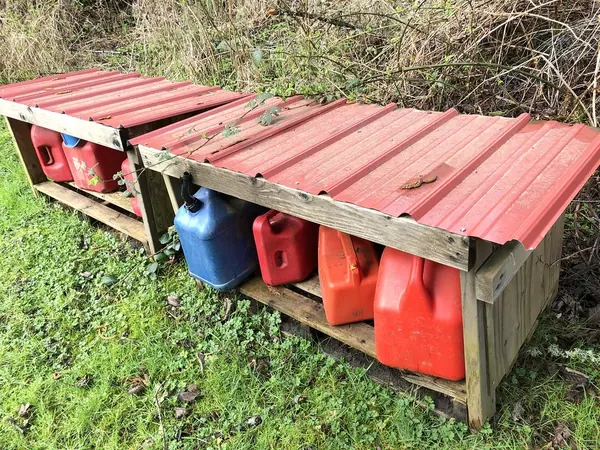
Representative photo. Check the retailer listing for the exact model, color and size.
Photo: Gas Can Storage by Hugo-90, CC BY 2.0
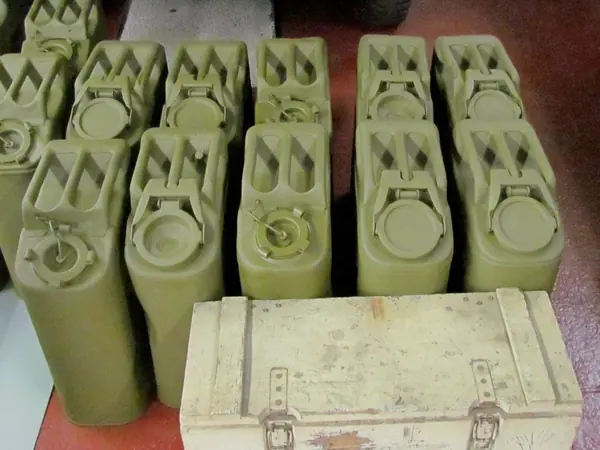
Metal safety can in green to keep oil and combustibles separate from gas on the truck.
This Eagle safety can is a metal container in green, the color many crews use to mark oil or other combustibles so nobody pours the wrong thing into a saw. It is a solid upgrade from a plastic jug rolling around the truck bed.
Plastic jugs are cheap, but they crack, leak and swell in the sun. A metal Eagle safety can has a spring-loaded lid that closes on its own and vents pressure, so it does not puff up on a hot afternoon. It also stands up to being bumped around a truck box all season.
On a tree crew, fluids get handled all day: topping off saws, refilling bar oil and fueling the chipper. Having proper cans for each fluid keeps the truck cleaner and cuts down on mix-ups.
Eagle has been making safety cans for a long time, and their cans are a common sight in tree service shops, municipal yards and fleet garages. Parts such as lids and gaskets are widely available, which helps a can last for years.
A good can also makes refueling faster. A wide, steady pour from a can with a proper spout means less oil down the side of the saw and on the ground, and less time spent wiping up before you get back to work.
Colors on safety cans are a convention, not a law of nature, but most shops follow something close to this: red for gasoline, yellow for diesel, blue for kerosene and green for oil or other combustibles. Pick a system, label every can and stick to it. Pouring diesel or bar oil into a saw tank costs a lot more than a can.
Many crews keep a green can for bar and chain oil and a red can for mixed fuel. For premix, see Husqvarna 2-stroke premix fuel.
Write the contents on the can in large letters as well. Colors fade, and new crew members do not always know your system. A simple paint-pen label that says BAR OIL or MIX 50:1 heads off mistakes on a busy morning.
Keep the can upright and secured in the truck so it cannot tip or slide. Fill it outdoors, away from running engines and sparks, and do not overfill: leave room for expansion. Check the label for the rated contents and any listings, and use the can only for what it is marked for.
Inspect the lid gasket and spring now and then. If the lid no longer snaps shut or the gasket is cracked, replace the part or the can. Store full cans out of direct sun when the truck is parked.
Plan where the cans ride. A rack or a strap point in the truck bed or utility body keeps them upright and away from the chipper exhaust and hot saws. Keep spill rags and a small absorbent kit nearby so a drip at the fill point does not become a mess in the truck box.
Remember that fuel and oil vapors are the real hazard. Never fill cans in an enclosed trailer, never smoke around them, and ground metal cans when filling from a larger tank if your shop procedure calls for it.
| Type | Metal safety can |
|---|---|
| Color | Green |
| Closure | Self-closing spring lid |
| Brand | Eagle |
| Typical contents | Oil or other combustible liquids |
| Use | Truck, trailer and shop storage |
Specs are from the manufacturer's published figures where available. Confirm against the product listing before you buy.
Green is commonly used for oil or other combustible liquids, not gasoline. Label the can with its contents so everyone on the crew knows what is in it.
Use the can only for the liquids it is rated and labeled for. Most crews keep gasoline in red cans so there is no confusion.
A metal safety can has a self-closing lid, holds up to rough handling and vents pressure instead of swelling in the heat.
Pairs well with
Husqvarna
Ready-to-pour 50:1 ethanol-free premix in quart cans, sold by the case.
Husqvarna
Ethanol-free 50:1 premixed fuel in a bulk size for crews running several saws.
Husqvarna
Synthetic blend 2-stroke mixing oil sized for a 5 gallon can of fuel at 50:1.
Husqvarna
Synthetic blend 2-stroke oil for a 2.5 gallon batch of 50:1 fuel.
No-Spill
Red push-button fuel can for clean refueling of saws and small engines.
Husqvarna
Husqvarna's biodegradable bar and chain oil for saws working near soil and water.
Husqvarna
Bulk ready-mixed 2-stroke fuel for crews running a fleet of saws and handhelds.
Eagle
A galvanized steel 5 gallon safety can in yellow, the color crews use for diesel.
Eagle Green Safety Can$79