Eagle
Eagle Green Safety Can
Metal safety can in green to keep oil and combustibles separate from gas on the truck.
Typical $79
 Fuel & Oil
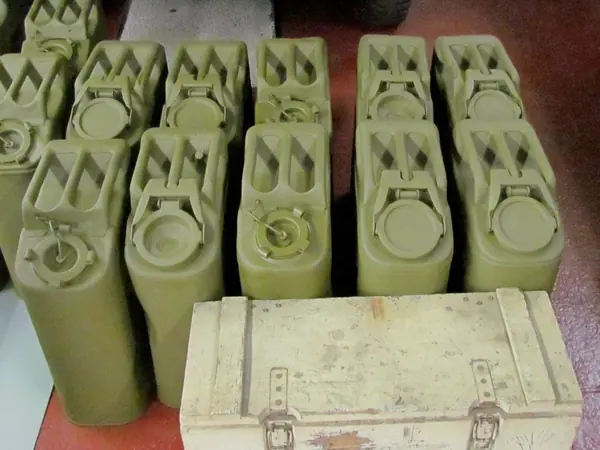
Representative photo. Check the retailer listing for the exact model, color and size.
Photo: Jerry Cans by Ozzy Delaney, CC BY 2.0
Ready-to-pour 50:1 ethanol-free premix in quart cans, sold by the case.
Husqvarna 50:1 pre-mix 2-stroke fuel comes ready to pour, with ethanol-free gasoline already blended with two-stroke oil at 50:1. Buying it by the case in 1 quart cans means every saw on the truck gets the same clean fuel, and nobody is guessing at a mix ratio on the tailgate.
Mixing your own fuel works, until someone grabs the wrong can, mixes at the wrong ratio, or fills a saw with pump gas that has been sitting in the shop for three months. Ethanol in pump gas pulls in moisture and breaks down over time. In small engines that leads to varnish, hard starts and damaged carburetors.
Husqvarna's premix removes those variables. It is ethanol-free and already blended at 50:1, so every saw, pole saw and trimmer gets the same fuel. For crews, that consistency is the main selling point. For homeowners and climbers who run a top-handle a few times a month, it means the saw starts after sitting.
It is also one less thing to carry. No oil bottles, no measuring cups, no mixing can. Grab a quart, top off the saw and go.
Two-stroke engines also run cleaner and more consistently on fresh, stable fuel, which means fewer fouled plugs and less carbon on the muffler screen over a season.
Per gallon, pre-mix costs a lot more than pump gas and oil. Most tree services do not run it in every saw every day. Where it pays off is in the saws that sit: top-handles that only come out for climbs, pole saws, backup saws on the truck, and anything that goes into storage for the season.
A common approach is to run your own mix in the big ground saws that burn a tank an hour, and pre-mix in everything else. Before storing a saw for a long stretch, many crews run it on pre-mix for a few minutes so the carburetor is full of stable fuel.
Climbers like the quart can size too. It is small enough to keep in a climbing bag or the bucket for a top-handle refill, and the sealed can does not slosh fuel the way a half-empty jug does. Some crews also keep a case on hand for winter, when saws sit longer between storm jobs and fuel goes stale fastest.
Use it in two-stroke engines that call for 50:1. Check your owner's manual. Do not use it in four-stroke engines, and do not add more oil to it. Shake the can gently before pouring if it has been sitting.
Fuel safety matters on every job: refuel with the saw shut off and cooled, away from ignition sources, and move at least 10 feet from the fueling spot before starting the saw, as recommended under ANSI Z133. Wipe up spills and keep cans closed and secured on the truck. Pair it with bar oil from our fluids section.
If a saw has been sitting on old pump-gas mix and runs poorly, draining the tank and switching to fresh pre-mix is a cheap first step before taking the carburetor apart. Many starting problems are fuel problems.
| Mix ratio | 50:1 |
|---|---|
| Container | 1 quart (32 fl oz) can |
| Fuel | Ethanol-free gasoline |
| Oil | Two-stroke oil, pre-blended |
| Packaging | Case of cans |
Specs are from the manufacturer's published figures where available. Confirm against the product listing before you buy.
Case counts vary by listing. Check the product details for the exact number of 1 quart cans included.
Yes, in any two-stroke engine that calls for a 50:1 mix. Always follow your engine maker's fuel recommendations.
Sealed cans store far longer than pump-gas mix. Once opened, keep the can tightly closed and use it within the time the label recommends.
Pairs well with
Eagle
Metal safety can in green to keep oil and combustibles separate from gas on the truck.
Husqvarna
Ethanol-free 50:1 premixed fuel in a bulk size for crews running several saws.
Husqvarna
Synthetic blend 2-stroke mixing oil sized for a 5 gallon can of fuel at 50:1.
Husqvarna
Synthetic blend 2-stroke oil for a 2.5 gallon batch of 50:1 fuel.
No-Spill
Red push-button fuel can for clean refueling of saws and small engines.
Husqvarna
Husqvarna's biodegradable bar and chain oil for saws working near soil and water.
Husqvarna
Bulk ready-mixed 2-stroke fuel for crews running a fleet of saws and handhelds.
Eagle
A galvanized steel 5 gallon safety can in yellow, the color crews use for diesel.
Husqvarna 1 Quart Premix 50:1 Fuel, Case$79