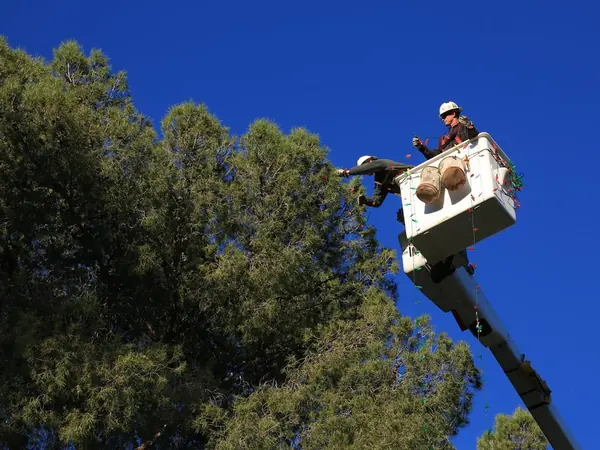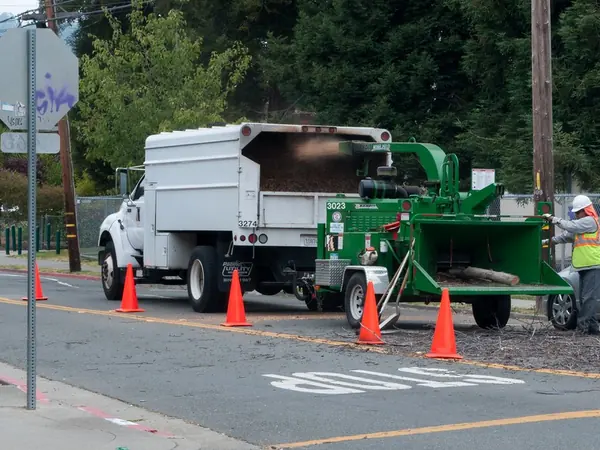
Bigfoot
Bigfoot Composite Outrigger Pads
Composite outrigger pads that spread the load under bucket trucks and cranes.
Typical $199
 Bucket Truck & Lift Gear
Representative photo. Check the retailer listing for the exact model, color and size.
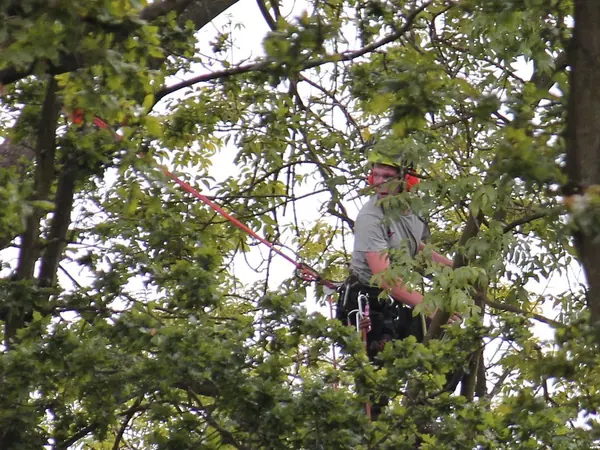
Photo: Climbing Gear for Mt. Fuji by KE-TA, CC BY 2.0
A bucket-mounted saw holder that keeps a chainsaw secure and in reach aloft.
A chainsaw scabbard for bucket truck work hangs on the bucket lip and holds your saw bar-down, so it is ready when you need it and out of the way when you do not. It keeps the saw off the bucket floor, away from your legs, and out of the controls.
A bucket is a small space. Two people, a saw, a pole saw, a hand saw and maybe a rope all share it. A running or recently stopped chainsaw lying on the floor is a cut risk to your legs and can bump into the controls. A bucket truck chainsaw scabbard solves that. The saw hangs outside the working space, bar down, and you can grab it with one hand.
It also protects the saw. Saws knocking around on the bucket floor get chains dulled and covers cracked. In the scabbard, the chain is shielded and the saw is not rattling around while you move the boom.
On the ground, the same scabbard keeps the saw secure on the truck between bucket setups, and it means the saw always lives in the same place, which helps every crew member find it without looking.
It also gives your hands back. With the saw hung outside the bucket, you have both hands for positioning the boom, handling a pole saw or tying off a piece for a controlled lower.
Check that the scabbard fits the lip of your bucket and the saw you run. Most work with top-handle saws and compact rear-handle saws, but bar length and powerhead size vary, so compare the listing with your saw. Mount it on the side away from the controls and where it will not catch on limbs as you boom through the canopy.
Some crews run two: one for the top-handle and one for a pole saw or hand saw. Keep the chainsaw holder for the bucket truck clear of hydraulic lines and the platform gate.
If you run a two-man bucket, agree on which side the saw lives on so both operators know where it is and nobody reaches across the controls for it.
A bucket truck chainsaw scabbard with drain openings stays lighter and cleaner, since rain and sawdust fall through rather than collecting around the bar.
Always engage the chain brake before putting the saw in the scabbard, and never put a running saw away. In the bucket, follow ANSI Z133 and your employer's procedures, wear your fall protection attached to the designated anchor, and keep a safe distance from energized lines unless you are a qualified line-clearance arborist.
Clean the scabbard out regularly so sawdust and sap do not pack in. See related gear in bucket truck accessories and chainsaw cases.
Check the scabbard for cracks, worn hooks and loose hardware during your daily truck inspection. A scabbard that pops off the bucket lip drops a saw on whoever is below, so replace it as soon as it no longer seats firmly. Keep the work zone below the bucket clear of ground workers whenever you are cutting or handling the saw aloft.
| Type | Bucket truck chainsaw scabbard |
|---|---|
| Mount | Hooks over the bucket lip |
| Saw position | Bar down |
| Fits | Top-handle and compact saws |
| Use | Bucket trucks and aerial lifts |
Specs are from the manufacturer's published figures where available. Confirm against the product listing before you buy.
Most fit top-handle and compact saws. Check the bar length and powerhead size against the listing.
It hooks over the bucket lip. Place it away from the controls and where it will not snag on branches.
No. Shut the saw off, engage the chain brake, then put it in the scabbard.
Pairs well with
Bigfoot
Composite outrigger pads that spread the load under bucket trucks and cranes.
Weaver
A cover for two-man aerial buckets that keeps weather and debris out.
Gap Arborist Supply
A heavy-duty wheel chock for tree trucks, chippers and trailers.
Gap Arborist Supply
A 6-foot self-retracting web lanyard for fall protection at height.
Petzl
A single-leg energy-absorbing lanyard for fall arrest at height.
Safewaze
A budget-friendly harness and lanyard kit for aerial lift crews.
Gap Arborist Supply
A 3 x 8 foot HDPE mat for protecting turf and soft ground on tree jobs.
Gap Arborist Supply
HDPE ground mats that keep trucks and equipment from rutting a client's yard.
Bucket Truck Chainsaw Scabbard$59