Gap Arborist Supply
Wire Rope Clamps
Galvanized U-bolt wire rope clips for guying trees and making eyes in cable.
Typical $5
 Planting
Representative photo. Check the retailer listing for the exact model, color and size.
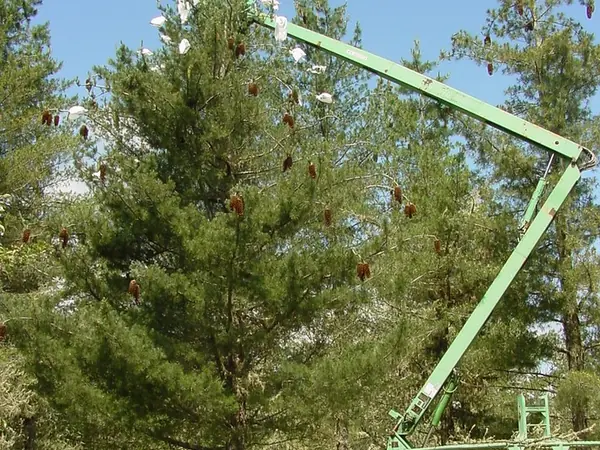
Photo: Caution - Tree Surgeon at work by Clint__Budd, CC BY 2.0
Soft, wide staking web on a roll for supporting newly planted trees.
This tree support web is a soft strap on a long roll for tying newly planted trees to their stakes. Wide webbing spreads the load on the bark, so the tree gets support without the cutting and girdling you get from wire or narrow twine.
A newly planted tree with a small root ball can rock in the wind before the roots grab the surrounding soil. Staking gives it a little help. The tie is where most staking goes wrong: wire, even inside a hose section, and thin twine can cut into the bark and girdle the trunk if they are forgotten.
A wide tree support web spreads the pressure over a larger patch of bark. It holds the trunk steady without clamping it. On a planting crew, a 250 ft roll goes a long way, since each tie only needs a short length.
The web is also kinder to the crew. It is easy to cut, quick to tie, and soft enough that nobody is fighting stiff wire with pliers on a planting day.
Drive two or three stakes outside the root ball, not through it. Attach the web to each stake and loop it around the trunk loosely, low enough that the top of the tree can still sway. Some movement is good; it is what tells the trunk to add taper and strength.
Tie a loose figure-eight between trunk and stake so the web does not rub the bark. Keep the attachment at the stake tight and the loop at the trunk relaxed. For larger trees on windy sites, guying with cable and earth anchors may be a better choice; see our planting supplies.
On sites with mowers and trimmers, keep stakes and web where they can be seen. Bright stakes or a mulch ring keep equipment off the trunk while the tree establishes.
Look at staked trees a few times through the season. Loosen anything that has tightened, and check for rubbing. Most trees can lose their stakes after one growing season once the roots have established. Leaving support on for years does the tree no favors.
Cut the web off cleanly rather than leaving it wrapped on the trunk. Forgotten ties are one of the most common reasons young street trees fail.
If bark under the tie has been rubbed raw, move the loop to fresh bark and loosen it. Small marks heal; deep rubbing does not.
Staking is a small part of getting a tree established. Planting at the right depth, with the root flare visible, mulched and watered through the first season, does far more for a tree than any tie. Treat the stake and web as a short-term aid, not a fix for a poorly planted tree.
For trees where you are unsure, try planting without stakes and keep an eye on them after the first few storms. If one starts to lean or rock, add support then. Many trees establish faster when left to move freely from the start.
| Type | Tree staking web |
|---|---|
| Length | 250 ft roll |
| Use | Tie trees to stakes after planting |
| Install | Loose figure-eight or loop around trunk and stake |
| Removal | Typically after one growing season |
Specs are from the manufacturer's published figures where available. Confirm against the product listing before you buy.
Usually one growing season. Check root establishment and remove the stakes and web as soon as the tree stands on its own.
Snug at the stake and loose at the trunk, so the tree can sway a little without rubbing.
No. Many container and balled trees stand fine without it. Stake only when the tree is top-heavy, the site is windy, or people are likely to push on it.
Pairs well with
Gap Arborist Supply
Galvanized U-bolt wire rope clips for guying trees and making eyes in cable.
Duckbill
Drive-in earth anchors for guying smaller newly planted trees.
Duckbill
Steel drive rod for setting the larger Duckbill earth anchors when guying trees.
Gap Arborist Supply
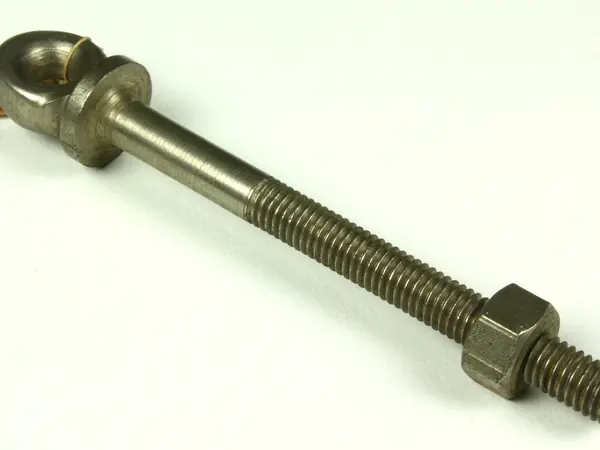
Threaded rods for bracing weak unions and split stems in trees.
Gap Arborist Supply
Galvanized steel strand for general-purpose, non-critical uses.
Gap Arborist Supply
Extra-high-strength galvanized steel strand for tree support systems.
Gap Arborist Supply
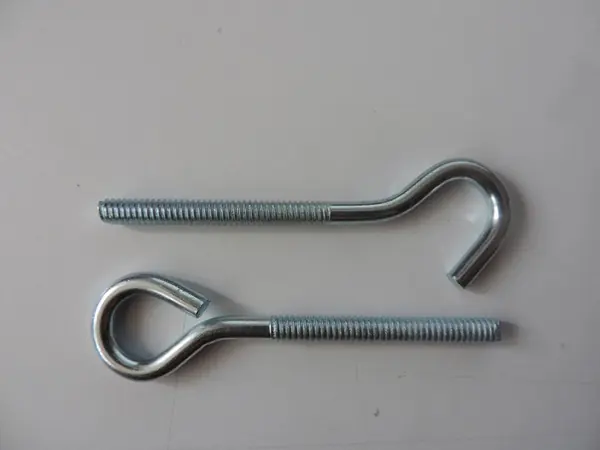
A 3/8 in eye bolt for anchoring light cabling systems in trees.
Gap Arborist Supply
A galvanized lag eye for anchoring light cable systems in small to medium limbs.
Tree Support Web for Staking Trees, 250 ft$45