Clogger
Clogger Denim Chainsaw Pants
Saw protection in a work-jean look for crews, homeowners and firewood cutters.
Typical $299
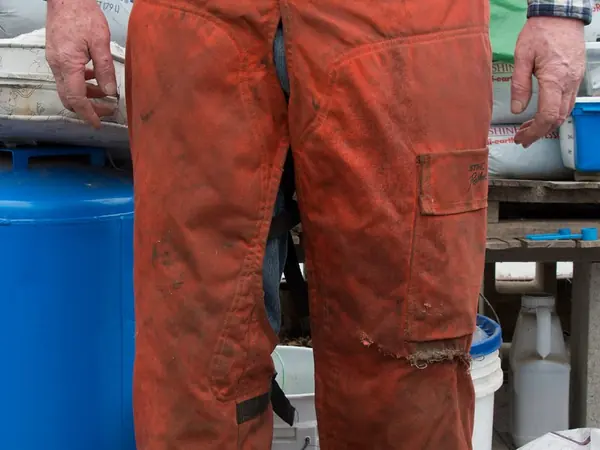 Chainsaw Pants
Representative photo. Check the retailer listing for the exact model, color and size.
Photo: Chainsaw Chaps by photofarmer, CC BY 2.0
Lightweight, breathable chainsaw pants for climbers and hot-weather ground work.
The DefenderPro Light is the Clogger chainsaw pants option for people who want saw protection without the bulk. It is cut for climbing, walking brush piles and working in heat, with the protective layers built into the front of the leg instead of strapped on top.
Most chainsaw protection is heavy, and that weight is what makes people leave it in the truck. The DefenderPro Light is Clogger's answer for the climber who runs a top-handle saw all day and the ground person who is moving fast through a big storm job. It is cut close enough to climb in, with stretch where your knees and hips bend.
Because the protection is part of the pants, there are no straps to adjust and nothing to swing into brush. You get dressed once in the morning and you are covered whether you are in the canopy, feeding the chipper or bucking wood at the landing.
Weight matters more aloft than on the ground. Every extra pound on your legs is something you lift on every footlock, every step up a spur climb and every reposition in the crown. Light pants also dry faster after a rainy morning or a sweaty afternoon, which keeps them from chafing by the end of the day.
Like other chainsaw pants, the front panels use layers of long cut-resistant fibers. If a moving chain contacts the leg, the fibers pull out and jam the sprocket to stop the chain. That only works in the protected zone, so know where it is on your pants: the front of the legs. The back of the leg is not protected.
Check the label for the standard and protection class the pants are certified to, and buy the class that matches your saw work and your employer's requirements. Any cut through the outer fabric into the protective layer means the pants are done. Replace them; do not sew up a damaged panel and keep working.
No chainsaw pants are cut-proof. A saw running at full throttle with a sharp chain can cut through any protective layer if it hits hard enough, and the protection does nothing for a slow, grinding contact with a stalled chain. Treat the pants as a last line of defense behind good saw handling, solid work positioning and a chain brake you actually use.
Chaps are cheaper and easy to take off, which suits occasional saw use. Lightweight chainsaw pants cost more but are cooler, move better and stay put, which matters when you are climbing or running a saw most of the day. Many crews keep a pair of chainsaw chaps on the truck for occasional users and put full-time sawyers in pants.
If you want something tougher for heavy brush and logging, look at Clogger's other models. If heat and mobility are your main complaints, the DefenderPro Light is the one to try first.
Order your normal waist size and check the leg length so the protective panel reaches the boot top without bunching. Wash them per the care label, keep bar oil and fuel off them where you can, and inspect the front panels after every job. PPE helps, but training, saw handling and good footing are what keep you out of trouble.
Keep a second pair if you work every day. Rotating pants lets one pair dry and get washed while you wear the other, and it means a damaged pair can be retired right away instead of being worn "just until Friday". Write the purchase date inside the waistband so you can track how long each pair lasts in your work.
| Style | Chainsaw trousers |
|---|---|
| Protection area | Front of legs |
| Weight class | Lightweight |
| Fit | Athletic cut with stretch panels |
| Best for | Climbing, hot weather, all-day saw use |
Specs are from the manufacturer's published figures where available. Confirm against the product listing before you buy.
Yes. They are designed to be light and flexible, with stretch panels that make high steps and climbing more comfortable than heavier saw pants or chaps.
Protection depends on the standard and class printed on the label, not the weight alone. Compare the certification of each model and match it to your saw work.
No. If a chain has cut into the protective layer, replace the pants. Small tears in the outer fabric that do not reach the protective layer can be checked against the manufacturer's guidance.
Follow the care label. In general, wash on a gentle cycle without bleach or fabric softener and let them dry without high heat.
Pairs well with
Clogger
Saw protection in a work-jean look for crews, homeowners and firewood cutters.
Clogger
Very light chainsaw pants for climbers and sawyers who work in heat.
Arbortec
Lightweight, stretchy chainsaw protective pants in Realtree camo with brown accents.
Arbortec
Lightweight, stretchy chainsaw protective pants in Realtree camo with orange accents.
Arbortec
Lightweight, stretchy chainsaw protective pants in Realtree camo with lime green accents.
Arbortec
Light, breathable stretch chainsaw pants for climbers and ground workers.
Arbortec
Light, breathable stretch chainsaw pants for climbers and ground workers.
Arbortec
Light, breathable chainsaw pants with all-round leg protection for climbers.
Clogger DefenderPro Light Chainsaw Pants$329