Gap Arborist Supply
Economy Apron-Style Chainsaw Chaps
Budget apron chaps for occasional saw users and ground crews.
Typical $79
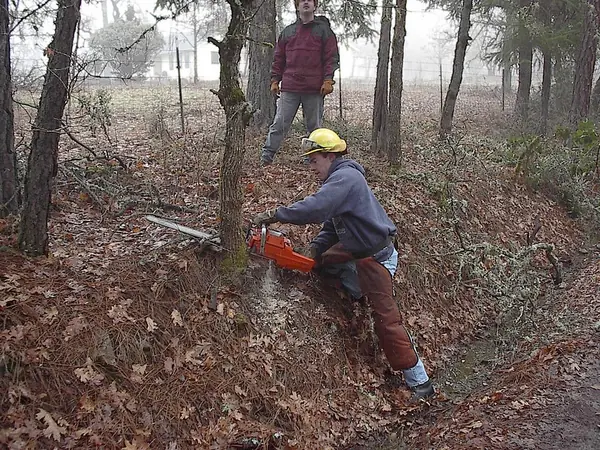
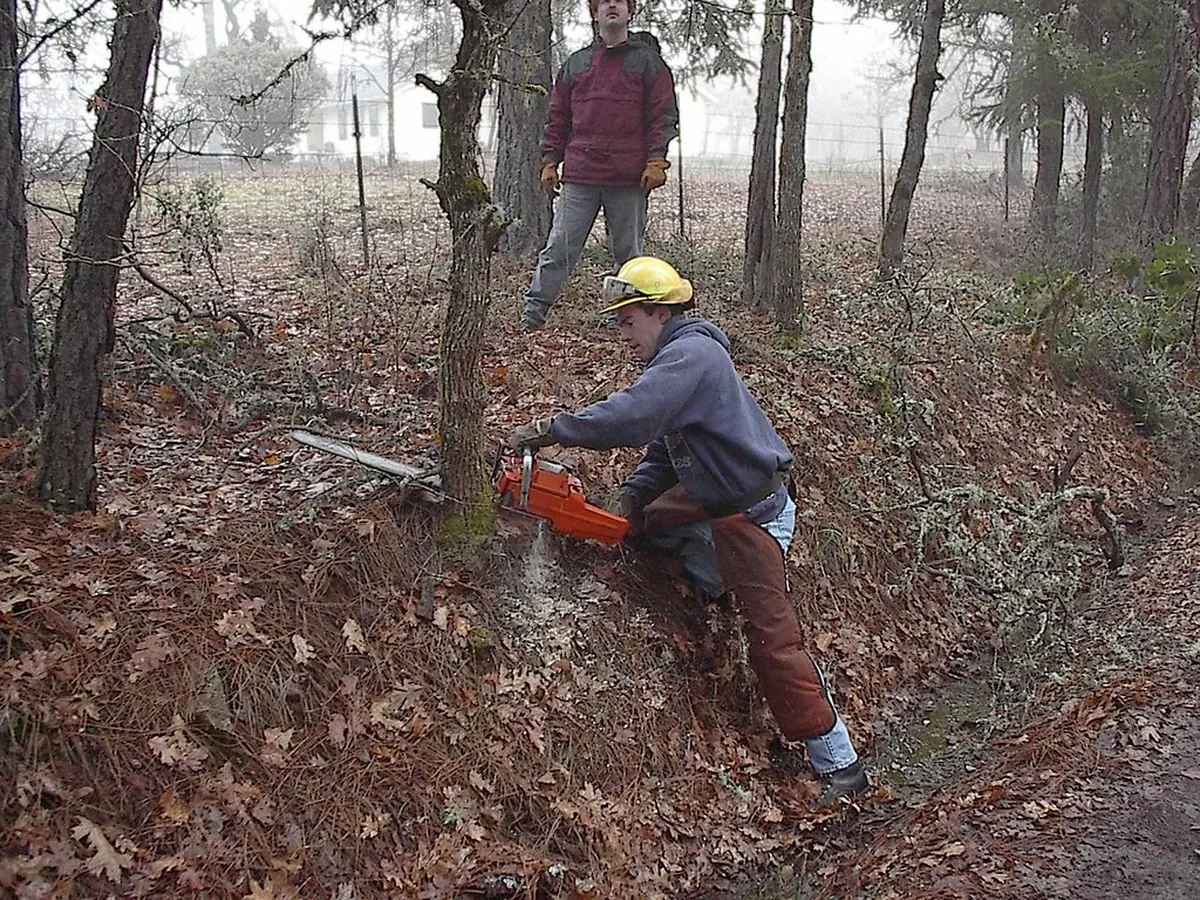
Chainsaw chaps are the simplest way to protect your legs when you run a saw on the ground. These chain saw chaps strap over your work pants and use layers of long fibers that pull out and jam the sprocket when a chain contacts them.
Gap Arborist Supply
Budget apron chaps for occasional saw users and ground crews.
Husqvarna
Apron-style leg protection for ground sawing, bucking and cleanup crews.
Clogger
Light, cool apron-style chaps for sawyers who spend all day on the ground.
Nothing matches those filters. Try another brand or raise the price limit.
Buying guide
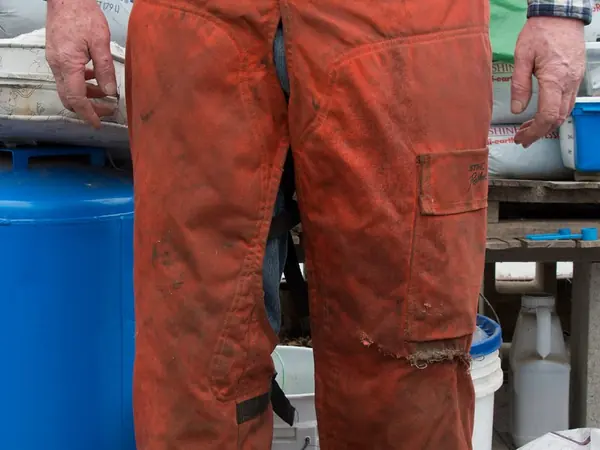
Under the tough outer shell, chaps have several layers of long, loosely woven fibers. When a moving chain cuts the shell, those fibers are dragged into the drive sprocket and stop the chain. That is why a chap that has been cut must be retired: the fibers have done their job once.
Chaps do not make you cut-proof. They are designed to reduce injury from contact at typical saw speeds, and a saw at full throttle with a sharp chain can still cause harm. Good technique, a working chain brake and a clear work area come first.
Remember that chaps protect the front of the legs, where most saw contact happens, but a chain can still reach other areas. Keep both hands on the saw, engage the chain brake when walking, and never run a saw above shoulder height on the ground. Chaps are part of a system that includes boots, gloves, a helmet with eye and hearing protection, and training.
Apron chaps cover the front of each leg from the hip down and buckle at the back of the thigh. They are light, quick to put on and the common choice for crews. Full-wrap chaps add protection around the calf, which helps if you often work in awkward positions or around brush.
Lightweight chaps made from newer fabrics breathe better in hot weather, which makes it more likely people will actually wear them all day. Economy chaps are a good option for occasional users and spares on the truck.
If you are outfitting a crew, keep a few lengths on the truck so everyone gets chaps that actually fit. Mark each pair with its length and an in-service date. For anyone who runs a saw all day, chainsaw pants are worth considering as an upgrade, since they fit closer and move better.
Measure from the belt line to about two inches above the ankle and pick the closest length. Chaps should cover the top of your boot when you are standing. Too short leaves the shin exposed; too long and they catch on brush.
In the US, look for chaps that meet ASTM F1897 or carry a UL classification for chainsaw leg protection. ANSI Z133 expects chain-saw-resistant leg protection for ground operators, so check your employer's policy too.
Wash chaps according to the manufacturer's label; some can be machine washed and others should only be hand washed. Do not repair cuts with patches, because a patch will not restore the fibers underneath. Fuel and bar oil break down the fabric over time, so wipe off spills and store chaps dry. Replace any chap that has been cut, is badly worn or is past the maker's service life.
Inspect chaps before each use. Look for cuts through the outer shell, pulled fibers sticking out, torn straps or broken buckles, and fabric that is stiff with oil or fuel. Chaps that pass inspection should still be replaced when they reach the maker's service life.
They are designed to stop or slow a chain on contact by jamming the sprocket with fibers, which greatly reduces injury. They are not a guarantee, so treat them as the last line of defense.
You can, but it is rarely needed. Choose one or the other and make sure it covers from the hip to the boot top.
Measure from your belt line to about two inches above the ankle and choose the nearest listed length. They should overlap the top of your boots.
No. Once the protective layer is cut it will not stop a chain the same way again. Replace the chaps.