Buckingham
Buckingham Buckalloy Screw and Dowel Style Replacement Tree Gaffs
Screw and dowel style Buckalloy tree gaffs to bring worn Buckingham spurs back.
Typical $89
 Gaffs & Spur Parts
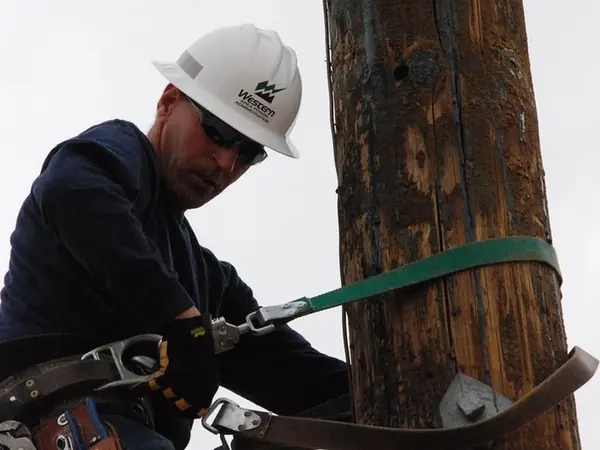
Representative photo. Check the retailer listing for the exact model, color and size.
Photo: Fall Protection Training, 2013 by Western Area Power Admin, CC BY 2.0
Leather 26 inch lower straps for keeping climbing spurs snug at the boot.
Weaver leather lower straps are 26 inch replacement ankle straps for climbing spurs. Leather molds to the boot over time and holds the stirrup firmly, and with a little care it lasts a long time.
Leather has been the traditional choice for spur straps for good reason. It holds a buckle well, molds to the shape of your boot over time, and stays put once it is broken in. A lower strap that holds the stirrup snug under your arch keeps the spur from rolling as you step up a spar.
Check that 26 inch straps suit your spurs and boots. More spur straps, gaffs, and guards are in our replacement gaffs and parts section.
New leather is stiff for the first few days on the spurs. Expect to re-tighten the straps a few times while they break in, and check them again halfway through your first climbs. Once broken in, they hold their shape and settle into the curve of your boot.
Leather lasts when it is cared for. Wipe off mud and sap, let it dry slowly away from heat, and condition it so it does not dry out and crack. Leather that stays wet or is baked dry fails much sooner.
Inspect straps before every climb. Replace any that are cracked, cut, stretched at the holes, or have damaged buckles. Do spur work only on removals, with training, a flipline in place, and under ANSI Z133.
Store spurs and straps somewhere dry and ventilated, not sealed in a plastic bin with damp gear.
| Type | Lower spur straps |
|---|---|
| Length | 26 in |
| Material | Leather |
Specs are from the manufacturer's published figures where available. Confirm against the product listing before you buy.
Leather molds to the boot and lasts with care. Webbing handles water better and needs less upkeep.
Clean, dry slowly, and condition them. Avoid leaving them wet or near direct heat.
Pairs well with
Buckingham
Screw and dowel style Buckalloy tree gaffs to bring worn Buckingham spurs back.
Edelrid
Replacement upper straps and pads for Edelrid Talon climbing spurs.
Distel
Fresh pads, rings and straps to put worn Distel climbers back in service.
Buckingham
Replacement adjustable sleeve that restores height adjustment on Buckingham steel spurs.
Buckingham
A simple template that keeps your spur gaffs filed to the right shape.
Climb Right
Fresh tree gaffs to bring a worn set of Climb Right spurs back into service.
Climb Right
Replacement height sleeve and hardware for adjustable Climb Right steel climbers.
Climb Right
Spare screws to keep the pads tight on Climb Right Ultralight climbers.
Weaver 26" Leather Lower Straps$25