Buckingham
Buckingham Buckalloy Screw and Dowel Style Replacement Tree Gaffs
Screw and dowel style Buckalloy tree gaffs to bring worn Buckingham spurs back.
Typical $89
 Gaffs & Spur Parts
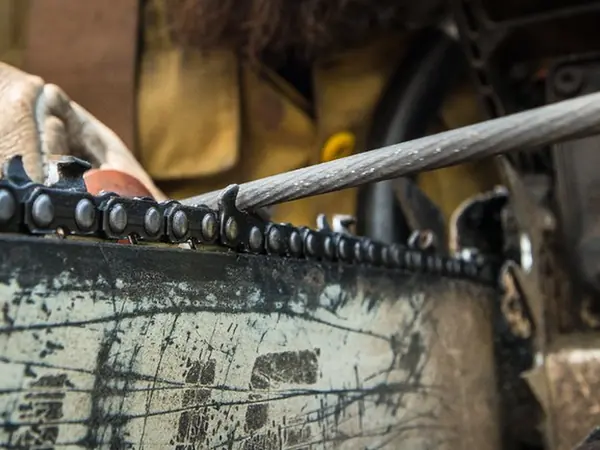
Representative photo. Check the retailer listing for the exact model, color and size.
Photo: 20160823-FS-LSC-0474 by USDAgov, Public domain
A simple template that keeps your spur gaffs filed to the right shape.
The Buckingham gaff gauge is a profile template you hold against your climber gaffs while sharpening, so you file them back to the correct shape and know when they are worn too short. It takes the guesswork out of spur maintenance.
A gaff that is filed too thin, too blunt or at the wrong angle can roll out of the bark and drop you onto your lanyard. Most cut-outs trace back to gaffs that were sharpened by eye on a grinder until the profile was gone. A gauge gives you a fixed reference every time.
Sharpen with a fine flat file on the outside faces only, checking against the gauge as you go. Never use a bench grinder, which can overheat the steel and ruin the temper. More spur parts are in replacement gaffs and parts.
Every sharpening takes a little length. When the gauge shows the gaff is short of the minimum, replace it rather than squeezing out another week. Short gaffs don't penetrate far enough to hold on thick-barked trees.
Check gaffs before each climb and after hitting anything hard, like wire, nails or rock. Follow the manufacturer's instructions and ANSI Z133 for spur use and maintenance.
A gauge also makes it easy to keep both feet matched. If one gaff is noticeably shorter or thinner than the other, the spurs will bite differently and you'll feel it on every step. Sharpen them together and replace them as a pair.
| Use | Gaff profile and wear check |
|---|---|
| Type | Shaping template |
| Pairs with | Flat file |
Specs are from the manufacturer's published figures where available. Confirm against the product listing before you buy.
It is designed for Buckingham gaffs. Other brands may use a different profile, so check with that maker's guidance.
No. Use a file. Grinders can overheat the steel and change the profile.
Pairs well with
Buckingham
Screw and dowel style Buckalloy tree gaffs to bring worn Buckingham spurs back.
Edelrid
Replacement upper straps and pads for Edelrid Talon climbing spurs.
Distel
Fresh pads, rings and straps to put worn Distel climbers back in service.
Buckingham
Replacement adjustable sleeve that restores height adjustment on Buckingham steel spurs.
Climb Right
Fresh tree gaffs to bring a worn set of Climb Right spurs back into service.
Climb Right
Replacement height sleeve and hardware for adjustable Climb Right steel climbers.
Climb Right
Spare screws to keep the pads tight on Climb Right Ultralight climbers.
Distel
Genuine Distel M8 eye bolt for keeping your Distel spurs complete and serviceable.
Buckingham Gaff Shaping Gauge$15