Buckingham
Buckingham Buckalloy Screw and Dowel Style Replacement Tree Gaffs
Screw and dowel style Buckalloy tree gaffs to bring worn Buckingham spurs back.
Typical $89
 Gaffs & Spur Parts
Representative photo. Check the retailer listing for the exact model, color and size.
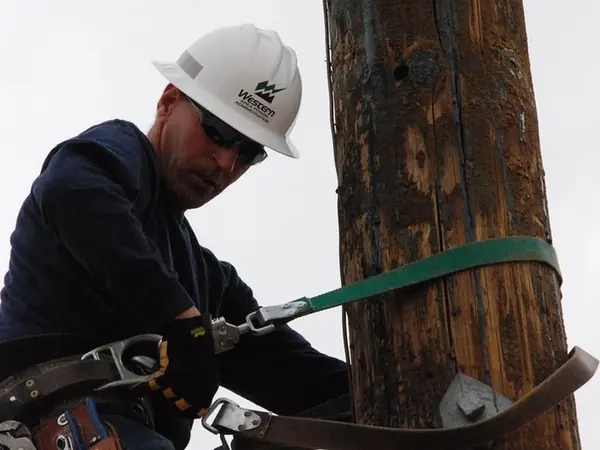
Photo: Fall Protection Training, 2013 by Western Area Power Admin, CC BY 2.0
Factory replacement ankle straps for Edelrid Talon climbing spurs.
Edelrid Talon lower straps are the replacement ankle straps for Edelrid Talon climbing spurs. They hold the foot stirrup firmly to your boot, so fresh straps keep the spur from rolling under your instep.
The lower strap is what keeps the spur locked to your boot. When it stretches or frays, the stirrup shifts and the spur can roll, which changes the gaff angle and puts strain on your ankle. On a long removal that shows up as fatigue and a less secure stance.
Lower straps get hammered by bark, brush and boot laces, so they often wear out before the uppers. Replacing them is cheap compared with new spurs. More Talon parts, including gaffs and upper straps, are in replacement gaffs and parts.
Climbers who change boots between seasons should recheck strap fit with each pair, since a different boot shape changes how the stirrup sits. Carrying a spare set in the truck is cheap insurance on a multi-day removal.
Install the straps following Edelrid's instructions and check they hold the stirrup firmly to your boot without pinching. Secure loose ends so they cannot catch on brush or the other spur.
Inspect straps, buckles, shanks and gaffs before every climb. Spurs are life-support gear on a removal: follow the manufacturer's instructions and ANSI Z133, and be trained before you climb on them.
Look for wear on the gaffs at the same time. Gaffs need sharpening and eventually replacement, and a dull gaff is more likely to cut out.
| Fits | Edelrid Talon spurs |
|---|---|
| Position | Lower (ankle) |
| Brand | Edelrid |
Specs are from the manufacturer's published figures where available. Confirm against the product listing before you buy.
They are made for Edelrid Talons. Check width and attachment before trying them on other spurs.
If both are worn, yes. Otherwise replace whichever fails inspection.
Pairs well with
Buckingham
Screw and dowel style Buckalloy tree gaffs to bring worn Buckingham spurs back.
Edelrid
Replacement upper straps and pads for Edelrid Talon climbing spurs.
Distel
Fresh pads, rings and straps to put worn Distel climbers back in service.
Buckingham
Replacement adjustable sleeve that restores height adjustment on Buckingham steel spurs.
Buckingham
A simple template that keeps your spur gaffs filed to the right shape.
Climb Right
Fresh tree gaffs to bring a worn set of Climb Right spurs back into service.
Climb Right
Replacement height sleeve and hardware for adjustable Climb Right steel climbers.
Climb Right
Spare screws to keep the pads tight on Climb Right Ultralight climbers.
Edelrid Talon Lower Straps$45