Edelrid
Edelrid TreeRex Bungee Chest Harness
An elastic chest harness that pairs with the TreeRex saddle for efficient ascent.
Typical $45
 Saddle Parts & Chest Harnesses
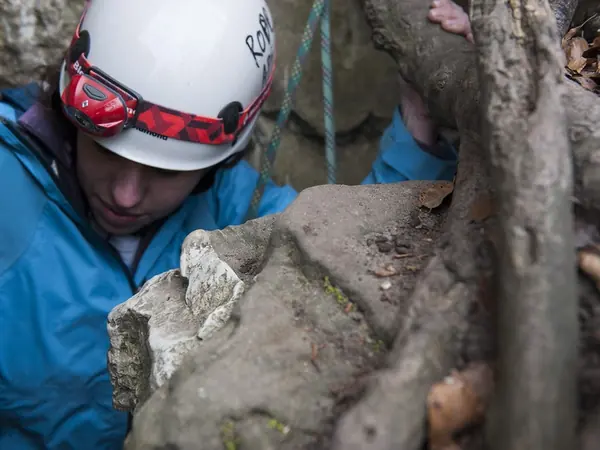
Representative photo. Check the retailer listing for the exact model, color and size.
Photo: 160320-F-QP401-181 by DoD News Photos, Public domain
Replacement bridge for the Tree Austria 3.2 saddle.
The Tree Austria 3.2 replacement bridge is made for the Tree Austria 3.2 saddle. Bridges are the highest-wear part of a climbing saddle, and replacing one keeps the rest of the saddle in service.
Your climbing system, lanyard, and often your rope wrench all connect through the bridge, and the connector slides on it every time you move. That constant friction is why saddle makers treat the bridge as a replaceable part.
Inspect it before each climb. Fuzzing, glazing, cuts, flattened sections, stiff spots, or contamination from fuel and oil all mean it is time to swap it. Follow the service life in the manufacturer's instructions even if the bridge still looks acceptable.
Keep a spare in a clean, dry bag in the truck, away from fuel and bar oil. Many climbers note the install date in a gear log, which shows how long a bridge lasts in their work and when to reorder. When you retire a bridge, cut it so it cannot end up back in service by mistake.
Confirm the part matches your saddle model and version before you order, since bridge lengths and terminations vary. Install it as Tree Austria shows, check the terminations, and test your setup low before climbing. You will find other saddle parts and shoulder harnesses in this category.
Life-support gear must meet the applicable standard (ANSI Z133 and the manufacturer's instructions), be inspected before every climb, and be used only by trained climbers.
| Type | Replacement saddle bridge |
|---|---|
| Fits | Tree Austria 3.2 saddle |
| Replace when | Worn, damaged, or past its service life |
Specs are from the manufacturer's published figures where available. Confirm against the product listing before you buy.
It is made for the Tree Austria 3.2. Do not fit it to another saddle unless the manufacturer approves it.
Minor surface fuzz can be normal, but compare it with the manufacturer's inspection criteria. When in doubt, replace it.
Pairs well with
Edelrid
An elastic chest harness that pairs with the TreeRex saddle for efficient ascent.
Weaver
A simple Weaver chest harness that keeps your saddle and ascent gear in position.
Tree Access
A simple chest harness that keeps your SRT ascent system tight and efficient.
Buckingham
A replacement bridge that keeps a Buckingham ErgoLite saddle in service.
Buckingham
Shoulder straps that retrofit to a Buckingham ErgoVation saddle.
Buckingham
A bridge for setting up an ErgoVation saddle for single-rope climbing.
Buckingham
Shoulder suspenders that carry tool weight on a compatible Buckingham saddle.
Edelrid
A replacement rope bridge for the Edelrid TreeRex saddle.
Tree Austria 3.2 Replacement Bridge$40