Grounds Keeper
Grounds Keeper Rake, Complete
Stiff-tined scrape rake that cleans chips and twigs out of lawns after tree work.
Typical $69
 Landscaper Tools
Representative photo. Check the retailer listing for the exact model, color and size.
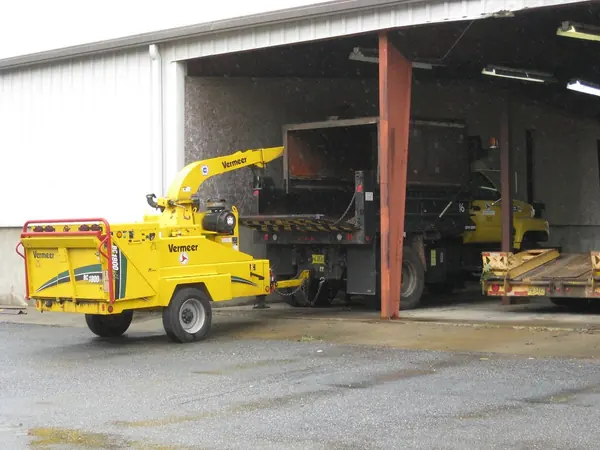
Photo: Chipper by photofarmer, CC BY 2.0
48-inch non-conductive probe for checking soil and buried obstructions.
The Jameson soil probe is a 48-inch non-conductive probe for pushing into the ground to check soil conditions, compaction, and buried obstructions before you dig, plant, or set equipment. Its non-conductive shaft adds a margin of safety when working near buried utilities.
A soil probe tells you a lot quickly. Push it in around a planting site to feel for compaction layers, rock, or old foundations. Use it to check soil moisture around a stressed tree, or to find the edges of a root plate before you set outriggers or a stump grinder.
Plant health care techs use it to judge where soil treatments or aeration will do the most good.
Arborists assessing a tree before construction or root work use a probe to estimate how much soil disturbance a site has seen. Hard, compacted layers often explain poor root growth and decline.
The 48-inch length lets you probe deeper than a short hand probe without kneeling, and gives you better leverage in firm soil. Take readings in several spots around a tree rather than relying on one.
A non-conductive probe reduces electrical risk, but it does not make probing near buried lines safe on its own. Call 811 and have utilities located before you dig or probe, keep to marked tolerance zones, and probe gently rather than driving the shaft.
Store it where the tip will not be damaged and keep the shaft clean so you can feel resistance clearly.
Clean the probe after use and check for cracks in the shaft. See more landscaper tools.
| Length | 48 in |
|---|---|
| Construction | Non-conductive |
Specs are from the manufacturer's published figures where available. Confirm against the product listing before you buy.
It lowers the risk but is not a substitute for having utilities located and marked before you work.
It helps you feel compaction, moisture, rock, and buried obstructions so you can plan planting, digging, or equipment placement.
Pairs well with
Grounds Keeper
Stiff-tined scrape rake that cleans chips and twigs out of lawns after tree work.
Grounds Keeper
Replacement handle that puts a broken Grounds Keeper rake back in service.
Grounds Keeper
Spring steel replacement tines that restore a worn Grounds Keeper rake.
Hasegawa
Japanese aluminum tripod ladder for pruning, hedges and orchard work.
Corona
A sturdy steel leaf rake for cleaning up after tree work and landscaping.
Husqvarna
Battery-powered 4-gallon backpack sprayer for plant health and landscape work.
Husqvarna
Square-profile string trimmer line for clean cuts in grass and weeds.
Husqvarna
Tough, long-wearing trimmer line for crews who clean up heavy growth after the tree work.
Jameson Non-Conductive Soil Probe, 48 in$69