Edelrid
Edelrid TreeRex Bungee Chest Harness
An elastic chest harness that pairs with the TreeRex saddle for efficient ascent.
Typical $45
 Saddle Parts & Chest Harnesses
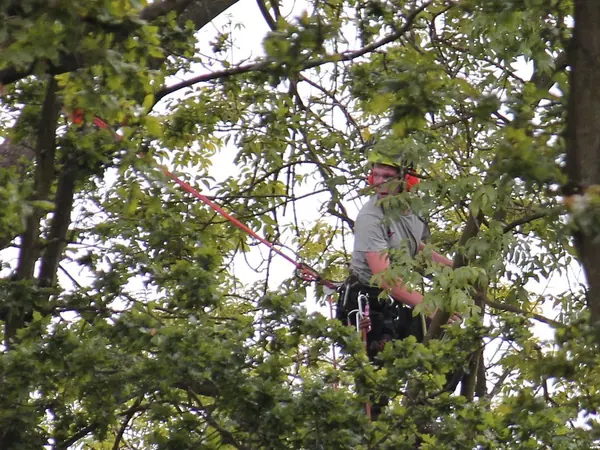
Representative photo. Check the retailer listing for the exact model, color and size.
Photo: Tree Surgeon by Tim Sheerman-Chase, CC BY 2.0
A chest harness that adds shoulder support to the Courant Koala saddle.
The Courant Top Koala is a chest harness designed to pair with the Courant Koala saddle, adding shoulder support and a place to attach chest-mounted gear. Climbers running SRS often add a chest harness to keep upright on long ascents and to hold a chest ascender in position.
On a long SRS ascent, a chest harness keeps your upper body close to the rope and holds a chest ascender in the right position, so each stroke moves you up efficiently. It also helps carry the weight of gear hung from the saddle by sharing it with your shoulders.
The Top Koala is built to work with the Koala saddle so the attachment points line up properly. Compare other saddle parts and shoulder harnesses if you climb in a different saddle.
A chest harness also gives you a place to clip tools and keeps gear from pulling the back of the saddle down, which many climbers notice on long days. It can make a frog-style or rope-walking ascent feel noticeably smoother.
Adjust the straps so the harness sits snug without restricting your breathing or arm movement, and follow Courant's instructions for how it connects to the saddle.
A chest harness used to position ascent gear is part of your climbing system. Inspect webbing, stitching, and buckles before every climb. Life-support gear must meet the applicable standard and the manufacturer's instructions, be inspected before every climb, and be used only by trained climbers working to ANSI Z133.
| Type | Chest harness |
|---|---|
| Pairs with | Courant Koala saddle |
| Brand | Courant |
Specs are from the manufacturer's published figures where available. Confirm against the product listing before you buy.
It is designed for the Courant Koala. Check the maker's compatibility information before using it with another saddle.
Not always, but many climbers find it makes rope-walking and frog-style ascents more efficient.
Pairs well with
Edelrid
An elastic chest harness that pairs with the TreeRex saddle for efficient ascent.
Weaver
A simple Weaver chest harness that keeps your saddle and ascent gear in position.
Tree Access
A simple chest harness that keeps your SRT ascent system tight and efficient.
Buckingham
A replacement bridge that keeps a Buckingham ErgoLite saddle in service.
Buckingham
Shoulder straps that retrofit to a Buckingham ErgoVation saddle.
Buckingham
A bridge for setting up an ErgoVation saddle for single-rope climbing.
Buckingham
Shoulder suspenders that carry tool weight on a compatible Buckingham saddle.
Edelrid
A replacement rope bridge for the Edelrid TreeRex saddle.
Courant Top Koala Harness$99