
 Swivels
Representative photo. Check the retailer listing for the exact model, color and size.
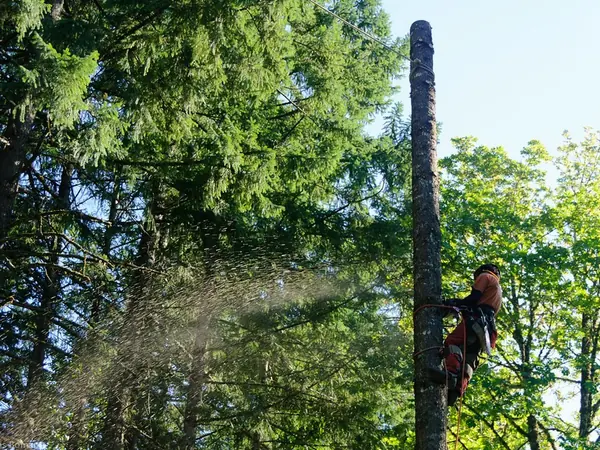
Photo: Arborist Cutting by matt.boman, CC BY 2.0
DMM Nexus Swivel
A DMM swivel with multiple attachment points to stop twists in your system.
- Free-spinning bearing swivel
- Stops rope and lanyard twist
- Larger eye takes multiple connectors
- Useful in climbing and rigging
- Machined DMM hardware
The DMM Nexus swivel is a bearing swivel that lets the parts of a climbing or rigging system rotate freely, so ropes and lanyards do not twist up. Its larger attachment eye can take more than one connector, which makes it useful as a small hub.
Why add a swivel
Every time a climber spins on a single line or a rigged piece rotates on the way down, twist goes into the rope. Over a day it builds up into kinks and hockles that make devices and hitches run badly. A swivel between the rope and your saddle, or between the rigging line and the load, lets that rotation happen at the bearing instead.
The Nexus adds a larger attachment eye, so you can clip a second connector for a positioning lanyard, a pulley, or a tool line. Compare other models in our swivels.
In rigging, a swivel between the lowering line and a heavy piece lets the wood rotate as it comes down without spinning the rope into kinks. That keeps the line running clean through the block and the lowering device.
Inspection and use
Check that the swivel spins smoothly before each use, with no grinding, play, or flat spots. Look for cracks, sharp edges, and wear where connectors bear on the eyes. Retire it after a shock load or any sign of damage.
Load it only in the directions and configurations DMM approves, and make sure every connector on it is oriented correctly and closed. Life-support use must follow the maker's instructions and ANSI Z133 practice.
| Type | Swivel |
|---|---|
| Brand | DMM |
| Use | Climbing and rigging systems |
Specs are from the manufacturer's published figures where available. Confirm against the product listing before you buy.
Questions about the DMM Nexus Swivel
Where should a swivel go in a climbing system?
Common spots are between the bridge and the climbing device, or at the end of a rope in an SRS setup. Follow the maker's instructions for your system.
Can I use the DMM Nexus swivel for rigging?
Swivels are used in rigging to stop line twist. Check DMM's rated strength against your expected loads.
Pairs well with
More swivels & related gear

Petzl
Petzl Micro Swivel Open
A small, openable swivel that installs directly on a saddle bridge or sling.

Petzl
Petzl SWIVEL (NFPA Rated)
A ball bearing swivel for climbing and rescue systems that keeps twists out.
Petzl
Petzl Swivel Open
An openable Petzl swivel that installs directly on a bridge or fixed loop.
DMM
DMM Mini Swivel
A compact DMM swivel that stops rope twist between connectors and devices.
DMM Nexus Swivel$95