Petzl
Petzl Ring Open
An openable ring that installs around slings and anchors without threading an end.
Typical $45
 Rings
Rings
Representative photo. Check the retailer listing for the exact model, color and size.
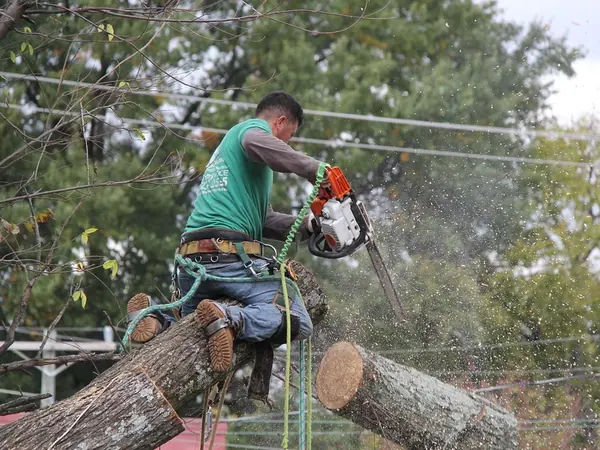
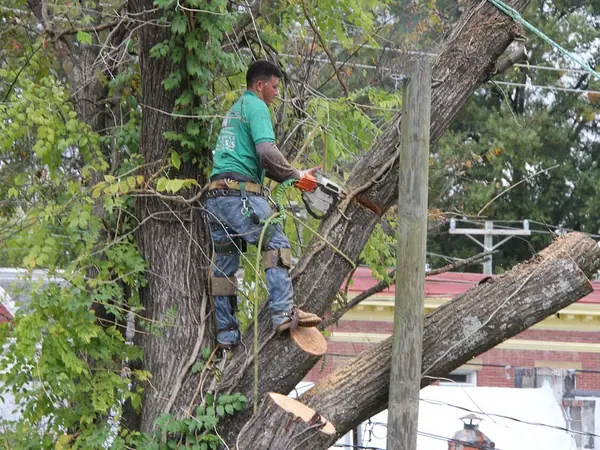
Photo: Tree Pruning in RVA (Carytown, Virginia) by Gamma Man, CC BY 2.0
Strong, smooth rings for building climbing anchors and friction savers.
DMM anchor rings are forged rings used to build friction savers, adjustable anchors and simple rigging connections. Their smooth bore lets rope run over them with low friction, which is why so many climbers build ring-and-ring savers around DMM anchor rings.
A ring is the simplest piece of hardware you can own. No gate, no sleeve, no moving parts. That makes it ideal at the top of a climbing system, where the rope runs back and forth through the anchor and you want as little friction and wear as possible.
A ring-and-ring friction saver is the classic example: a sling with a large ring on one end and a small ring on the other. You install it around a union, run your line through both rings, and the rope runs over smooth metal instead of bark. When you are done, the small ring passes through the large one so you can retrieve the saver from the ground.
Rings also work well as the bottom connection on a basal anchor for stationary rope, or as a gathering point for a multi-sling anchor where you want everything to sit together without cross-loading a connector.
Ring size affects what can pass through it and how rope bends over it. On a retrievable friction saver, the small ring has to pass through the large one, so the pair must be sized to work together. A larger ring gives a gentler bend radius and smoother running.
Rings come in aluminum and steel versions. Aluminum is lighter and fine for most climbing anchors. Steel stands up better to abrasion and is often chosen for heavy-use applications. Check DMM's rated strength for the exact ring you buy and keep within it.
Buy rings in matched pairs if you are building retrievable savers, and keep a spare pair in your kit for when a saver gets stuck or damaged.
Rings pair with eye-to-eye slings, adjustable cambium savers and spliced loops. You can also use them as a clean connection point for a lanyard or as part of a simple redirect. Compare options with the Petzl Ring Open, which can be opened and closed around a sling or rope.
Do not mix climbing anchors and rigging loads without understanding the forces. Rigging can generate loads well beyond what a climbing anchor sees.
For climbers who do not want to build their own, many pre-made ring savers use DMM rings. If you build your own, follow manufacturer guidance and get the construction checked by a qualified person.
Inspect rings for grooving where rope runs, sharp edges, cracks and deformation. Aluminum rings wear faster when gritty rope runs over them, so keep your line clean. Retire a ring if wear is visible or if it has taken a major shock load.
Anything you hang your life on must meet the applicable standard, be used per the manufacturer's instructions and ANSI Z133, and be inspected before every climb by a trained user.
Keep a simple record of when you started using each ring, and retire rings that see heavy rope traffic before wear becomes deep.
| Type | Anchor ring |
|---|---|
| Brand | DMM |
| Construction | Forged ring, no moving parts |
| Sizes | Small and large options |
| Common uses | Friction savers, anchors, light rigging |
| Typical price | About $20 to $35 per ring |
Specs are from the manufacturer's published figures where available. Confirm against the product listing before you buy.
Yes. Ring-and-ring friction savers are one of their most common uses. Size the rings so the small one passes through the large one.
Aluminum is lighter and common for climbing anchors. Steel resists abrasion better for heavy use. Check the rating of the ring you choose.
Rings can be part of light rigging setups, but rigging loads can be high. Stay within the rated strength and get trained in rigging forces.
Pairs well with
Petzl
An openable ring that installs around slings and anchors without threading an end.
ISC
Hard-wearing steel rings for savers, anchors and rigging where rope runs often.
DMM
Machined DMM rings for friction savers, anchors, and custom climbing setups.
The Splice Shop
A smooth aluminum ring for friction savers and custom climbing setups.
Gap Arborist Supply
A tough forged steel ring for building ring slings, anchors and redirects.
DMM Anchor Rings$25