Hardhead
Hardhead Felling Wedge
Plastic felling and bucking wedge that is safe to hit with an axe and safe near a chain.
Typical $15
 Felling Wedges
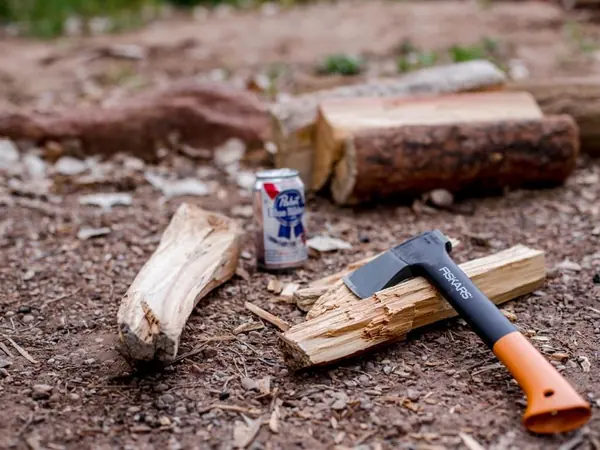
Representative photo. Check the retailer listing for the exact model, color and size.
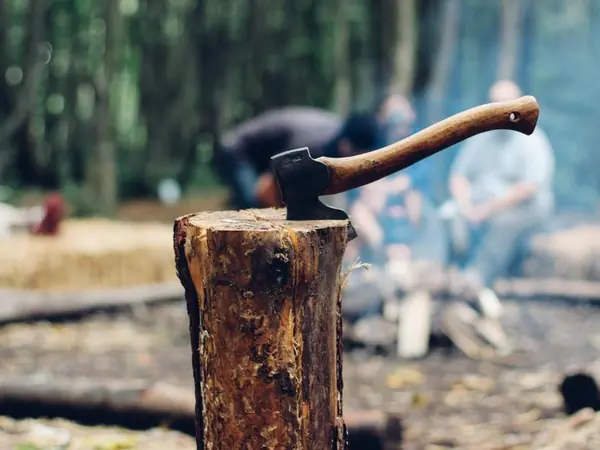
Photo: Axe Wood by Tim Wright, CC0
A hard plastic felling wedge with spikes that help it stay put in the kerf.
A hard body spiked felling wedge is a plastic felling wedge with spikes or barbs on its faces that grip the wood so it is less likely to back out of the cut. The hard body takes heavy blows from an axe or sledge without mushrooming as fast as softer wedges.
Smooth plastic wedges can spit back out of a wet or frozen kerf, especially when you drive them hard or the tree settles. Spikes on the faces give the wedge some bite, so it stays where you set it while you drive it home or step around the stump.
Set the wedge in the back cut as soon as there is room, then drive it to keep the kerf open and lift the tree toward the face. Use plastic or composite wedges near a running chain, never steel. More options are in felling wedges.
Hard body wedges cost little, so it pays to carry several in different sizes. A thin wedge starts the lift in a narrow kerf, and a thicker one takes over once there is room. The spiked faces matter most on the first wedge in, when the kerf is tight and the wedge is most likely to pop out under the first few blows.
Stack wedges or use two side by side for more lift, and keep a few sizes on the belt. A wedge is not a substitute for a good face, proper hinge and correct back cut. Felling should follow ANSI Z133 and be done by trained sawyers with proper PPE.
Retire wedges with cracked bodies, deep cuts from the chain, or heads so mushroomed that they glance off when struck. A broken wedge in a loaded back cut is the last thing you want.
| Material | Hard plastic |
|---|---|
| Faces | Spiked for grip |
| Use | Back cut lifting and holding |
Specs are from the manufacturer's published figures where available. Confirm against the product listing before you buy.
A little, which is the point. Tap it from the side or drive a second wedge if you need to pull one.
Yes, that is what a hard body wedge is for, but expect the head to wear over time and replace it when it starts to fail.
Pairs well with
Hardhead
Plastic felling and bucking wedge that is safe to hit with an axe and safe near a chain.
Weaver
Belt and pouches that keep wedges, tape and saw tools within reach.
K&H Distributing
A tough plastic felling wedge that every sawyer should carry in the back pocket.
Gap Arborist Supply
Bright, hard plastic wedge for lifting trees and freeing pinched bars.
Gap Arborist Supply
A belt holster that keeps wedges and small tools within reach on the ground.
Hard Body Spiked Felling Wedge$15